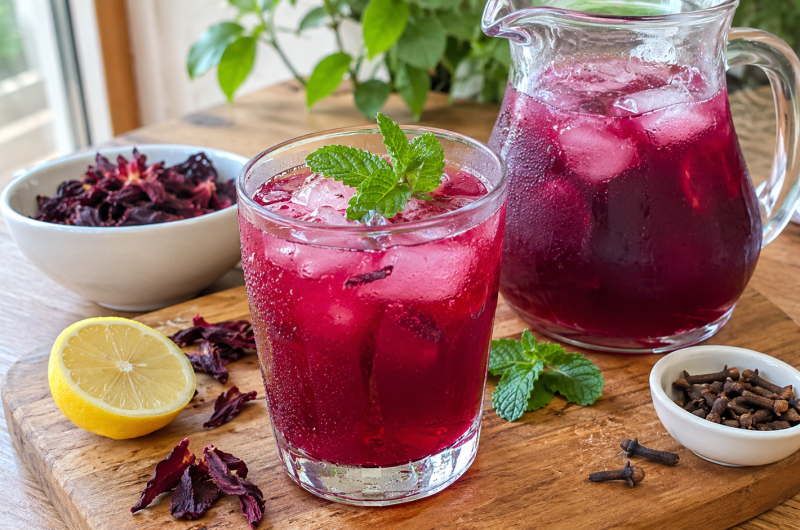
Hibiscus Tea is a vibrant herbal drink made by steeping dried hibiscus flowers in hot water until they release their deep ruby-red color and naturally tart flavor. This refreshing homemade tea can be enjoyed warm during cooler months or chilled over ice when the weather is hot. Because hibiscus is naturally caffeine-free, it is also a useful alternative to coffee, black tea, and other caffeinated beverages. With only water and dried hibiscus flowers as the essential ingredients, this easy hibiscus tea recipe requires very little preparation and can be customized with honey, lemon, mint, or other optional flavors.
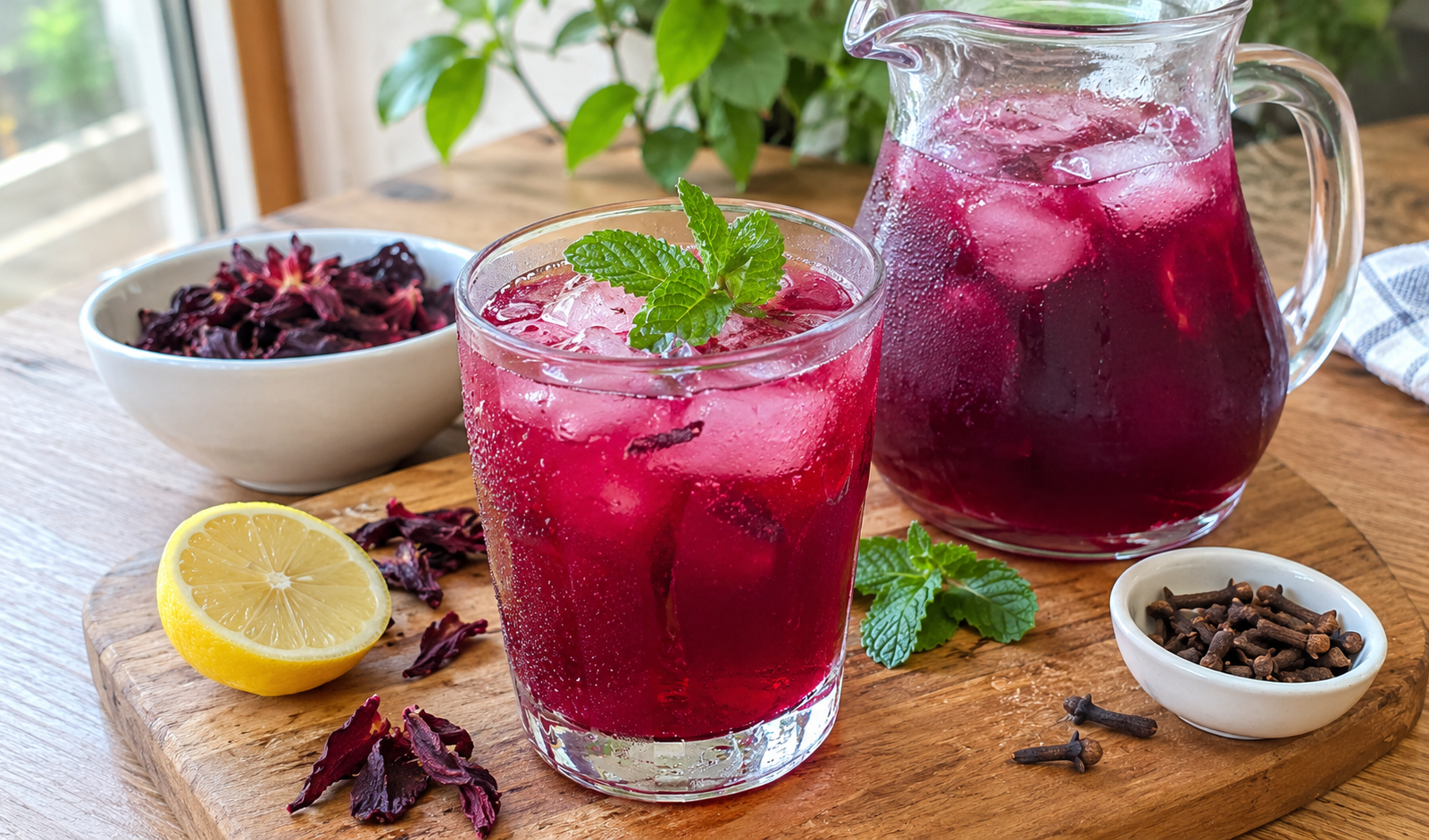
The flavor of hibiscus tea is pleasantly tangy and fruity, often compared with cranberry because of its slightly sharp and refreshing finish. Its striking red color makes it as attractive as it is enjoyable to drink, particularly when served in a clear glass with ice, fresh mint, or slices of lemon. Homemade hibiscus tea can be prepared in about 20 minutes, including the steeping time, and a larger batch can be refrigerated so that a refreshing cold drink is ready whenever you want it.
Why You Prefer This Recipe
There are many reasons homemade hibiscus tea works so well as an everyday drink. It uses inexpensive ingredients, requires no special equipment, and can be prepared without complicated cooking techniques. The basic recipe needs only four cups of water and one-quarter cup of dried hibiscus flowers, while honey, lemon, mint, and ice remain completely optional. This simplicity makes it easy to prepare a plain version first and then adjust each serving according to individual taste.
Another advantage is its versatility. You can enjoy the tea immediately after steeping for a warming herbal drink or allow it to cool and pour it over ice for a refreshing summer beverage. The naturally tart flavor also combines well with sweet, citrusy, herbal, and spicy ingredients. Honey can soften the sharpness, lemon can emphasize its bright flavor, mint can add freshness, and ginger or cinnamon can create a warmer variation without changing the basic preparation method.
What Is Hibiscus Tea?
Hibiscus tea is an herbal infusion prepared by steeping dried hibiscus flowers in hot water. Unlike traditional black, green, or oolong teas, it is not brewed from the leaves of the tea plant. Instead, the dried hibiscus material releases its natural pigments, aroma, and tart flavor into the water. The resulting drink develops a distinctive red to deep crimson appearance that makes hibiscus tea immediately recognizable.
Because it is an herbal infusion rather than traditional tea, hibiscus tea is naturally caffeine-free. This makes it suitable for people who prefer beverages without caffeine or who want an herbal drink later in the day. Hibiscus-based drinks have long been prepared in different parts of Africa, the Caribbean, Latin America, the Middle East, and Asia, although individual recipes vary widely in sweetness, spices, fruit additions, and serving methods.
What Does Hibiscus Tea Taste Like?
The flavor of hibiscus tea is naturally tart, slightly fruity, and gently floral. Cranberry is one of the most common comparisons because both have a refreshing acidity and a bright finish. Some people enjoy hibiscus completely unsweetened, particularly when it is served cold, while others prefer balancing its tart character with a small amount of honey or another sweetener.
The strength of the flavor can also be controlled through steeping time. A shorter infusion produces a lighter drink, while leaving the flowers in the hot water for the full 10 to 15 minutes creates a deeper color and more pronounced tartness. Once you have prepared the recipe a few times, it becomes easy to adjust the infusion according to whether you prefer a mild, refreshing tea or a stronger herbal drink.
Why Hibiscus Tea Is Naturally Caffeine-Free
One of the most appealing characteristics of homemade hibiscus tea is that it contains no natural caffeine because it is prepared from hibiscus flowers rather than traditional tea leaves. For people who limit caffeine, this means the drink can be enjoyed at different times of the day without adding another caffeinated beverage to the routine. It is particularly convenient for anyone who likes the ritual of sipping tea but does not always want coffee, black tea, or green tea.
The absence of caffeine also makes hibiscus useful as the base for flavored cold drinks. Instead of relying on bottled sodas or heavily sweetened iced teas, you can prepare a chilled pitcher and adjust the sweetness yourself. The tart flavor remains refreshing even without added sugar, while optional lemon and mint can make the drink feel brighter and more flavorful without changing the fundamental recipe.
The Natural Goodness of Hibiscus
Hibiscus flowers contain naturally occurring plant compounds and antioxidants, which are among the reasons hibiscus beverages have become popular in many parts of the world. The dried flowers are also associated with naturally occurring nutrients, including small amounts of vitamin C and minerals. However, the exact nutritional content of a prepared cup depends on the hibiscus used, the strength of the infusion, and any additional ingredients added to the finished tea.
For everyday use, it is best to think of hibiscus tea primarily as a flavorful herbal beverage rather than as a treatment for any medical condition. Unsweetened hibiscus tea is very low in calories, while adding honey, maple syrup, sugar, fruit juice, or other sweeteners will increase the calorie and sugar content. This gives you control over whether you want a completely unsweetened herbal tea or a sweeter drink.
Choosing Dried Hibiscus Flowers
The main ingredient in this recipe is one-quarter cup of dried hibiscus flowers. When purchasing hibiscus for tea, use dried hibiscus intended for culinary or beverage use. The flowers should have a rich red color and a noticeable fruity, floral aroma. Since hibiscus is responsible for nearly all the character of the drink, using good-quality dried flowers can make a clear difference in both flavor and appearance.
Store unused dried hibiscus in a tightly sealed container away from excessive moisture, heat, and direct sunlight. Proper storage helps maintain its color and aroma until the next batch of tea. Because only one-quarter cup is required for four cups of water, even a modest package of dried hibiscus can produce several batches, which also makes homemade hibiscus tea a practical and budget-friendly beverage.
How to Make Hibiscus Tea at Home
Begin by pouring four cups of water into a saucepan and bringing the water to a boil. Once it reaches a full boil, remove the saucepan from the heat before adding the dried hibiscus flowers. Adding the flowers after removing the water from direct heat allows them to steep gently rather than continuing to boil aggressively, which helps produce a clean herbal infusion.
Add one-quarter cup of dried hibiscus flowers to the hot water and cover the saucepan. Let the flowers steep for approximately 10 to 15 minutes. During this time, the water will gradually transform into a rich red color as the hibiscus infuses. Ten minutes will create a slightly lighter tea, while the full 15 minutes produces a stronger, more concentrated flavor.
How to Strain Hibiscus Tea Properly
Once the steeping time is complete, strain the tea through a fine-mesh strainer into a teapot, heat-safe pitcher, or another suitable container. The goal is to remove all the softened pieces of hibiscus so the finished drink is smooth and pleasant to sip. Discard the used flowers after straining, since their main color and flavor have already been released into the hot water.
A fine-mesh strainer is particularly useful because dried hibiscus can break into small pieces during steeping. Removing those particles gives the tea a cleaner appearance, especially if you plan to serve it chilled in clear glasses. After straining, you can immediately proceed with sweetening and serving, or leave the tea to cool if you are preparing an iced version.
How to Sweeten Hibiscus Tea
Hibiscus tea is naturally tart, so whether it needs sweetener depends entirely on personal preference. The recipe allows one to two tablespoons of honey or another sweetener, but this ingredient is optional. Taste the tea before adding anything so you can decide how much sweetness is actually needed. Starting with a small amount is useful because additional sweetener can always be stirred in later.
If using honey, adding it while the tea is still warm makes it easier to dissolve evenly. Other sweeteners can be used if preferred. For a completely unsweetened drink, simply leave the sweetener out. Lemon slices and mint leaves can also make the drink taste more aromatic and refreshing without necessarily adding sweetness, which is particularly useful when serving the tea over ice.
Hot Hibiscus Tea
For hot hibiscus tea, the drink can be served immediately after it has been strained and sweetened to taste. Pour it into mugs while still warm and add an optional lemon slice or a few fresh mint leaves. The naturally tart flavor remains bright when served warm, while honey can create a softer, more comforting version during colder weather.
A warm version can also be customized with spices. Ginger provides a more warming, slightly spicy character, while cinnamon can complement the fruity acidity of hibiscus. These additions are optional and are not part of the core ingredient list, so the basic tea can remain as simple as desired. Serving it warm is an easy way to enjoy the same caffeine-free herbal drink throughout autumn and winter.
Iced Hibiscus Tea
For iced hibiscus tea, allow the strained tea to cool completely before pouring it over ice cubes. Cooling the tea before adding ice helps prevent excessive dilution and preserves its characteristic flavor. Once chilled, the tea becomes especially refreshing, with its tartness and fruity notes making it well suited to warm weather or casual outdoor meals.
Add the optional lemon slices and mint leaves just before serving for extra freshness and visual appeal. If you plan to prepare the tea ahead of time, refrigerate it in a covered container and add ice only when serving. This prevents melting ice from slowly weakening the drink while it sits in the refrigerator.
Optional Flavor Additions
Although the basic recipe is flavorful on its own, hibiscus works naturally with several additional ingredients. Lemon adds more citrus brightness and can sharpen the refreshing character of the drink. Honey balances the tartness with gentle sweetness, while fresh mint produces a cooling herbal note that works especially well in iced hibiscus tea.
Ginger can provide warmth and spice, orange slices can contribute a sweeter citrus character, and cinnamon can create a cozy version suited to cooler weather. Fresh fruit such as berries or pineapple can also be added when serving the tea chilled. These are optional serving ideas rather than required ingredients, allowing you to keep the original recipe simple or personalize individual glasses.
Sparkling and Fruit-Infused Hibiscus Tea Ideas
Another way to serve chilled hibiscus tea is to combine it with sparkling water shortly before drinking. This produces a lighter, fizzy beverage while retaining the tea’s bright red color and tart flavor. It can be served over ice with lemon or mint for an attractive alcohol-free drink suitable for warm afternoons, parties, or casual meals.
A fruit-infused version can be prepared by adding fresh berries, orange slices, or pineapple to the cooled tea. Allowing fruit to sit briefly in the chilled hibiscus can add aroma and subtle flavor. Since fruit and sparkling water are optional variations, they can easily be added to individual servings without changing the original batch.
How to Store Homemade Hibiscus Tea
Prepared hibiscus tea can be transferred to a sealed pitcher or container and stored in the refrigerator for up to five days. Keeping it covered helps protect the flavor and prevents the tea from absorbing aromas from other refrigerated foods. For the best experience, add fresh lemon slices, mint leaves, and ice when serving rather than leaving them in the stored tea for several days.
Another convenient option is freezing some prepared tea in an ice cube tray. Hibiscus ice cubes can then be added to chilled hibiscus tea without watering it down as regular ice melts. They can also add a colorful touch to other suitable cold beverages. This is particularly helpful when preparing larger batches during hot weather.
Hibiscus Tea Recipe A Refreshing Homemade Herbal Drink
A simple homemade Hibiscus Tea made from dried hibiscus flowers and water. This vibrant ruby-red herbal drink has a naturally tart, fruity flavor and contains no caffeine.
4
servings5
minutes15
minutes5
kcal20
minutesIngredients
4 cups water
¼ cup dried hibiscus flowers
1–2 tablespoons honey or sweetener, optional
1 lemon, sliced, optional
Fresh mint leaves, optional
Ice cubes, for iced tea
Directions
- Bring 4 cups of water to a boil in a saucepan.
- Remove the saucepan from the heat.
- Add ¼ cup dried hibiscus flowers.
- Cover and steep for 10–15 minutes.
- Strain through a fine-mesh strainer.
- Discard the soaked hibiscus flowers.
- Stir in honey or preferred sweetener if desired.
- Serve immediately for hot hibiscus tea.
- For iced tea, cool completely before pouring over ice.
- Add lemon slices and fresh mint leaves if desired.