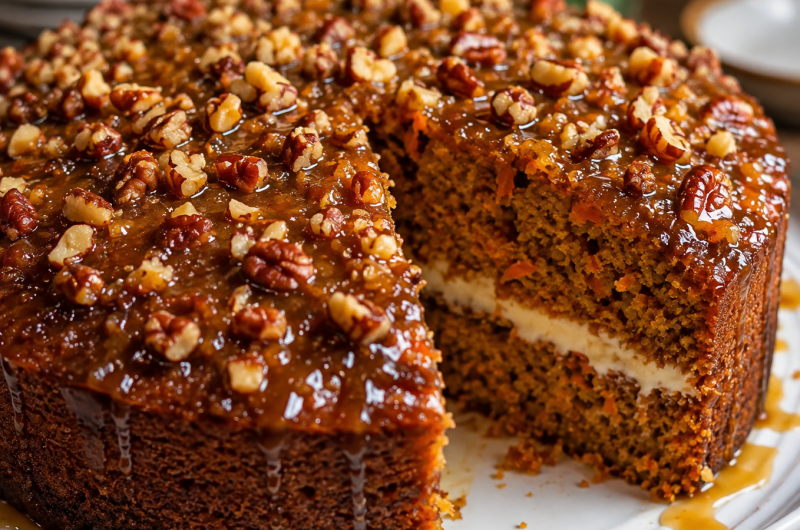
This Healthy Carrot Cake Without Sugar or Refined Flour is a moist, warmly spiced dessert made with almond flour, coconut flour, fresh grated carrots, walnuts, eggs, butter, and Greek yogurt. Instead of regular granulated sugar, the recipe uses granulated sweetener, while the traditional wheat flour is replaced with a combination of almond flour and coconut flour. The result is a rich, tender carrot cake with plenty of cinnamon, ginger, nutmeg, and crunchy walnuts in every slice.
This flourless-style carrot cake is particularly useful when you want a homemade dessert without conventional refined flour or added sugar. The carrots contribute natural moisture and subtle sweetness, while Greek yogurt helps keep the crumb soft. Two frosting choices are included: a lighter Greek yogurt frosting or a richer cream cheese frosting. Both are sweetened with powdered sweetener rather than powdered sugar, allowing you to choose the finish that best suits your preference.
Why This Recipe Popular
Traditional carrot cake often contains substantial amounts of sugar, wheat flour, and a rich cream cheese frosting. This version takes a different approach while preserving the characteristics that make carrot cake so popular. Fresh carrots provide moisture and texture, walnuts add crunch, and four teaspoons of cinnamon give the cake a noticeably warm, aromatic flavor. Ginger and nutmeg round out the spice mixture without overpowering the carrot.
Another advantage is the simple one-layer preparation. You do not need to bake several cake layers or prepare complicated fillings. The batter goes into a single 20-centimeter springform or loose-bottom cake pan and bakes for approximately 55 to 60 minutes. After cooling, simply prepare your preferred frosting, spread it over the top, and finish with walnut halves and chopped walnuts.
What Makes This Carrot Cake Different?
The biggest difference is the flour combination. Instead of all-purpose flour, this recipe uses 200 grams of almond flour and 30 grams of coconut flour. Almond flour provides richness, moisture, and a slightly nutty character, while coconut flour absorbs moisture and contributes structure. Since the two flours behave very differently from wheat flour, their specific quantities are important for achieving the intended batter consistency.
The sweetener is also different from conventional carrot cake. Half a cup, or 100 grams, of granulated sweetener is included as the standard quantity. The original recipe allows this to be increased to three-quarters of a cup or as much as 150 grams for a sweeter cake. Keeping this choice within the original recipe allows you to adjust sweetness without changing the basic ingredients.
Almond Flour and Coconut Flour Carrot Cake
Almond flour is an excellent match for carrot cake because its naturally rich flavor works well with walnuts, cinnamon, and fresh carrots. It also contains fat, which contributes to the soft and satisfying texture of the finished cake. This recipe calls for two cups, or 200 grams, of almond flour, making it the primary flour ingredient in the batter.
Coconut flour is used in a much smaller amount—only one-quarter cup, or 30 grams. This is intentional because coconut flour absorbs considerably more moisture than almond flour. Using both provides a balance between tenderness and structure. Because flour behavior can vary slightly between brands and measurements, the original method also provides an optional adjustment if the batter appears unusually dry.
Fresh Grated Carrots for Moisture and Texture
Two cups of freshly grated carrot, approximately 220 grams, form an important part of this healthy carrot cake recipe. The carrots should be loosely packed rather than compressed tightly into the measuring cup. Freshly grated carrots contain moisture that is gradually released as the cake bakes, helping create the soft texture associated with a good homemade carrot cake.
For even distribution, grate the carrots into relatively fine pieces rather than leaving them in thick strips. They are stirred into the batter at the end, after the wet and dry mixtures have already been combined. This makes it easier to spread the carrot evenly without overworking the cake batter. Once baked, the carrots soften and become integrated into the nutty, spiced crumb.
Cinnamon, Ginger, and Nutmeg
Carrot cake is known for warm spices, and this recipe uses a generous four teaspoons of cinnamon. Cinnamon is the dominant spice and provides the familiar aroma that immediately identifies the dessert as carrot cake. One teaspoon of ginger adds gentle warmth, while half a teaspoon of nutmeg brings another layer of fragrant spice.
These spices are mixed with the almond flour, coconut flour, walnuts, and baking powder before being added to the wet mixture. Combining the dry ingredients first helps distribute the spices throughout the batter so each slice has consistent flavor. The combination works particularly well with the sweetness of the carrots, the richness of the butter, and the nutty character of almond flour and walnuts.
Walnuts Add Crunch and Nutty Flavor
The cake batter contains three-quarters of a cup, or approximately 90 grams, of finely chopped walnuts. You can chop them with a knife or pulse them briefly in a food processor. Smaller pieces are preferable because they distribute throughout the batter instead of creating large, heavy sections that can interfere with neat slicing.
Walnuts also appear in the final decoration. Twelve walnut halves are used as a topping, along with one tablespoon of chopped walnuts. This creates an attractive finish while clearly showing the nut flavor inside the cake. When cutting the finished dessert into 12 servings, the walnut halves can also provide a convenient visual guide for portioning each slice.
Preparing the Cake Pan
Begin by preheating the oven to 180°C or 350°F for a conventional electric oven. For a fan-assisted oven, use 160°C or 320°F. Prepare a 20-centimeter springform or loose-bottom baking tin by placing a circle of parchment paper across the bottom and greasing the sides with butter.
Proper pan preparation is especially helpful with a moist almond flour cake because it makes removal easier after baking. The removable base or springform sides also reduce the need to turn the cake upside down, which could damage its surface. Have the prepared pan ready before mixing the batter so the cake can go into the oven promptly once assembled.
Whipping the Eggs and Sweetener
Place four large, room-temperature eggs and half a cup of granulated sweetener into a mixing bowl. Using an electric handheld mixer or food processor, beat the mixture for approximately two minutes until it becomes pale and fluffy. This step incorporates air and creates a lighter foundation for the batter.
Room-temperature eggs are useful because they combine more readily with the other ingredients. The sweetener quantity can remain at 100 grams for the standard version or be increased according to the original recipe if a sweeter result is preferred. Once the egg mixture looks lighter and aerated, it is ready for the butter and yogurt.
Adding Butter and Greek Yogurt
Add half a cup, or 114 grams, of melted butter to the whipped egg mixture, followed by one-quarter cup, or 65 grams, of Greek yogurt. Mix until the ingredients are evenly incorporated. Butter provides richness, while Greek yogurt contributes moisture and helps create a softer texture in a cake made with highly absorbent coconut flour.
The original instructions also mention cream cheese as an alternative at this stage, although the ingredient list specifies Greek yogurt. To preserve the supplied ingredient list exactly, this rewritten recipe uses the listed Greek yogurt. Once the butter and yogurt are fully combined with the eggs and sweetener, the wet ingredients are ready to receive the dry mixture.
Combining the Dry Ingredients
In a separate clean bowl, combine the almond flour, coconut flour, finely chopped walnuts, baking powder, cinnamon, ginger, and nutmeg. Stir thoroughly so the baking powder and spices are evenly distributed through the flour mixture. Preparing the dry ingredients separately reduces the chance of concentrated pockets of spice or leavening in the finished cake.
Add the dry mixture to the prepared wet ingredients and mix until everything is combined. The batter should be thick, which is expected because coconut flour absorbs substantial moisture. It should not, however, appear excessively dry or crumbly. Once the flour mixture has been incorporated, the grated carrots can be stirred through the batter.
Adding the Fresh Carrots
Once the wet and dry ingredients have been combined, stir in the two cups of freshly grated carrot. Fold the carrots through the batter until they appear evenly distributed. Avoid excessive mixing; the goal is simply to make sure there are no large areas containing only carrot or only batter.
Adding the carrots at the end allows their moisture and texture to remain distinct until the batter is ready for baking. The finished mixture will be thick, rich, and visibly packed with carrots and finely chopped walnuts. Spoon it into the prepared 20-centimeter baking pan and spread it evenly toward the edges.
How to Bake Healthy Carrot Cake
Smooth the surface of the batter with a spatula before placing the pan in the preheated oven. Bake for approximately 55 to 60 minutes. Since almond flour cakes can brown noticeably on top, check the cake after about 45 minutes rather than leaving it completely unattended until the timer finishes.
If the surface has already developed a deep golden-brown color at the 45-minute point, loosely cover the top with aluminum foil. This protects the surface from becoming too dark while allowing the center to continue baking. Avoid pressing the foil directly onto the cake; a loose covering is sufficient to reduce direct heat exposure.
How to Check When the Cake Is Done
At approximately 55 minutes, insert a skewer into the center of the cake and remove it. The cake is ready when no wet dough sticks to the skewer. Depending on your oven and baking pan, it may require closer to 60 minutes. The center should also feel set rather than visibly wet or unstable.
Avoid extending the baking time unnecessarily once the cake has cooked through. Almond flour and coconut flour create a different crumb from wheat flour, and excessive baking can reduce the moisture that makes this carrot cake appealing. Using the skewer test provides a more reliable indication than judging doneness based only on the color of the surface.
Cooling the Carrot Cake Correctly
After removing the cake from the oven, leave it inside the baking pan for approximately 10 minutes. This brief resting period allows its structure to settle, making removal safer. A warm almond flour cake can be more delicate than a completely cooled cake, so trying to transfer it immediately may cause cracking or breakage.
After 10 minutes, carefully remove the cake from the springform or loose-bottom pan and transfer it to a wire cooling rack. Allow it to cool completely before adding either frosting. Frosting a warm cake can cause Greek yogurt frosting to loosen or cream cheese frosting to soften, so patience during cooling will produce a cleaner finished appearance.
Greek Yogurt Frosting Option
The first frosting option is a lighter topping made with one cup, or 250 grams, of extra-thick Greek yogurt. Combine it with one teaspoon of vanilla extract and two to four tablespoons of powdered sweetener, adjusting the quantity within the stated range according to your preferred sweetness.
Extra-thick yogurt is important because a loose or watery yogurt will not sit on top of the cake as neatly. Stir the frosting ingredients together until smooth, then spread the mixture over the completely cooled cake. This option provides a fresh, tangy contrast to the rich almond flour cake and warm spices.
Is This Carrot Cake Really Sugar-Free?
The recipe does not use conventional granulated sugar or powdered sugar. Instead, it specifies granulated sweetener for the cake and powdered sweetener for either frosting. However, the carrots, Greek yogurt, almond flour, and other ingredients can contain small amounts of naturally occurring sugars. The supplied nutritional information lists approximately 3.2 grams of sugar per serving.
For that reason, carrot cake without added sugar or sugar-free carrot cake made with sweetener may be clearer descriptions than claiming the finished cake contains absolutely zero sugar. The precise nutritional profile will also depend on the specific sweetener, yogurt, almond flour, and other products used.
Is This Carrot Cake Made Without Refined Flour?
Unlike the previous carrot cake version, this recipe does genuinely avoid conventional all-purpose wheat flour. Its flour ingredients are almond flour and coconut flour. That makes carrot cake without refined flour, almond flour carrot cake, and coconut flour carrot cake appropriate descriptions for this particular recipe.
It is important, however, not to assume that every almond flour or coconut flour product has identical properties. Use the exact quantities specified rather than substituting one flour for the other. Coconut flour is significantly more absorbent than almond flour, so changing their proportions could substantially affect the batter and finished texture.
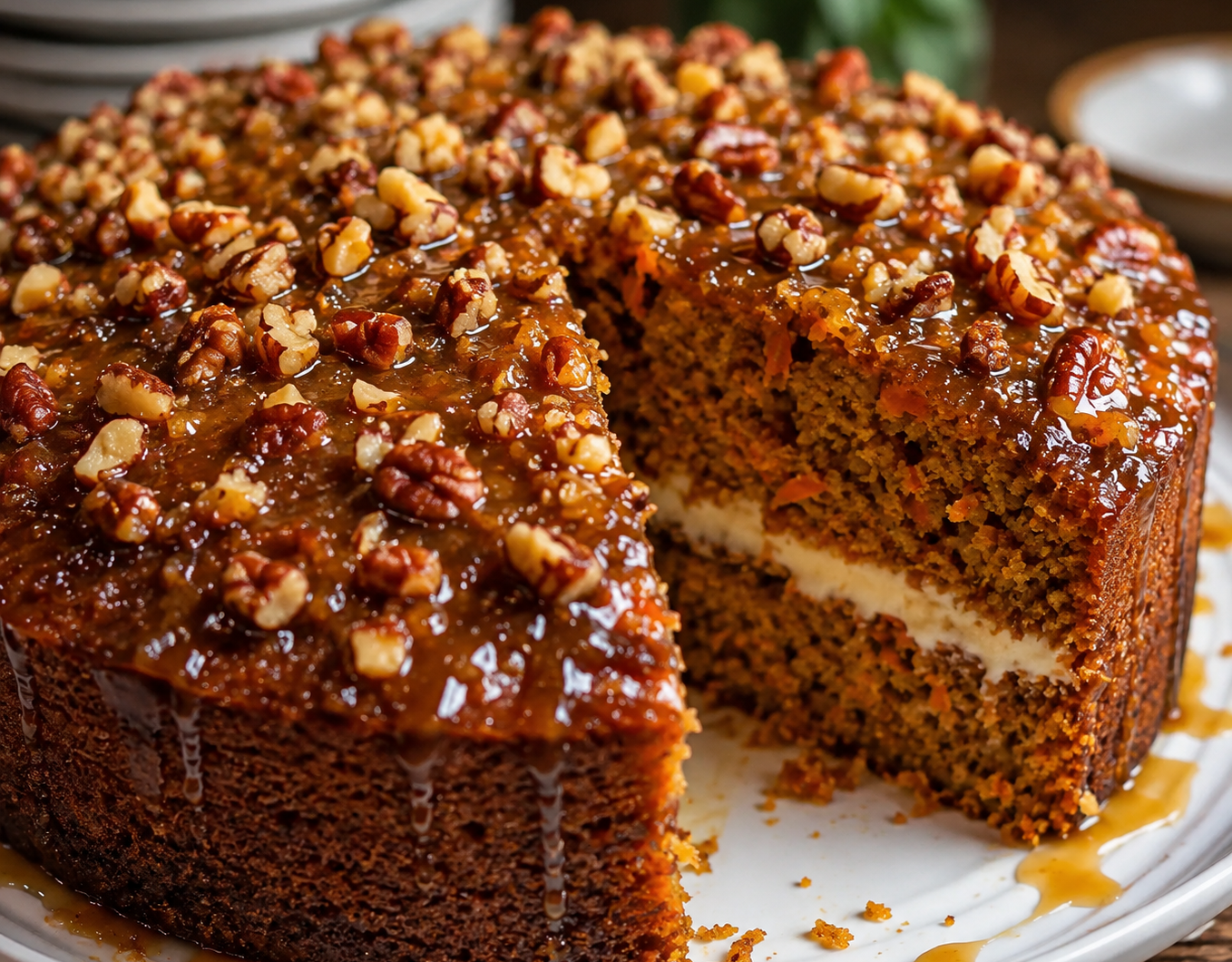
Healthy Carrot Cake Without Sugar or Refined Flour
A moist and warmly spiced healthy carrot cake made with fresh grated carrots, almond flour, coconut flour, walnuts, Greek yogurt, and granulated sweetener.
12
servings10
minutes1
hour315
kcal1
hour10
minutesIngredients
- Carrot Cake
2 cups (220 g) fresh grated carrot, loosely packed
½ cup (100 g) granulated sweetener, white or golden (use ¾ cup or up to 150 g for a sweeter cake)
4 large eggs, room temperature
½ cup (114 g) butter, melted
¼ cup (65 g) Greek yogurt
2 cups (200 g) almond flour
¼ cup (30 g) coconut flour
¾ cup (90 g) walnuts, finely chopped or pulsed in a food processor
3 teaspoons baking powder
4 teaspoons cinnamon
1 teaspoon ginger
½ teaspoon nutmeg
- Frosting Option 1 – Greek Yogurt
1 cup (250 g) extra-thick Greek yogurt
1 teaspoon vanilla extract
2–4 tablespoons powdered sweetener, to taste
- Frosting Option 2 – Cream Cheese
1 cup (240 g) cream cheese, room temperature
3 tablespoons (40 g) butter, softened
¼ cup (40 g) powdered sweetener
1 teaspoon vanilla extract
- Topping
12 walnut halves
1 tablespoon chopped walnuts
Directions
- Preheat oven to 350°F (180°C) or 320°F (160°C) fan-assisted.
- Line a 20 cm baking tin with parchment and grease the sides.
- Beat eggs and granulated sweetener for about 2 minutes until pale and fluffy.
- Add melted butter and Greek yogurt. Mix well.
- Combine almond flour, coconut flour, walnuts, baking powder, cinnamon, ginger, and nutmeg separately.
- Add the dry mixture to the wet ingredients and combine.
- Stir in the grated carrots.
- Spoon the thick batter into the prepared pan.
- Smooth the surface with a spatula.
- Bake for approximately 55–60 minutes.
- Check after 45 minutes and loosely cover with foil if the top is sufficiently browned.
- Test the center with a skewer before removing from the oven.
- Cool in the pan for 10 minutes.
- Transfer to a wire rack and cool completely.
- Prepare Your Chosen Frosting
For Frosting Option 1, mix extra-thick Greek yogurt, vanilla, and powdered sweetener until smooth. - For Frosting Option 2, mix cream cheese, softened butter, powdered sweetener, and vanilla until smooth and creamy.
- Decorate
Spread your chosen frosting over the completely cooled cake. Finish with the 12 walnut halves and 1 tablespoon chopped walnuts
Nutrition Facts
12 servings per container
- Amount Per ServingCalories315
- % Daily Value *
- Total Fat
27g
35%
- Total Carbohydrate
9g
4%
- Total Sugars 3g
- Protein 10g 20%
* The % Daily Value tells you how much a nutrient in a serving of food contributes to a daily diet. 2,000 calories a day is used for general nutrition advice.