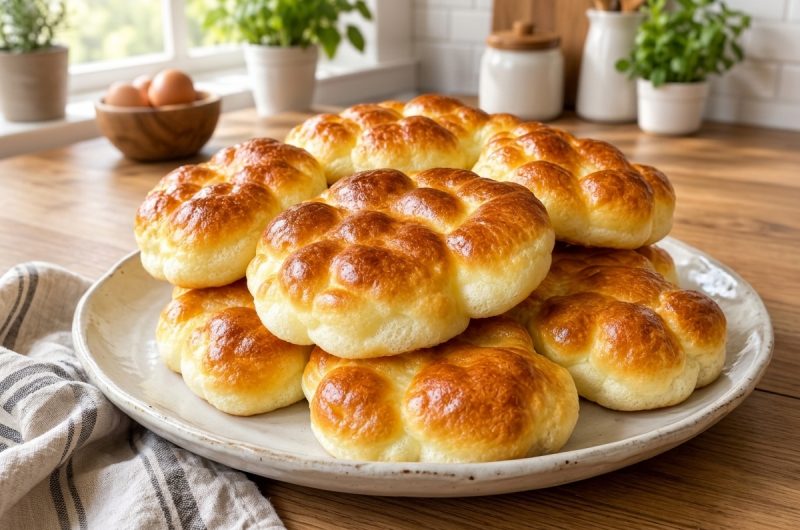
Cloud bread is a light, fluffy bread alternative made without traditional flour, grains, or yeast. It is especially popular among people following low-carb, keto, gluten-free, and grain-free eating plans. Unlike regular sandwich bread, which relies on wheat flour for its structure, cloud bread uses whipped egg whites to create a soft, airy texture that makes each slice look almost like a little round pillow.
This homemade cloud bread recipe combines eggs, low-fat cream cheese, cream of tartar, and a few savory seasonings to create a flavorful alternative to traditional bread. The result is slightly golden on the outside and soft in the middle. It has a delicate texture when freshly baked, but after resting for a couple of hours, it becomes a little more bread-like and easier to use for sandwiches.
This Homemade Cloud Bread Recipe
One of the best things about cloud bread is its simple ingredient list. You do not need flour, yeast, baking powder, or complicated baking equipment to prepare it. A few everyday ingredients are enough to make a batch of fluffy bread rounds that can be served with breakfast, lunch, or dinner. The preparation is also relatively quick, making this recipe useful when you want a homemade bread alternative without spending hours in the kitchen.
Another reason to enjoy this recipe is its nutritional profile. Each serving contains approximately 36 calories, making it a light option compared with many traditional bread varieties. The eggs provide protein, while the cream cheese adds a little richness and helps create a smoother mixture. Since the recipe contains no flour or grains, it is naturally gluten-free and grain-free when prepared with suitable ingredients.
The savory seasoning is another detail that makes this version worth trying. Plain cloud bread can have a noticeable egg flavor, which some people find less suitable for sandwiches. Italian seasoning, sea salt, and garlic powder give these fluffy bread rounds a more savory taste. They pair nicely with cheese, vegetables, eggs, and other sandwich fillings without making the bread taste overly sweet.
What Makes This Cloud Bread Different?
Cloud bread recipes can vary depending on the ingredients and flavors used. Some versions use cottage cheese instead of cream cheese, while others include sweeteners, vanilla, or cinnamon. Those variations can work well when preparing a dessert-style bread, but this recipe focuses on a savory flavor that is more suitable for everyday meals.
The combination of cream cheese and properly whipped egg whites is important for achieving the desired consistency. Cream cheese gives the egg yolk mixture a smooth, creamy texture, while the egg whites provide most of the volume. Cream of tartar helps stabilize the whipped whites, allowing them to hold their shape when combined with the remaining ingredients.
The Italian seasoning and garlic powder also help distinguish this recipe from sweeter cloud bread variations. Instead of tasting like an egg-based dessert, the finished bread has a mild herbal and garlicky flavor. You can serve it with savory toppings or use it as a base for simple sandwiches.
How to Make Cloud Bread from Scratch
Preparing cloud bread is mostly about getting the egg whites to the correct consistency and combining the ingredients carefully. The process is straightforward, but taking your time during mixing will help produce fluffy, evenly shaped bread rounds.
Prepare the Oven and Baking Sheets
Begin by preheating your oven to 300°F. If your oven has a convection setting, you can use it to help the bread bake evenly. Prepare two large baking sheets and cover them with parchment paper. Cloud bread contains relatively little fat, so it can stick to an unlined baking surface. Parchment paper makes removing the finished bread much easier and helps keep the delicate rounds intact.
Make sure the baking sheets are ready before preparing the mixture. Once the egg whites are whipped and folded into the yolk mixture, you want to transfer the batter to the oven without unnecessary delays.
Separate the Eggs
Carefully separate the egg whites from the yolks, placing them into two different bowls. Add the egg whites to a clean stand mixer bowl fitted with a whisk attachment. You can also use a large mixing bowl and an electric hand mixer if you do not have a stand mixer.
Check that the bowl and whisk attachment are completely clean and dry. Any leftover grease, oil, or egg yolk can interfere with the whipping process. Keeping the whites free from fat helps them develop the volume needed for a light and fluffy bread texture.
Whip the Egg Whites Until Stiff Peaks Form
Add the cream of tartar to the egg whites and begin beating on high speed. At first, the mixture will look foamy and loose. As you continue whipping, the bubbles become smaller and the mixture gradually increases in volume. Keep beating until the egg whites become thick, glossy, and firm enough to hold stiff peaks.
To check the consistency, lift the whisk attachment from the bowl. The whipped whites should stand upright rather than immediately falling back into the mixture. This stage is essential because soft or under-whipped egg whites may not provide enough structure for the cloud bread.
Once the whites reach stiff peaks, transfer them carefully to a separate clean bowl. Avoid stirring or pressing them down because you want to preserve as much air as possible.
Prepare the Cream Cheese and Egg Yolk Mixture
Place the softened cream cheese into the empty mixing bowl. Beat it until smooth and creamy, making sure there are no large lumps remaining. Add the egg yolks one at a time, mixing after each addition so that they become fully incorporated into the cream cheese.
Scrape the sides and bottom of the bowl with a spatula when necessary. This helps prevent unmixed cream cheese from remaining around the edges. Continue beating until the mixture has a consistent texture and looks completely smooth.
Add the Italian herb seasoning, sea salt, and garlic powder. Mix again until the seasonings are evenly distributed throughout the mixture. Preparing this base separately makes it easier to combine everything without overworking the whipped egg whites later.
Fold the Whipped Egg Whites into the Mixture
Add the whipped egg whites to the cream cheese and egg yolk mixture. Use a spatula to gently fold the ingredients together rather than stirring them quickly. Bring the spatula down through the center of the bowl, move it along the bottom, and lift the mixture over the top.
Continue folding carefully until the two mixtures are mostly combined. Avoid aggressive mixing because it can release the air trapped inside the egg whites. Some gentle folding is necessary to create an even batter, but the finished mixture should remain thick, airy, and foamy.
This step has a major effect on the final texture. If too much air escapes, the bread may spread excessively or turn out flatter than expected. Keeping the mixture light helps produce the characteristic fluffy appearance of homemade cloud bread.
Shape the Cloud Bread Rounds
Use a spoon or measuring cup to place approximately 1/4 cup portions of the mixture onto the prepared baking sheets. Spread each portion into an even circle measuring about 4 inches across and approximately 3/4 inch high.
Leave enough room between the portions so that they have space during baking. Try to keep the circles similar in size and thickness because evenly shaped portions are more likely to cook at the same rate. Avoid pressing the mixture too firmly while shaping, as this can remove some of the air that you worked to incorporate.
The mixture should look soft and slightly raised before baking. It does not need to have perfectly smooth edges. Small differences in shape are normal and will not affect how the bread tastes.
Bake Until Golden and Firm
Place the baking sheets in the preheated oven. If you are using a convection oven, bake the cloud bread for approximately 15 to 18 minutes. For a conventional oven, baking may take up to 30 minutes.
Watch the bread as it approaches the end of the cooking time. The outside should develop a light golden color, while the centers should become firm. If you gently shake the baking sheet, the middle of each bread round should not jiggle like uncooked batter.
Oven temperatures and baking times can vary, so use the appearance and firmness of the bread as your main indicators. Once fully baked, remove the trays from the oven and allow the bread rounds to cool for several minutes on the baking sheets.
Cool and Serve
After the cloud bread has rested briefly, carefully remove the rounds from the parchment paper. They will be delicate while warm, so handle them gently to prevent tearing. You can serve them shortly after baking, but allowing them to rest for a little longer changes their texture.
Freshly baked cloud bread has a soft, soufflé-like consistency. After a couple of hours, it becomes slightly firmer and more suitable for holding sandwich fillings. Serve it with your favorite savory toppings or keep the rounds refrigerated for later meals.
How to Get Light and Fluffy Cloud Bread
The most important part of making successful cloud bread is preparing the egg whites correctly. They need to reach firm peaks before being combined with the other ingredients. If the whites are too soft, the batter may not hold its shape properly. A clean mixing bowl, a suitable whisk attachment, and a little patience make a noticeable difference.
Another important detail is making sure the cream cheese mixture is completely smooth. Lumps of cream cheese can make the batter uneven and difficult to fold. Beat the softened cream cheese first, then gradually incorporate the egg yolks before adding the seasonings.
Gentle folding is just as important as whipping. The air inside the egg whites provides the light texture, so avoid using a fast stirring motion. A spatula gives you better control and allows you to combine the ingredients while keeping the mixture as fluffy as possible.
Finally, use parchment paper or a silicone baking mat to line the trays. Because this recipe is relatively low in fat, the bread can stick to an unprepared baking sheet. Avoid using aluminum foil as a substitute, since removing the delicate rounds may become more difficult.
Ways to Serve Savory Cloud Bread
Cloud bread is versatile enough to use in several everyday meals. Its mild flavor and soft texture make it a good match for ingredients that would normally be served with regular sandwich bread. You can enjoy the rounds on their own or add your favorite fillings to create a more satisfying meal.
Make Simple Sandwiches
Use two cloud bread rounds to make a sandwich with cheese, lettuce, tomatoes, and your preferred protein. The savory Italian seasoning works particularly well with traditional sandwich fillings. Since the bread is light and delicate, avoid adding too much wet filling at once.
Serve with Eggs for Breakfast
Cloud bread can be served alongside scrambled eggs, omelets, or fried eggs. You can also place a cooked egg between two rounds for a simple breakfast sandwich. Its mild garlic and herb flavor complements eggs without overpowering them.
Pair with Soups and Salads
Serve a few cloud bread rounds alongside vegetable soup, chicken soup, or a fresh salad. They provide a bread-like addition to the meal without the flour-based texture of conventional bread. You can also use them to scoop up creamy dips or enjoy them with your favorite savory spreads.
Use as a Light Burger Bun
For smaller burgers, cloud bread can work as a soft alternative to traditional buns. Choose fillings that are not overly heavy, as the rounds are more delicate than regular bread. A little cheese, lettuce, and a suitable burger patty can make a satisfying combination.
How to Store Homemade Cloud Bread
Cloud bread is best enjoyed relatively soon after baking because its texture is especially pleasant during the first several hours. However, you can store any leftovers in an airtight container in the refrigerator. Refrigeration helps keep the bread fresh for several days, although the texture may gradually change as it sits.
For the best experience, try to eat the bread within 12 hours of baking. If you are preparing it ahead of time, allow the rounds to cool completely before placing them in the container. Storing warm bread can create condensation, which may make the surface damp.
When you are ready to serve refrigerated cloud bread, allow it to sit briefly at room temperature. You can also warm it gently if you prefer. Avoid excessive heating because the delicate texture can become dry or lose some of its softness.
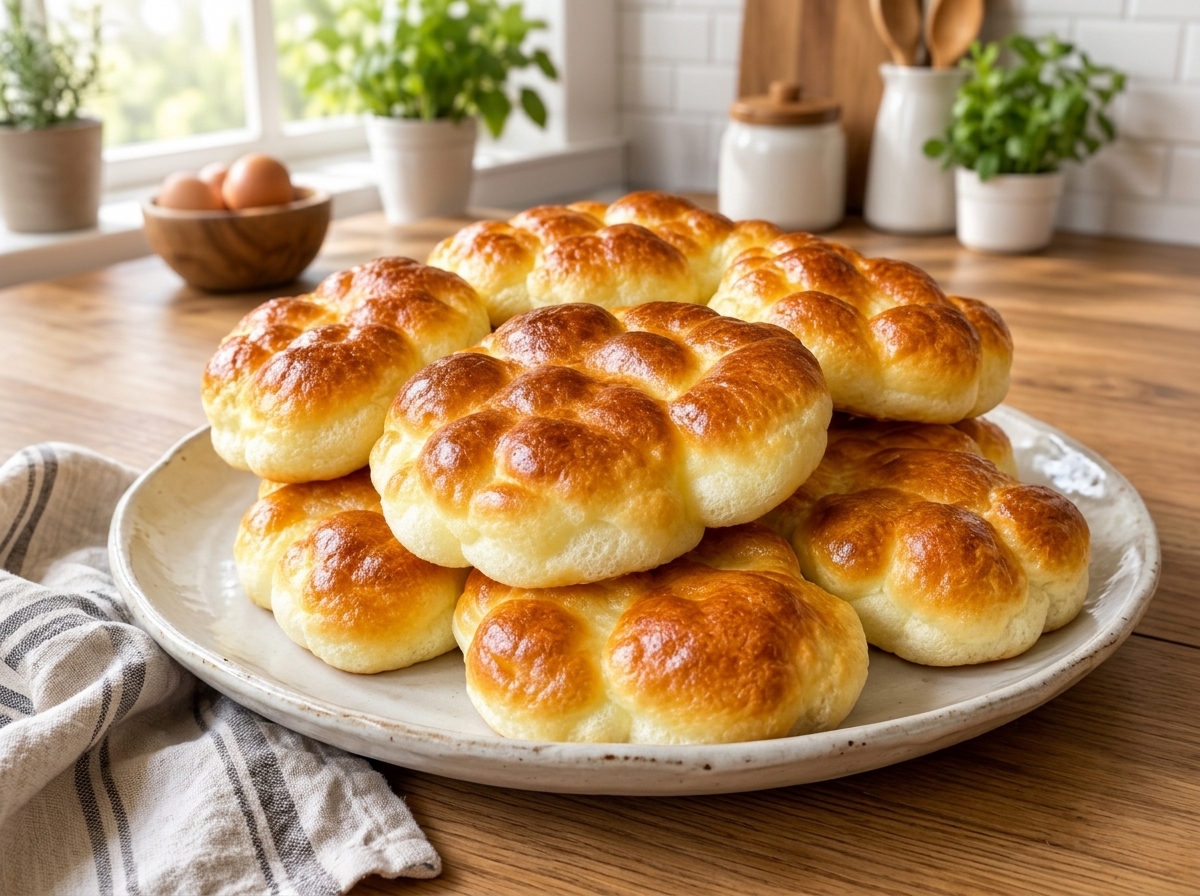
Cloud Bread
This easy cloud bread recipe makes light, fluffy, savory bread rounds with eggs, low-fat cream cheese, and Italian herbs. It is naturally gluten-free, grain-free, and low in carbohydrates, making it a delicious alternative to traditional sandwich bread.
10
servings10
minutes15
minutes36
kcal25
minutesIngredients
4 large eggs, separated
1/2 teaspoon cream of tartar
2 ounces low-fat cream cheese
1 teaspoon Italian herb seasoning
1/2 teaspoon sea salt
1/4–1/2 teaspoon garlic powder
Directions
- Prepare the Oven: Preheat the oven to 300°F. If using a convection oven, select the convection setting. Line two large baking sheets with parchment paper.
- Whip the Egg Whites: Separate the egg whites and yolks. Place the egg whites in a clean stand mixer bowl, add the cream of tartar, and beat on high speed until stiff peaks form. Transfer to another bowl.
- Prepare the Cream Cheese Mixture: Beat the cream cheese until smooth. Add the egg yolks one at a time, mixing until fully incorporated. Scrape the sides of the bowl and beat until smooth.
- Add the Seasonings: Mix the Italian herb seasoning, sea salt, and garlic powder into the cream cheese and egg yolk mixture.
- Combine the Mixtures: Gently fold the whipped egg whites into the cream cheese mixture using a spatula. Avoid overmixing to preserve the airy texture.
- Shape the Bread: Spoon approximately 1/4 cup portions onto the prepared baking sheets. Spread each portion into a 4-inch circle, approximately 3/4 inch high. Leave space between each round.
- Bake the Cloud Bread: Bake for 15–18 minutes in a convection oven or up to 30 minutes in a conventional oven, until golden on the outside and firm in the center.
- Cool and Serve: Allow the bread rounds to cool for several minutes on the baking sheets. Carefully remove and serve.
Notes
- Store leftover cloud bread in an airtight container in the refrigerator for several days. The best texture is usually enjoyed within 12 hours of baking.
- Make sure the mixing bowl and whisk attachment are completely clean and free from grease before whipping the egg whites.
- Beat the egg whites until stiff peaks form for the best fluffy texture.
- Fold the whipped whites gently into the cream cheese mixture to prevent losing too much air.
- Use parchment paper or a silicone baking mat to prevent sticking. Avoid aluminum foil.
- Start with 1/4 teaspoon garlic powder if you prefer a milder garlic flavor.
Nutrition Facts
- Calories: 36kcal
- Fat: 2g
- Carbohydrates: 0g
- Sugar: 0g
- Protein: 2g