Easy gluten-free oat pancakes are a satisfying breakfast made with simple pantry ingredients, including rolled oats, almond milk, eggs, cinnamon, nutmeg, and baking powder. Instead of traditional wheat flour, rolled oats are blended into homemade oat flour, creating thick and hearty pancakes with a pleasantly textured center. They are naturally dairy-free when prepared with almond milk and contain no added sugar in the pancake batter.
These oat flour pancakes are particularly useful when you want a homemade breakfast without buying a complicated gluten-free flour blend. The rolled oats provide the entire flour base, while eggs and baking powder help give the pancakes enough structure and lift. Cinnamon and nutmeg add warm flavor, making the finished pancakes enjoyable with fresh fruit, maple syrup, jam, whipped topping, or any other preferred pancake accompaniment.
Why You’ll Enjoy These Gluten-Free Oatmeal Pancakes
One of the biggest advantages of this easy oatmeal pancake recipe is its simplicity. The main ingredients are common foods that many people already keep in their kitchens. You do not need several types of gluten-free flour, specialty starches, or a long ingredient list. Rolled oats are simply processed into a flour-like consistency before being combined with the remaining ingredients.
These pancakes also have a more substantial texture than very light traditional pancakes made with refined wheat flour. Oats naturally create a hearty batter, so the finished pancakes are thick and filling rather than extremely airy. This makes them a good choice for people who prefer breakfast pancakes with more texture and a noticeable oat flavor.
A Simple Flourless Pancake Recipe
The term flourless in this recipe means that no traditional wheat flour or packaged all-purpose flour is added. Instead, rolled oats are ground in a blender until they resemble flour. The homemade oat flour then becomes the foundation of the pancake batter. It is an easy technique that eliminates the need to purchase a separate bag of oat flour.
Although the pancakes do not contain wheat flour, oats themselves are a grain and naturally have their own distinctive texture. Grinding them finely makes the batter smoother, but these pancakes will still feel more substantial than classic white-flour pancakes. That texture is part of what makes homemade oat flour pancakes different and satisfying.
Making Sure Your Oat Pancakes Are Gluten-Free
If you need the recipe to be strictly gluten-free, use rolled oats specifically labeled or certified gluten-free. Oats are naturally gluten-free, but ordinary oats can be exposed to wheat, barley, or rye during growing, transportation, processing, or packaging. Certified gluten-free oats provide greater assurance for people who need to avoid gluten.
The recipe specifically works with rolled oats rather than quick oats. Rolled oats retain more structure and are well suited to being ground into homemade oat flour. Quick oats are more heavily processed and can absorb liquid differently, potentially producing a batter that becomes too soft or mushy. For the intended consistency, regular rolled oats are the better choice.
Why Rolled Oats Work So Well
Rolled oats form the main ingredient in these gluten-free pancakes. Once blended, they create a naturally textured flour that absorbs the almond milk and eggs as the batter rests. This absorption is important because freshly mixed oat pancake batter may initially appear thinner than it will be several minutes later.
Oats also contribute dietary fiber and make the pancakes more substantial than many highly refined breakfast options. However, the final nutritional value depends on portion size and toppings as well as the pancakes themselves. Adding large quantities of syrup or sweetened toppings, for example, can significantly increase the overall sugar and calorie content of the meal.
How to Make Homemade Oat Flour
Making oat flour at home requires only rolled oats and a blender or food processor. Add the 2 1/2 cups of rolled oats to the appliance and process until the oats develop a fine, flour-like consistency. Depending on the power of the machine, you may need to stop and redistribute the oats before blending again.
The flour does not have to look exactly like highly refined wheat flour. A small amount of oat texture is normal and contributes to the character of these pancakes. Once ground, transfer the homemade oat flour into a mixing bowl and proceed with the remaining dry ingredients. This simple process can be completed in only a few minutes.
Cinnamon and Nutmeg for Warm Flavor
Because the pancake batter contains no added sugar, spices play an important role in creating flavor. One teaspoon of cinnamon provides familiar warmth, while half a teaspoon of nutmeg adds a deeper aromatic note. Together, these spices complement the natural oat flavor and make the pancakes taste more interesting without requiring sweetener in the batter.
The quantities in the recipe are already balanced for the amount of rolled oats being used, so there is no need to increase them. Once the pancakes are cooked, sweeter flavors can come from whichever toppings you choose. This keeps the basic oat pancake batter versatile and allows individual servings to be finished according to personal preference.
Why Baking Powder Is Important
Two teaspoons of baking powder are included to help the pancakes rise during cooking. Homemade oat flour does not behave exactly like wheat flour, so the leavening agent is particularly useful for preventing the pancakes from becoming unnecessarily compact. The eggs also contribute structure, but baking powder supplies additional lift as the batter heats in the pan.
Check that your baking powder is still fresh before making the recipe, particularly if the container has been open for a long time. Weak or expired baking powder may not provide adequate leavening. Even with fresh baking powder, remember that these oatmeal pancakes are intended to be thick and hearty rather than extremely light like some traditional pancakes.
Using Almond Milk in Oat Pancakes
The recipe uses 1 1/2 cups of almond milk, making the pancake batter dairy-free without requiring regular cow’s milk. Almond milk combines easily with ground oats and eggs and provides the moisture necessary for the oats to hydrate. As the batter rests, the ground oats gradually absorb part of this liquid and the mixture becomes noticeably thicker.
The intended consistency is similar to thick cake batter. This detail matters because a very thin batter can spread excessively in the pan and produce flat pancakes. Once everything has been combined, allow the mixture to rest before deciding whether its texture is correct. The oats need several minutes to absorb moisture and reach their final batter consistency.
Eggs Provide Structure
Two eggs help bind the ground oats and almond milk into a cohesive pancake batter. Eggs also contribute to the structure of the pancakes during cooking, working together with baking powder to prevent the finished pancakes from falling apart. They are therefore an important functional ingredient rather than simply an optional addition.
The original recipe has not been designed around an egg substitute, so replacing the eggs with flax eggs or another alternative could significantly change the texture, cooking behavior, and final appearance. If you want the pancakes to turn out according to this recipe, using the two eggs listed in the ingredient measurements is the most reliable approach.
Why the Pancake Batter Needs to Rest
Once the oat flour, spices, baking powder, salt, almond milk, and eggs have been mixed, set the batter aside for approximately five to eight minutes. This short resting period allows the ground oats to absorb some of the liquid, transforming the mixture into the thick batter needed for these pancakes.
Skipping the resting period may leave the batter too loose when the first pancakes reach the pan. Waiting several minutes makes portioning easier and helps prevent excessive spreading. The resting time is also convenient because you can use those minutes to warm the pan slowly over low-medium heat, ensuring that the cooking surface is ready when the batter has thickened.
Getting the Right Batter Consistency
The finished batter should be thick, almost like a thick cake batter. It should still be soft enough to scoop with a spoon or ladle, but it should not run rapidly across the pan. Because oats continue absorbing moisture after mixing, judge the consistency only after allowing the batter to sit for the recommended resting period.
The thick texture helps explain why these pancakes are more substantial than conventional pancakes. Oat flour naturally produces a different crumb and mouthfeel from refined wheat flour. Rather than trying to make the mixture extremely thin, work with its natural consistency and portion small amounts into the pan for easier, more even cooking.
Cooking Oat Flour Pancakes Correctly
While the batter rests, place a pan over low-medium heat and give it enough time to warm evenly. Once the batter has thickened, lightly grease the cooking surface with vegan butter as directed. Add approximately two to three tablespoons of pancake mixture for each pancake rather than making them excessively large.
Smaller pancakes are easier to turn because oat-based batter can be more delicate than traditional wheat pancake batter. Cook each pancake for approximately two to three minutes on the first side. When the underside becomes golden and the edges look more established, carefully flip it and cook the second side for another two to three minutes.
Controlling the Heat
Temperature management is one of the most important parts of making good oatmeal pancakes. If the pan becomes too hot, the outside may brown before the center has enough time to cook. Low-medium heat gives these thicker pancakes enough time to cook through while developing an attractive golden surface.
If you notice that later batches are browning significantly faster than the first pancakes, reduce the heat slightly. Pans often become hotter as cooking continues, even when the stove setting has not changed. Adjusting the temperature as necessary helps maintain consistent color and prevents burnt exteriors or undercooked centers.
What Texture Should You Expect?
These gluten-free oatmeal pancakes are thick, textured, and hearty. They should not be expected to have exactly the same soft, airy crumb as pancakes prepared from refined all-purpose wheat flour. Ground rolled oats create more body and a distinctive oat texture, which is part of the appeal of the recipe.
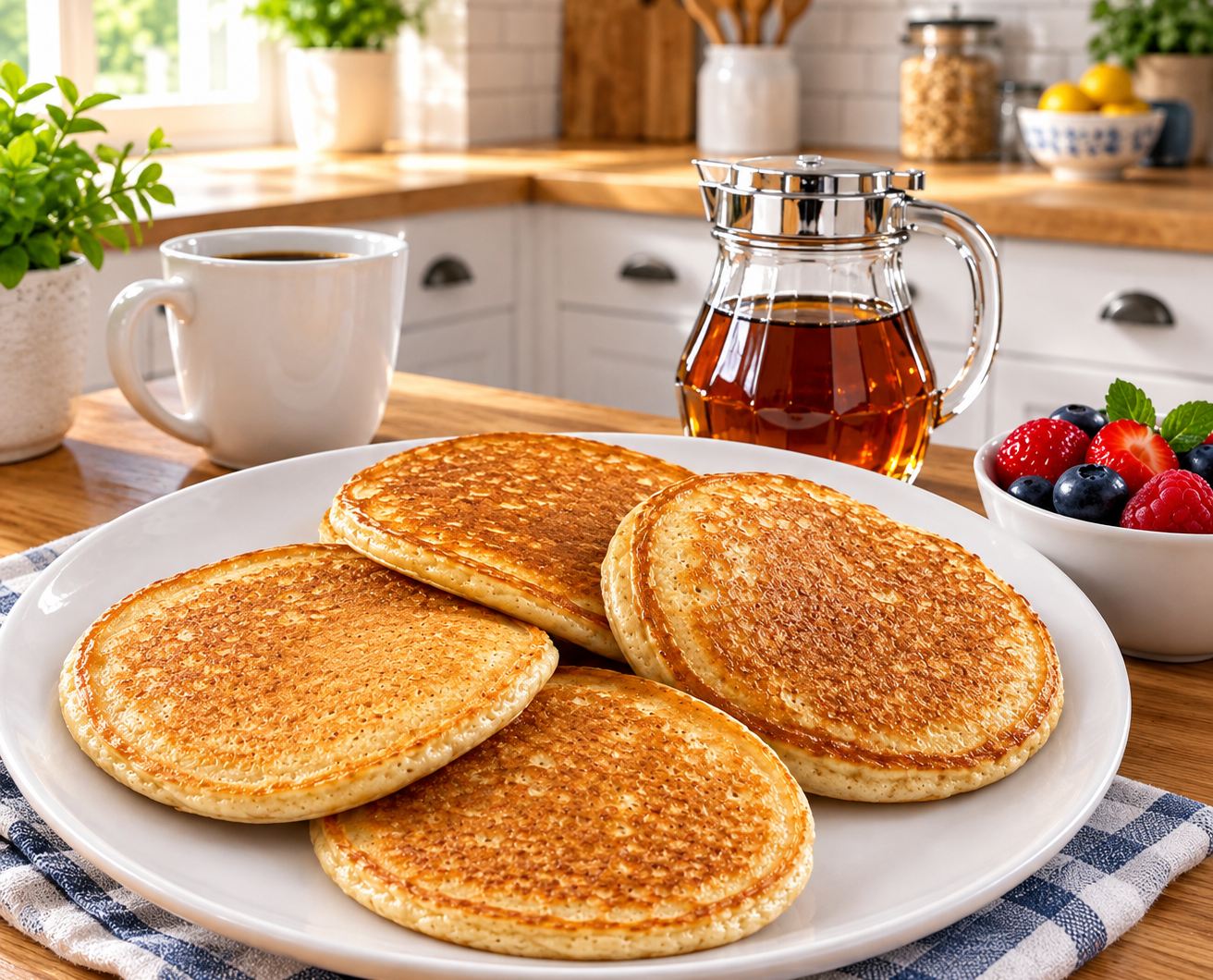
Allowing the batter to rest, using fresh baking powder, and cooking the pancakes slowly all help create the best possible texture. The outside should develop a pleasant golden color, while the center remains tender and fully cooked. When properly prepared, they hold together well enough for stacking while remaining soft enough to cut easily with a fork.
Serving Gluten-Free Oat Pancakes
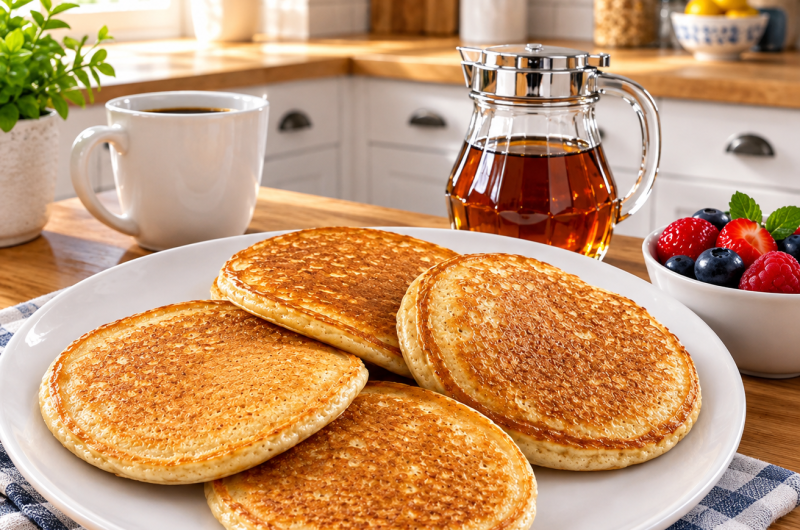
Freshly cooked oat flour pancakes can be served in many of the same ways as traditional pancakes. Maple syrup provides classic sweetness, while fresh raspberries, strawberries, or blackberries add color and fruit flavor. Jam is another simple choice, and whipped cream or a non-dairy whipped topping can make the pancakes feel more indulgent.
Because there is no added sugar in the pancake batter itself, the toppings largely determine how sweet the finished breakfast becomes. You can keep things simple with fresh fruit or add maple syrup for a sweeter stack. Serving the toppings separately is also useful when preparing breakfast for several people because everyone can finish their pancakes according to preference.
Are Oat Flour Pancakes a Healthy Breakfast?
Oats can be a nutritious component of breakfast because they provide carbohydrates, plant protein, minerals, and soluble fiber, including beta-glucan. These pancakes also contain eggs, which contribute additional protein, and the batter does not contain added sugar. Those qualities can make them a useful alternative to some heavily sweetened breakfast foods.
Still, whether a breakfast is “healthy” depends on the entire meal, serving size, individual dietary needs, and toppings. Pancakes covered with large amounts of syrup and sweetened whipped topping will have a different nutritional profile from the same pancakes served with fresh fruit. It is more accurate to view these as oat-based pancakes that can fit into a balanced breakfast.
Dairy-Free Oatmeal Pancakes
These pancakes use almond milk instead of dairy milk, so the recipe itself is dairy-free when the cooking fat and toppings are also dairy-free. This makes the pancakes suitable for people who avoid dairy or simply prefer plant-based milk in their breakfast recipes. The eggs remain part of the recipe, so these pancakes are not vegan.
When serving the pancakes, remember that toppings can change their dairy-free status. Non-dairy whipped topping can be used instead of conventional whipped cream if necessary. Similarly, check any butter or spread used for greasing the pan to make sure it matches your dietary requirements.
Making the Pancakes Ahead
Oat flour pancakes can be prepared in advance when you want a quicker breakfast during the week. Once cooked, allow the pancakes to cool before transferring them to an airtight container. They can be kept in the refrigerator for approximately five days, making it possible to cook a batch ahead rather than preparing fresh batter every morning.
When reheating refrigerated pancakes, warm only the amount you plan to eat. A toaster oven or microwave can be used depending on the texture you prefer and the equipment available. Reheating gently is generally sufficient because the pancakes are already fully cooked and only need to be brought back to a pleasant serving temperature.
How to Freeze Oatmeal Pancakes
Freezing is another practical option for storing these gluten-free oat pancakes. After the pancakes have completely cooled, arrange them with wax paper between individual pancakes to prevent them from sticking together. Place the separated pancakes in an airtight freezer-safe container and store them frozen for approximately two to three weeks.
They can be thawed on the kitchen counter until they reach room temperature or left to thaw ahead of time. For faster preparation, warm frozen or partially thawed pancakes in a toaster oven or use the defrost setting on a microwave. Once warmed, add your preferred fresh fruit, syrup, jam, or other toppings immediately before serving.
Notes for the Best Gluten-Free Oat Pancakes
Use Rolled Oats Rather Than Quick Oats
Rolled oats are the preferred choice because they can be ground into homemade oat flour while maintaining the consistency needed for this recipe. Quick oats have already been processed more extensively and may absorb liquid differently, potentially making the pancake mixture softer or mushier than intended.
If the pancakes must be gluten-free, choose certified gluten-free rolled oats. This is especially important for people with celiac disease or those who need strict gluten avoidance, since standard oats may experience cross-contact with gluten-containing grains during agricultural or manufacturing processes.
Let the Batter Thicken Before Cooking
Do not judge the pancake batter immediately after adding the almond milk and eggs. The ground oats need time to absorb liquid. Resting the mixture for five to eight minutes produces a thicker consistency that is easier to portion and better suited to cooking small, structured pancakes.
While the batter rests, warm the pan over low-medium heat. This makes efficient use of the waiting time and helps ensure the pan is evenly heated before cooking begins. Once rested, the batter should resemble a thick cake batter rather than a thin, rapidly flowing pancake mixture.
Keep the Pancakes Relatively Small
Using approximately two to three tablespoons of batter per pancake makes these thick oat pancakes easier to cook and flip. Large pancakes can be more difficult to handle because the center takes longer to set while the outside continues browning.
Small pancakes also allow better control over doneness. Cook for approximately two to three minutes per side, watching the surface and edges rather than relying only on the clock. When the pancake is golden and stable enough to turn without breaking, gently flip it and finish cooking the opposite side.
Adjust the Heat When Necessary
Start with low-medium heat and pay attention as each batch cooks. If the pancakes become dark too quickly, lower the temperature. The thick oat batter needs enough cooking time for the center to set, so excessive heat can produce a browned exterior while leaving the inside undercooked.
This becomes especially important when preparing the full batch because the pan continues retaining heat between rounds. Small temperature adjustments throughout cooking are normal and can produce more consistent results than leaving the stove at exactly the same setting from beginning to end.
An Easy Oat Pancake Recipe for Busy Mornings
These easy gluten-free oat pancakes show that a homemade pancake breakfast does not require traditional flour or a lengthy ingredient list. Rolled oats become homemade oat flour in a blender, while almond milk, eggs, baking powder, cinnamon, nutmeg, and salt turn that flour into a simple, naturally unsweetened pancake batter.
The key is to respect the characteristics of oat flour rather than expecting it to behave exactly like wheat flour. Give the batter several minutes to thicken, keep the pancakes relatively small, and cook them patiently over low-medium heat. The finished result is a stack of hearty, golden oat flour pancakes that can be served immediately or stored for convenient breakfasts later in the week.
Easy Gluten-Free Oat Pancakes
Thick, hearty, and easy gluten-free oat pancakes made with rolled oats, almond milk, eggs, cinnamon, and nutmeg.
10
servings10
minutes50
minutes208
kcal1
hourIngredients
2 1/2 cups rolled oats
1/2 teaspoon nutmeg
1 teaspoon cinnamon
2 teaspoons baking powder
1/2 teaspoon salt
1 1/2 cups almond milk
2 eggs
Directions
- Add the rolled oats to a blender. Blend until they reach a fine, flour-like consistency. Transfer the oat flour to a mixing bowl.
- Add the nutmeg, cinnamon, baking powder, and salt. Stir until evenly combined.
- Pour in the almond milk and add the eggs. Mix until everything is well incorporated.
- Leave the batter to rest for 5–8 minutes. It should thicken to a consistency similar to thick cake batter.
- While the batter rests, place a pan over low-medium heat and allow it to warm.
- Lightly grease the heated pan with vegan butter.
- Spoon about 2–3 tablespoons of batter into the pan for each pancake.
- Cook for approximately 2–3 minutes, or until the underside is golden and the edges begin to set.
- Carefully flip each pancake. Cook the second side for another 2–3 minutes until golden and cooked through.
- Continue with the remaining batter. Reduce the heat slightly if the pancakes begin browning too quickly.
- Serve the pancakes warm with your preferred toppings, such as whipped cream, golden syrup, maple syrup, jam, or raspberries.
Nutrition Facts
10 servings per container
- Amount Per ServingCalories208
- % Daily Value *
- Total Fat
6g
8%
- Total Carbohydrate
32g
12%
- Protein 8g 16%
* The % Daily Value tells you how much a nutrient in a serving of food contributes to a daily diet. 2,000 calories a day is used for general nutrition advice.