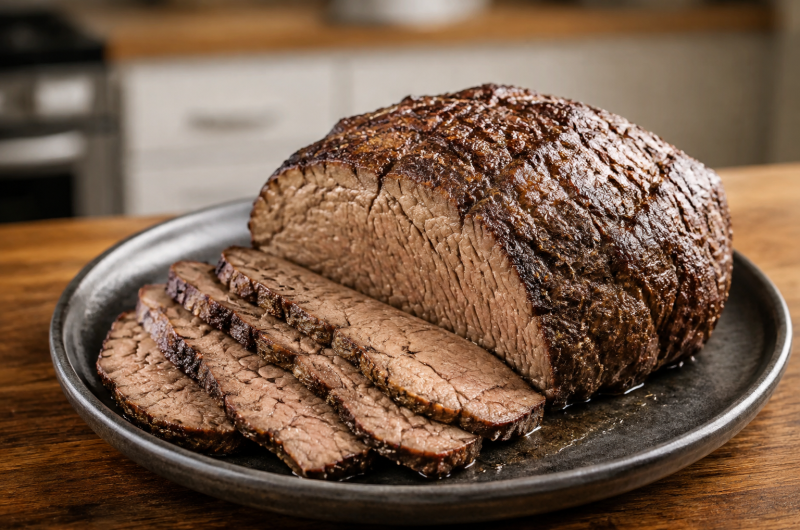
Air fryer chuck roast is a convenient beef dinner with a deeply seasoned crust and a juicy center. Instead of heating a full-size oven, this recipe uses concentrated circulating heat to cook a two-pound beef chuck roast. Olive oil, Worcestershire sauce, garlic, onion, thyme, rosemary, salt, and black pepper create a bold, savory coating using simple ingredients commonly available in the kitchen.
This easy air fryer roast beef recipe begins at a high temperature to brown the outside. The roast is then flipped and cooked at a lower temperature until it reaches the recommended internal temperature. A final resting period allows the juices to settle inside the meat before slicing. The complete method is straightforward enough for a weeknight dinner but flavorful enough for a special family meal.
Why Cook Chuck Roast in an Air Fryer?
An air fryer circulates hot air closely around the beef, producing efficient cooking and concentrated surface browning. The initial 390°F temperature creates a flavorful outer crust, while the second stage at 320°F cooks the center more gently. This two-temperature technique reduces the possibility of burning the seasoning before the roast reaches the desired internal temperature.
Using an air fryer can also be practical when you do not want to heat a conventional oven. The appliance usually preheats quickly, and its compact cooking chamber surrounds the meat with moving heat. The process is particularly convenient for a smaller two-pound chuck roast that fits comfortably inside the basket without touching the heating element or blocking essential airflow.
Understanding Beef Chuck Roast
Chuck roast comes from the shoulder area of the animal. It has a rich beef flavor and contains connective tissue that responds particularly well to slow, moist cooking. In this air fryer method, it is cooked more like roast beef and sliced against the grain. The result will differ from a traditional braised pot roast, which normally cooks for several hours until it becomes fall-apart tender.
Because this recipe cooks the beef to 145°F, the meat may have a firmer, steak-like texture rather than a shreddable consistency. The word “tender” therefore depends on proper slicing and the individual cut. Choosing a roast with moderate marbling, letting it rest, and cutting thin slices across the grain will make the finished beef easier and more enjoyable to eat.
Selecting the Right Roast
Choose a two-pound chuck roast with an even thickness so it cooks as consistently as possible. A roast that is extremely thick at one end and thin at the other may develop uneven doneness. Look for visible marbling throughout the beef because those small lines of fat can contribute moisture and flavor as the roast cooks.
The roast must fit safely inside the air fryer basket. Leave enough clearance around the beef for air to move, and make sure it cannot touch the heating element. Air fryer dimensions vary considerably, so check the appliance capacity before beginning. If the roast is too large, do not force it into a basket that cannot accommodate it safely.
Bringing the Beef to the Right Condition
Remove the chuck roast from its packaging and pat the exterior dry with paper towels. A dry surface accepts the oil mixture and seasonings more evenly. Excess moisture can dilute the coating and interfere with browning. There is no need to rinse raw beef, as rinsing can spread droplets containing raw meat juices around the sink and nearby surfaces.
The recipe does not require bringing the roast completely to room temperature. However, allowing it to stand briefly while the air fryer preheats and the seasonings are prepared can remove some of the refrigerator chill. Keep food safety in mind and avoid leaving raw beef unrefrigerated for an extended period, particularly in a warm kitchen.
Preparing the Air Fryer
Line the air fryer as directed with aluminum foil, or remove the grill plate so the roast can sit in its cooking juices. The foil must not interfere with safe airflow or come close to the heating element. Because appliance designs differ, consult the manufacturer’s directions to confirm whether foil is permitted in the specific air fryer model.
Preheat the air fryer to 390°F before adding the meat. Preheating ensures that the outer surface immediately encounters strong heat, helping the seasoning develop better color and flavor. Placing the roast in a cold appliance would increase the warming period and could make the cooking time less predictable, especially when trying to achieve a particular internal temperature.
Making the Oil and Worcestershire Mixture
Combine one tablespoon of olive oil with half a tablespoon of Worcestershire sauce in a small bowl. Olive oil helps the spice mixture stick to the beef and supports browning. Worcestershire sauce contributes savory depth, acidity, and a complex umami flavor that complements the natural richness of chuck roast without requiring a complicated marinade or an extended marinating period.
Stir the two liquids until they are reasonably blended. They may not become completely uniform, but they should be mixed enough to distribute over the meat. Apply the mixture across the top, bottom, and sides of the roast. A thin, even coating is preferable to allowing most of the liquid to collect in one area.
Preparing the Chuck Roast Seasoning
In a separate bowl, combine kosher salt, garlic powder, onion powder, dried thyme, dried rosemary, and black pepper. Mixing these dry ingredients before applying them prevents one section of the beef from receiving too much salt or garlic. It also distributes the smaller quantities of herbs and pepper more evenly over the roast.
Garlic and onion powders build a strong savory foundation, while thyme and rosemary add familiar roast beef aromas. Black pepper contributes gentle heat, and kosher salt strengthens the overall flavor. The blend contains no complicated ingredients, yet it creates a well-rounded herb crust that pairs naturally with potatoes, roasted vegetables, green beans, carrots, or a fresh salad.
Seasoning the Roast Evenly
After applying the olive oil and Worcestershire mixture, sprinkle the dry seasoning blend over every surface. Use clean hands to press the spices gently into the meat. Do not rub so aggressively that the coating falls away. Covering the sides as well as the broad upper surfaces ensures that every slice carries some of the herb and garlic flavor.
Once the raw meat has been handled, wash your hands and clean any utensils or surfaces that touched it. Use a separate clean plate for the cooked roast rather than returning it to the plate that held the uncooked beef. Simple kitchen hygiene prevents raw meat juices from contacting ready-to-eat foods during preparation and serving.
Creating a Flavorful Outer Crust
Place the seasoned roast in the preheated air fryer and cook it at 390°F for 15 minutes. This initial blast of strong heat promotes browning and helps set the seasoning coating. The outside may become dark and aromatic, but the center will still require additional time at the lower temperature to cook evenly.
Avoid opening the air fryer repeatedly during the first stage, as doing so releases heat and interrupts browning. One check may be appropriate if the roast sits unusually close to the heating element or the appliance tends to cook aggressively. Otherwise, allow the high-temperature stage to finish before flipping and reducing the heat.
Finishing the Roast at a Lower Temperature
After 15 minutes, carefully flip the chuck roast using sturdy tongs. Lower the air fryer temperature to 320°F and continue cooking for another 45 to 60 minutes. Flipping exposes the second side to the hot surface and promotes more balanced cooking. Lowering the temperature protects the herb coating while allowing heat to move toward the center.
The second cooking stage varies because chuck roasts differ in thickness, shape, fat content, and starting temperature. Air fryer models also heat differently. Begin checking the internal temperature near the lower end of the suggested range. Continue cooking when necessary, but avoid relying solely on the clock because time cannot confirm whether the center is properly cooked.
Checking the Internal Temperature
Insert an instant-read meat thermometer into the thickest section of the roast, avoiding large areas of fat. The supplied recipe uses 145°F as the target internal temperature. Check more than one area when the roast has an uneven shape. Once the center reaches the target, remove the beef promptly to prevent unnecessary overcooking.
A thermometer is more reliable than judging doneness by exterior color or cutting the roast open. The outside may look fully browned while the center remains below the target temperature. Cutting into the meat during cooking also releases juices. A quick thermometer reading provides better information while leaving the roast intact for its essential resting period.
Understanding the Expected Texture
Traditional chuck roast is often cooked low and slow with liquid until its collagen breaks down and the meat can be pulled apart. This air fryer version follows a different method and reaches 145°F, so it should be sliced like roast beef. It will not have the same fall-apart texture as a pot roast cooked for several hours.
For the most tender eating experience, cut the rested beef into thin slices against the grain. Chuck roast contains visible muscle fibers, and cutting across those fibers shortens them. Slicing parallel to the grain produces longer fibers that can feel chewy. Paying attention to the grain is therefore especially important for this faster, dry-heat preparation.
Resting the Air Fryer Chuck Roast
Transfer the cooked roast to a clean cutting board and leave it undisturbed for at least 10 minutes. The source guidance also permits a rest of up to 20 minutes. Resting gives the internal juices time to settle instead of immediately flowing onto the cutting board when the beef is sliced.
Covering the roast very loosely with foil can help retain warmth, but avoid wrapping it tightly. Trapped steam may soften the browned outer crust. The roast’s internal temperature can rise slightly during the first part of the resting period, a process known as carryover cooking. This is another reason to remove it promptly after reaching the desired reading.
How to Slice Chuck Roast
Before cutting, examine the roast to identify the direction of its muscle fibers. Position a sharp carving knife across those lines and cut thin, even slices. Some chuck roasts contain muscles running in different directions, so it may be helpful to separate the roast naturally and adjust the cutting angle for each section.
Serve the slices shortly after carving so they remain warm and juicy. Spoon a small amount of the cooking juices over the beef if desired, taking care not to wash away the seasoning crust. Thin slices are also convenient for sandwiches, wraps, grain bowls, or salads when using leftover air fryer chuck roast.
Side Dishes for Air Fryer Roast Beef
Air fryer chuck roast pairs well with mashed potatoes, roasted potatoes, potato wedges, green beans, carrots, Brussels sprouts, broccoli, or a mixed vegetable medley. A crisp green salad can provide a fresh contrast to the rich beef. Bread or dinner rolls are also useful for serving with the flavorful juices collected during cooking.
For a classic roast dinner, serve the beef with potatoes, cooked vegetables, and gravy. For a lighter meal, combine thin slices with salad and a simple vegetable side. Because the roast contains rosemary, thyme, garlic, and onion, it complements many familiar side dishes without requiring additional strong seasoning or an elaborate sauce.
Making Gravy from the Drippings
The cooking juices may be used as the foundation for gravy. Transfer the drippings carefully and combine them with broth and a thickener such as flour or cornstarch. The exact ingredients and quantities are not included in the original recipe, so gravy remains an optional serving idea rather than part of the formal recipe card.
Taste the drippings before adding extra salt because the roast already contains kosher salt and Worcestershire sauce. The concentrated liquid may be quite savory. Prepare any gravy in a saucepan where its thickness can be controlled, and bring mixtures containing flour or cornstarch to the appropriate cooking temperature before serving.
Optional Flavor Variations
Smoked paprika may be added for a deeper, smoky character, while a small amount of brown sugar can create a sweet and savory crust. Avocado oil can replace olive oil, and balsamic vinegar can replace Worcestershire sauce for additional tang. A prepared steak seasoning can also simplify the spice mixture when time is limited.
These suggestions are optional variations and are not included in the original recipe card. The ingredient list below remains unchanged as requested. Any substitution may affect flavor, sodium, browning, or nutritional information, so cooks with specific dietary needs should evaluate the chosen ingredients rather than assuming that every variation produces an identical result.
Storing Leftover Chuck Roast
Allow leftover roast to cool, then transfer it to an airtight container and refrigerate it for up to three days. Store the meat with a small amount of its cooking juices when available, as the liquid can help protect the slices against drying. Prompt refrigeration is important, so do not leave the cooked beef at room temperature for an extended period.
For longer storage, wrap the cooled beef carefully and freeze it for up to three months, as suggested in the source information. Dividing the meat into meal-sized portions makes thawing more convenient. Label the package with the date, and thaw frozen roast safely in the refrigerator before reheating it.
Reheating Without Drying the Beef
Reheat refrigerated chuck roast in the air fryer at 350°F for five to seven minutes. Arrange the slices or remaining portion so they heat evenly, and check early when reheating thin pieces. Because the meat is already cooked, extended exposure to dry heat can reduce its moisture and make it firmer.
A small foil packet may help retain moisture if the appliance manufacturer allows foil, although it can soften the crust. Alternatively, reheat the slices with a little reserved cooking liquid using another suitable method. Heat leftovers until properly warmed, and avoid repeatedly cooling and reheating the same portion.
Common Mistakes to Avoid
Skipping preheating may weaken initial browning, while cooking at 390°F for the entire period could darken the crust before the center reaches the target temperature. Failing to flip the roast may also produce uneven browning. The two-stage temperature method should be followed carefully for the most balanced exterior and interior.
Another common error is relying only on cooking time. Roast thickness and air fryer performance can vary, so a thermometer is necessary. Slicing immediately after cooking releases moisture, and cutting with the grain makes the fibers feel tougher. Resting for at least 10 minutes and slicing thinly against the grain will improve the finished result.
Notes for a Successful Air Fryer Chuck Roast
Use a roast that fits safely in the appliance, preheat fully, and coat the beef evenly with both seasoning mixtures. Cook for 15 minutes at 390°F, flip it, and then continue at 320°F. Begin checking the thickest portion with a thermometer before the maximum cooking time has elapsed.
Remember that this method produces sliceable roast beef rather than a shreddable pot roast. Remove the meat when the internal temperature reaches 145°F, rest it for 10 to 20 minutes, and slice it thinly against the grain. These final steps are essential for preserving moisture and achieving the best possible texture from a quickly air-fried chuck roast.
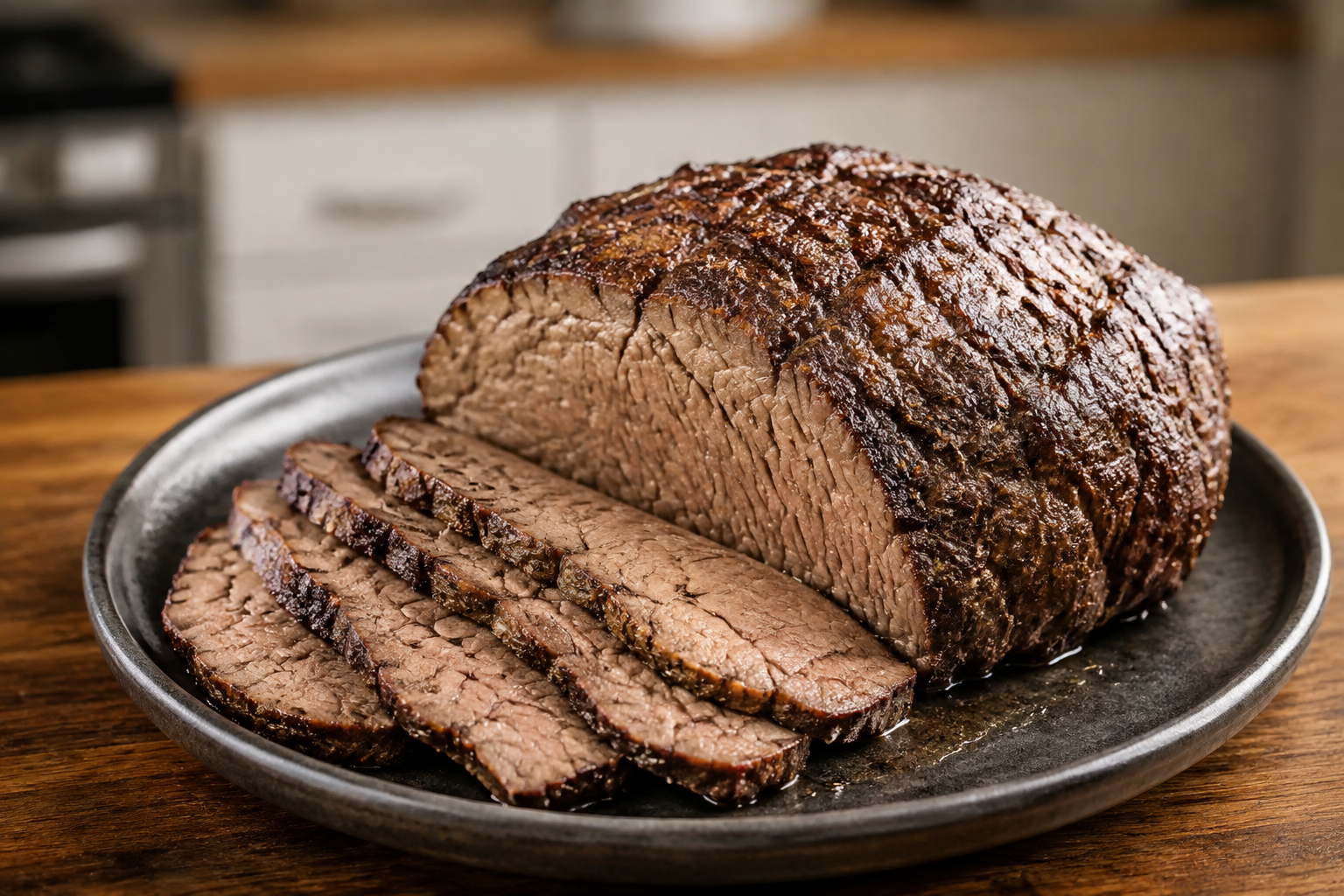
Air Fryer Chuck Roast
A savory two-pound chuck roast with a garlic and herb crust, cooked in the air fryer and sliced for an easy roast beef dinner.
4
servings10
minutes1
hour15
minutes330
kcal10
minutes1
hour35
minutesIngredients
2 pounds beef chuck roast
1 tablespoon olive oil
½ tablespoon Worcestershire sauce
1½ teaspoons kosher salt
1½ teaspoons garlic powder
1 teaspoon onion powder
1 teaspoon dried thyme
1 teaspoon dried rosemary
1 teaspoon black pepper
Directions
- Preheat
Line the air fryer with foil or remove the grill plate.
Preheat to 390°F. - Season
Mix the olive oil and Worcestershire sauce.
Combine all dry seasonings separately.
Coat the roast with the oil mixture.
Rub the seasonings over the beef. - Air Fry
Cook at 390°F for 15 minutes.
Flip the roast.
Reduce the heat to 320°F.
Cook for another 45–60 minutes.
Remove when the center reaches 145°F. - Rest and Serve
Rest the roast for 10 minutes.
Slice thinly against the grain.
Serve with preferred side dishes.
Nutrition Facts
4 servings per container
- Amount Per ServingCalories330
- % Daily Value *
- Total Fat
23g
30%
- Total Carbohydrate
1g
1%
- Protein 29g 58%
* The % Daily Value tells you how much a nutrient in a serving of food contributes to a daily diet. 2,000 calories a day is used for general nutrition advice.