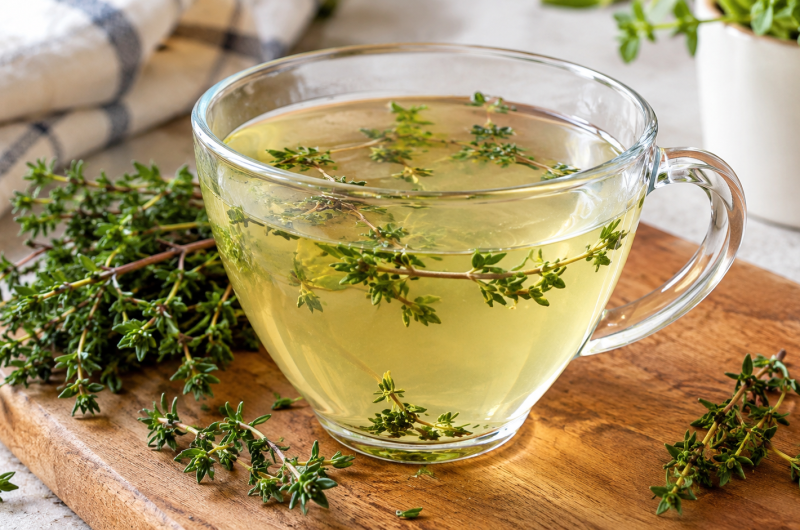
Thyme tea is a simple herbal drink made by steeping fresh or dried thyme in hot water. This homemade thyme tea recipe requires only two main ingredients and takes approximately six minutes to prepare when using the shortest recommended steeping time. The finished tea has a pleasant herbal aroma, a slightly earthy flavor, and a gentle savory note that makes it different from many traditional herbal teas.
Learning how to make thyme tea at home is easy because the preparation requires very little equipment. You can use fresh thyme sprigs from a garden or dried thyme from your kitchen cupboard. Both options produce a flavorful herbal infusion, although the strength and aroma may vary depending on the type and quantity of thyme used.
Thyme is widely recognized as a culinary herb used in soups, roasted vegetables, sauces, and savory dishes. However, its aromatic leaves can also be steeped in freshly boiled water to prepare a naturally caffeine-free herbal beverage. The tea can be enjoyed warm or chilled, and optional additions such as lemon or honey can be used to adjust the flavor.
What Is Thyme Tea?
Thyme tea is an herbal infusion prepared by soaking thyme leaves or sprigs in hot water. Unlike traditional black or green tea, it does not come from the tea plant, Camellia sinensis. Instead, it uses thyme, an aromatic herb belonging to the mint family, to produce a naturally caffeine-free drink.
The flavor of thyme tea is distinctive. It combines earthy, slightly woody, and mildly peppery notes with a pleasant herbal fragrance. Fresh thyme often produces a brighter taste, while dried thyme can create a stronger infusion because its flavor becomes concentrated during drying. The final taste also depends on the steeping time.
Thyme tea can be prepared using whole sprigs, loose dried leaves, or dried thyme sprigs. The herb is placed in a cup or teapot and covered with freshly boiled water. After steeping, the leaves are strained out, leaving a clear herbal drink that can be served immediately.
Why You Will Love This Homemade Thyme Tea
One of the main advantages of this easy thyme tea recipe is its simplicity. The basic preparation requires only thyme and water, making it convenient for anyone who enjoys homemade herbal drinks. There is no need for special tea blends, complicated equipment, or additional ingredients to prepare a flavorful cup.
Another benefit is the flexibility of using either fresh or dried thyme. Fresh sprigs can be collected from a garden or purchased from a grocery store, while dried thyme is easy to keep in a kitchen cupboard. Both forms work well, allowing you to prepare the tea throughout the year.
Thyme tea also offers an alternative to sweeter fruit-based herbal drinks. Its savory, aromatic flavor makes it suitable for people who enjoy earthy herbal infusions. It can be served without sweetener or customized with optional ingredients such as lemon, honey, mint, or ginger.
What Does Thyme Tea Taste Like?
Thyme tea has a distinctive herbal flavor that is slightly earthy, mildly peppery, and pleasantly aromatic. Its taste resembles the fragrance of fresh thyme used in cooking, although steeping the herb in water creates a lighter flavor than adding it directly to savory dishes.
Fresh thyme generally produces a brighter, greener flavor. The leaves release their natural aromatic compounds into the hot water, creating a fragrant infusion. Dried thyme may produce a more concentrated taste, particularly when larger quantities are used or the tea is steeped for an extended period.
The flavor can become stronger and slightly bitter when the herb remains in hot water for too long. For a milder drink, the original recipe recommends using a smaller amount of dried thyme and steeping it for approximately five minutes. Additional water can be added if the tea tastes too strong.
Ingredients for Homemade Thyme Tea
Fresh Thyme Sprigs
Fresh thyme is a convenient option for making herbal tea, especially when the herb is available from a home garden. The original recipe uses approximately six fresh thyme sprigs for two cups of water. The sprigs can be placed directly into the teapot without removing the individual leaves.
Fresh thyme provides a pleasant herbal fragrance and a relatively bright flavor. Choose healthy-looking sprigs without yellowing or damaged leaves. Rinse them thoroughly before use to remove any dirt or debris. The whole sprigs can be strained out easily after steeping, making preparation straightforward.
Dried Thyme
Dried thyme is an equally suitable ingredient for preparing thyme tea. The original recipe uses two teaspoons of dried thyme for two cups of freshly boiled water. Dried thyme is convenient because it can be stored for longer periods than fresh herbs when kept in suitable conditions.
The flavor of dried thyme may be stronger than fresh thyme, so accurate measuring helps prevent an overly concentrated infusion. Use plain culinary dried thyme without added salt or seasoning blends. A tea strainer or fine-mesh sieve is helpful for removing the small dried leaves after steeping.
Freshly Boiled Filtered Water
Two cups of freshly boiled filtered water form the base of this herbal tea. Hot water extracts the flavor and aroma from the thyme leaves, creating the finished infusion. The original recipe recommends using freshly boiled water and covering the tea while it steeps.
Using clean, pleasant-tasting water helps maintain the natural flavor of the herb. If your household water is safe to drink, it can be used according to personal preference. The tea should be steeped in a heat-safe cup, teapot, or suitable container to prevent damage from the hot water.
Fresh Thyme vs. Dried Thyme for Tea
Fresh and dried thyme can both be used to prepare homemade thyme tea, but they produce slightly different results. Fresh thyme often has a brighter herbal aroma, while dried thyme can create a more concentrated flavor. The difference comes partly from the moisture content and the way the herb changes during drying.
Fresh thyme is particularly convenient for people who grow herbs at home. It can be harvested when needed, rinsed, and placed directly into a teapot. Whole sprigs are also easy to remove after steeping, reducing the need for additional straining equipment.
Dried thyme is more practical for long-term storage and year-round use. It occupies little space and can be measured quickly. The original recipe provides quantities for both versions, allowing you to choose whichever form is available without changing the basic preparation method.
Traditional Uses and Potential Benefits of Thyme Tea
Thyme has a long history of culinary and traditional herbal use. It contains aromatic compounds, including thymol and carvacrol, that have been studied for various biological properties. However, research involving concentrated thyme extracts or essential oils should not be treated as proof that ordinary thyme tea produces the same effects.
Thyme tea is often discussed in connection with coughs, colds, throat discomfort, and digestion. These are traditional uses, and some thyme-containing herbal preparations have been studied for respiratory symptoms. Evidence for homemade thyme tea itself remains limited, so it should not be described as a proven treatment for illness.
A warm cup of thyme tea may feel soothing when the throat is irritated, much like other warm, nonalcoholic beverages. Its herbal aroma can also make it pleasant to drink during colder weather. However, it does not cure viral infections or replace medical care for persistent respiratory symptoms.
Thyme Tea for Coughs and Sore Throats
Thyme is traditionally associated with herbal preparations for coughs and throat discomfort. Certain thyme-based medicinal products have been studied for respiratory symptoms, but those preparations may contain standardized extracts or additional ingredients. Homemade thyme tea should not be assumed to provide the same effects.
Drinking warm liquids can temporarily soothe an irritated throat and help maintain fluid intake during a cold. Thyme tea may be enjoyable for this purpose because of its pleasant aroma and warmth. Optional honey can also improve the flavor, although honey should never be given to children younger than one year.
If a cough is severe, lasts for an extended period, or occurs with breathing difficulty, chest pain, or persistent fever, medical advice is important. Herbal tea should be considered a comforting beverage rather than a replacement for appropriate treatment.
Thyme Tea and Digestion
Thyme has traditionally been used in herbal preparations associated with digestion. Its aromatic compounds contribute to the flavor of many savory foods, and thyme tea is sometimes consumed after meals. However, strong clinical evidence that homemade thyme tea reliably treats digestive conditions is limited.
The tea can be enjoyed as a warm, caffeine-free beverage after eating. Some people may find warm herbal drinks pleasant, particularly when they prefer an alternative to coffee or caffeinated tea. Individual tolerance varies, and the drink should not be expected to relieve persistent digestive symptoms.
People with ongoing abdominal pain, severe bloating, vomiting, or other significant digestive problems should seek appropriate medical evaluation rather than relying on herbal tea. The recipe is best presented as a flavorful drink with traditional uses, not as a medical remedy.
Is Thyme Tea Caffeine-Free?
Plain thyme tea is naturally caffeine-free because it is prepared from thyme rather than leaves from the traditional tea plant. This makes it an option for people who prefer herbal drinks without caffeine. The basic recipe contains only thyme and water, so no caffeine-containing ingredients are required.
The absence of caffeine does not automatically mean that thyme tea improves sleep or treats anxiety. It simply means that the drink does not contain the caffeine naturally present in black, green, or white tea. Its warm temperature and herbal aroma may make it pleasant to enjoy during a quiet evening.
If thyme is combined with green tea, black tea, or white tea, the resulting beverage will contain caffeine. These combinations are optional variations mentioned in the original source and should be distinguished from the plain thyme tea recipe.
How to Store Homemade Thyme Tea
Thyme tea is best enjoyed freshly prepared, when its aroma and flavor are most noticeable. If you make more than you need, remove the thyme leaves or sprigs and allow the liquid to cool briefly before transferring it to a clean, airtight container.
Refrigerate leftover tea promptly rather than leaving it at room temperature for long periods. The original source recommends refrigeration but does not specify a precise refrigerated shelf life. For best quality, prepare modest quantities and consume leftovers relatively soon.
The tea can also be frozen in ice cube trays, as suggested in the original recipe. Once frozen, the cubes can be transferred to a suitable freezer bag or container. This method allows small portions to be used later without preparing a new batch.
How to Serve Thyme Tea Hot or Cold
Thyme tea is commonly served warm immediately after steeping. Its herbal fragrance is particularly noticeable when the drink is hot, making it a pleasant choice during cooler weather. The tea can be poured into ordinary cups after straining and enjoyed without any additional ingredients.
For a cold version, prepare the tea as directed, remove the herbs, and refrigerate the infusion until chilled. It can then be served as a refreshing herbal drink. Frozen thyme tea cubes can also be used to chill the beverage without introducing plain water.
If reheating previously prepared tea, warm it gently in a saucepan over low heat. Avoid unnecessary prolonged boiling, which may change the flavor. Whether served hot or cold, the basic thyme and water combination remains the same.
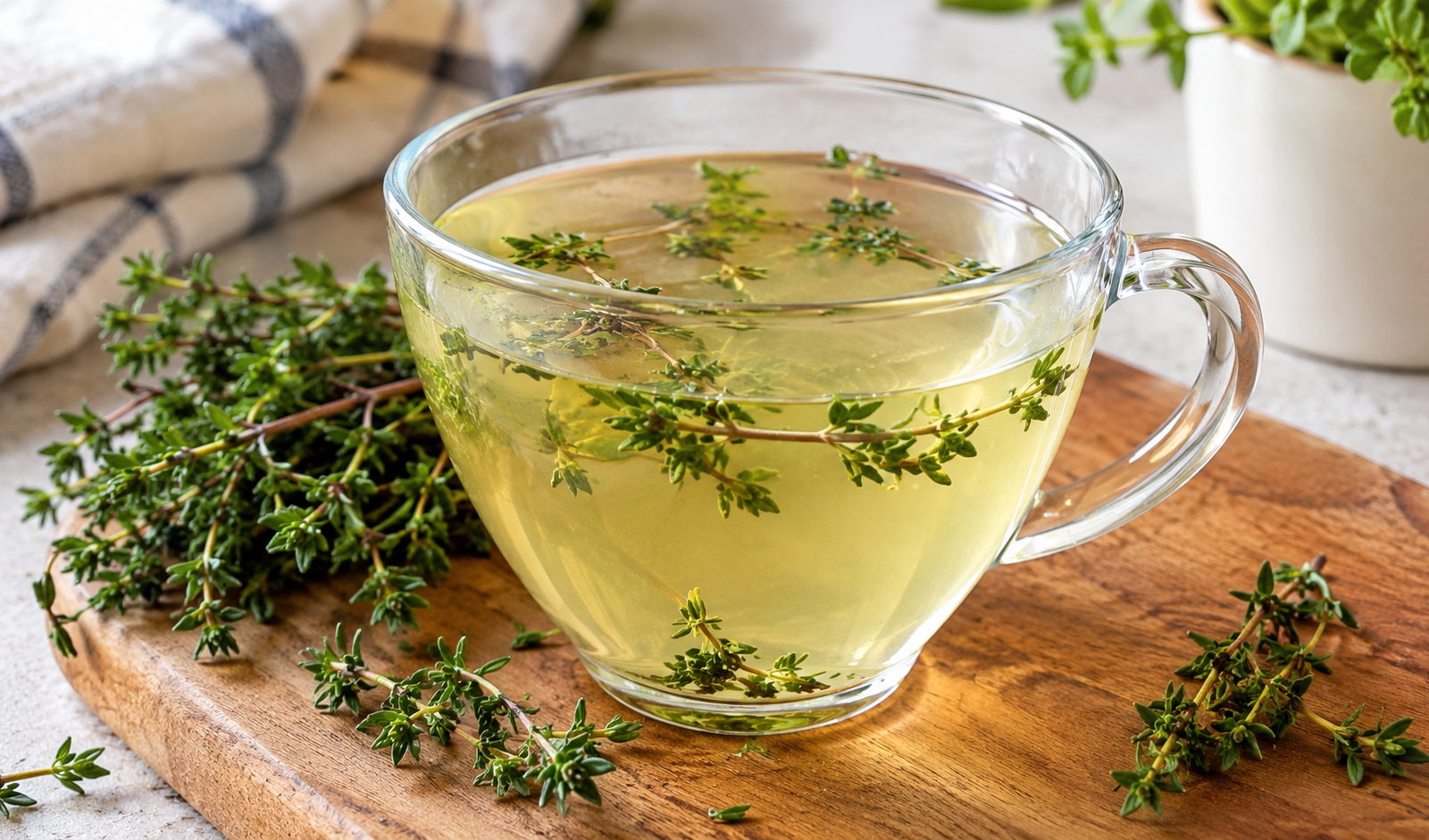
Healthy Thyme Tea Recipe
A simple, naturally caffeine-free herbal tea made by steeping fresh thyme sprigs or dried thyme in freshly boiled water. This aromatic drink can be served warm or chilled.
2
servings1
minute5
minutes06
kcal6
minutesIngredients
2 teaspoons dried thyme or approximately 6 fresh thyme sprigs
2 cups freshly boiled filtered water
Directions
- Using Fresh Thyme
- Select approximately 6 fresh thyme sprigs.
- Rinse the sprigs thoroughly under running water.
- Place them in a heat-safe teapot or container.
- Pour 2 cups of freshly boiled filtered water over the thyme.
- Cover and steep for at least 5 minutes, or longer for a stronger flavor.
- Remove the sprigs, strain if necessary, and serve.
- Using Dried Thyme
- Measure 2 teaspoons of dried thyme.
- Place the thyme in a teapot or heat-safe container.
- Pour 2 cups of freshly boiled filtered water over the herb.
- Cover and steep for at least 5 minutes.
- Strain through a fine-mesh sieve or tea strainer.
- Serve warm or refrigerate for later.
Nutrition Facts
2 servings per container
- Amount Per ServingCalories06
- % Daily Value *
- Total Fat
0g
0%
- Total Carbohydrate
1g
1%
- Protein 0g 0%
* The % Daily Value tells you how much a nutrient in a serving of food contributes to a daily diet. 2,000 calories a day is used for general nutrition advice.