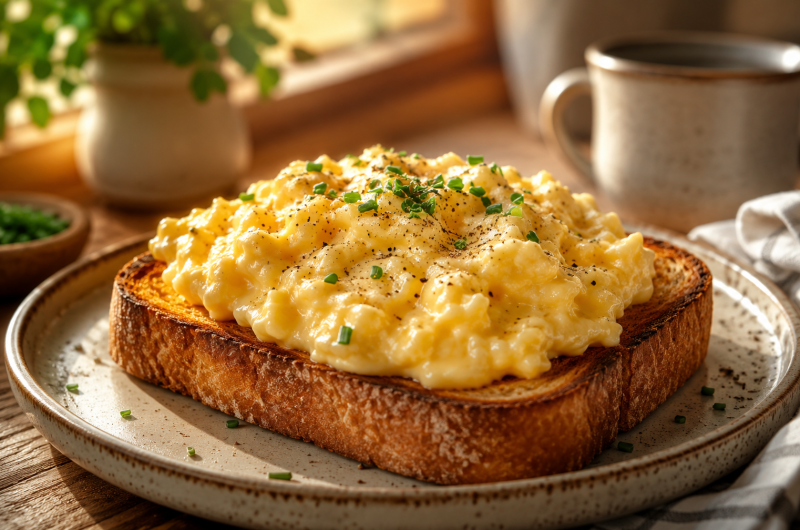
Scrambled eggs have remained one of the world’s most popular breakfast foods because they are simple, nutritious, and incredibly satisfying. When prepared correctly, they are soft, fluffy, moist, and rich in flavor, making them suitable for everything from a quick weekday breakfast to a relaxing weekend brunch. Although the recipe looks easy, achieving perfectly creamy scrambled eggs requires attention to a few important techniques. The right cooking temperature, proper whisking, and careful timing all play a major role in creating light and tender eggs instead of dry or rubbery ones. Whether you prefer using a traditional frying pan or an air fryer, this recipe helps you prepare delicious scrambled eggs with consistently excellent results.
What Makes This Scrambled Eggs Recipe Special
Many scrambled egg recipes rely on high heat to cook quickly, but rushing the process often produces tough, overcooked eggs. This recipe focuses on slow, gentle cooking that allows the eggs to develop soft curds while keeping plenty of moisture inside. A small amount of whole milk or heavy cream adds richness and creates an even creamier texture, while butter contributes a smooth finish and delicious flavor. Another advantage of this recipe is its flexibility. It includes both a classic stovetop method and an air fryer method, allowing you to choose whichever fits your cooking style, available equipment, or daily schedule.
Why You’ll Love These Soft and Fluffy Scrambled Eggs
This recipe combines convenience with excellent flavor, making it suitable for beginners and experienced home cooks alike. The ingredients are affordable, widely available, and require very little preparation. Since the cooking time is only a few minutes, you can prepare a satisfying breakfast even on busy mornings. The eggs are naturally high in protein and contain important vitamins and minerals that support a balanced diet. They can also be customized with herbs, cheese, cooked meats, or vegetables, allowing you to enjoy a different variation almost every day. Whether you’re preparing breakfast for yourself or feeding the entire family, this recipe delivers reliable results every time.
Choosing the Best Eggs for Maximum Flavor
Fresh eggs make a noticeable difference in both texture and taste. Their yolks remain firm, the whites stay thicker, and they produce softer, fluffier scrambled eggs after cooking. High-quality eggs also have a richer flavor and brighter color, giving the finished dish a more appealing appearance. Whenever possible, use fresh large eggs because they cook evenly and provide the ideal balance between yolk and white. Although older eggs can still be used, fresher eggs generally produce a smoother texture and more delicate curds that melt in your mouth.
How Milk or Heavy Cream Improves Texture
Adding a small amount of whole milk or heavy cream helps create the creamy consistency many people love in scrambled eggs. The extra moisture slows down protein coagulation during cooking, allowing the eggs to stay soft for longer instead of becoming dry. Heavy cream produces an especially rich and luxurious texture, while whole milk creates lighter eggs with a smooth finish. Since only a small amount is needed, the natural flavor of the eggs remains the highlight of the dish while gaining additional creaminess that enhances every bite.
The Importance of Butter in Scrambled Eggs
Butter contributes much more than flavor. As it melts into the eggs, it adds richness while helping prevent the mixture from sticking to the cooking surface. Its natural fats coat the egg proteins, contributing to a softer texture throughout the cooking process. The key is to melt the butter gently over low heat without allowing it to brown. Burnt butter can overpower the delicate flavor of the eggs, while gently melted butter creates the creamy finish that makes this breakfast recipe so enjoyable.
Simple Seasonings That Make a Big Difference
Sometimes the simplest ingredients produce the best flavor. Salt and black pepper enhance the natural richness of the eggs without overwhelming them. These classic seasonings create a balanced taste that pairs well with almost any breakfast side dish. Once the eggs are cooked, you can easily customize them further with chopped fresh herbs, shredded cheese, cooked bacon, diced ham, or cream cheese. These optional additions provide extra flavor and texture while allowing the recipe to suit different preferences and occasions.
Air Fryer or Pan: Which Method Should You Choose?
Both cooking methods produce delicious scrambled eggs, but each offers unique advantages. The stovetop method gives you complete control over texture because you can stir continuously and remove the eggs from the heat at exactly the right moment. This technique is ideal for people who enjoy traditional cooking and want complete control over the size of the curds. The air fryer method, on the other hand, is perfect for convenience. Once the egg mixture is placed inside the air fryer, very little attention is required except for one or two gentle stirs during cooking. This hands-off approach makes it an excellent choice for busy mornings or when preparing several breakfast items at once.
The Secret to Soft, Creamy Curds
The biggest difference between average scrambled eggs and exceptional scrambled eggs is cooking temperature. Gentle, low heat allows the egg proteins to cook slowly, creating moist and tender curds instead of dry, rubbery pieces. Stirring carefully with a silicone spatula helps move the cooked eggs from the edges toward the center, allowing uncooked egg to flow into the warm areas of the pan. This slow folding motion creates large, delicate curds while preserving moisture. Removing the eggs from the heat just before they appear completely finished is equally important because the remaining heat continues cooking them for another minute after they leave the pan.
Easy Ways to Customize Your Scrambled Eggs
One of the reasons scrambled eggs remain a favorite breakfast is their incredible versatility. The basic recipe is delicious on its own, but it also serves as the perfect foundation for countless flavor combinations. Cheese lovers can stir shredded cheddar, mozzarella, or Parmesan into the eggs just before they finish cooking for an extra creamy texture. Fresh herbs such as parsley, chives, dill, or basil add brightness and color without requiring additional preparation. If you want a heartier breakfast, mix in cooked bacon pieces, diced ham, or breakfast sausage. These simple additions allow you to create a new version every time while keeping the cooking process quick and uncomplicated.
Perfect Side Dishes to Serve with Scrambled Eggs
Soft scrambled eggs pair wonderfully with a wide variety of breakfast and brunch dishes. Toasted bread, bagels, English muffins, or buttery croissants provide a satisfying contrast to the creamy eggs. For a healthier meal, serve them alongside avocado slices, roasted tomatoes, sautéed spinach, mushrooms, or fresh fruit. Crispy hash browns, roasted potatoes, or sweet potato cubes create a more filling breakfast, while smoked salmon offers an elegant option for special occasions. Because scrambled eggs have a mild flavor, they complement both light and hearty side dishes, making them suitable for everyday meals and weekend gatherings alike.
Common Mistakes That Can Ruin Scrambled Eggs
Although scrambled eggs are simple to prepare, a few common mistakes can significantly affect their texture. Cooking over high heat is perhaps the biggest problem because it causes the proteins to tighten too quickly, resulting in dry and rubbery eggs. Overcooking is another frequent mistake since eggs continue to cook even after being removed from the heat. Insufficient whisking may produce uneven cooking and prevent the eggs from becoming fluffy. Starting with an overly hot skillet can also lead to uneven curds and sticking. Paying attention to these details helps ensure consistently creamy, tender scrambled eggs every time.
Helpful Tips for Consistently Creamy Eggs
Professional chefs often rely on a few simple techniques to achieve restaurant-quality scrambled eggs. Whisk the eggs thoroughly until the yolks and whites are completely combined and slightly frothy. Cook over low heat rather than rushing the process. Stir gently instead of constantly scrambling, allowing soft curds to form naturally. If you enjoy larger curds, stir less frequently; for smaller, creamier curds, stir more often. Heavy cream produces a richer result than milk, while adding a small amount of butter just before serving creates an extra silky finish. These small adjustments make a noticeable difference in both flavor and texture.
Air Fryer Scrambled Eggs: A Convenient Alternative
The air fryer has become one of the most popular kitchen appliances because it simplifies many everyday recipes, and scrambled eggs are no exception. Preparing eggs in an air fryer requires very little supervision compared to stovetop cooking. After whisking the ingredients together and pouring them into a greased oven-safe dish, the air fryer gently cooks the eggs while maintaining their moisture. Stirring once or twice during cooking ensures even texture and prevents overcooking around the edges. This method is particularly useful when preparing other breakfast foods at the same time, allowing you to multitask with ease.
Why Scrambled Eggs Are an Excellent Source of Nutrition
Eggs are naturally packed with nutrients that support a healthy diet. They provide high-quality protein containing all essential amino acids needed by the body. They are also an excellent source of vitamin B12, vitamin D, choline, selenium, and healthy fats. Choline plays an important role in brain function and normal cell activity, while protein helps maintain muscle health and keeps you feeling satisfied throughout the morning. Because scrambled eggs contain relatively few carbohydrates, they also fit well into low-carb and high-protein eating plans while providing long-lasting energy.
Storage and Reheating Guidelines
Although freshly cooked scrambled eggs always offer the best flavor and texture, leftovers can still be enjoyed later when stored correctly. Allow the eggs to cool before transferring them to an airtight container. Refrigerate them for up to three days. When reheating, use low microwave power or warm them gently in a nonstick skillet over low heat. High temperatures can quickly dry out the eggs and reduce their creamy consistency. Adding a small amount of butter during reheating can help restore some of their original richness and moisture.
Perfect for Busy Families and Meal Planning
This recipe is an excellent option for busy households because it combines speed, affordability, and nutrition. Since the ingredients are common pantry staples, there is no need for complicated shopping trips or specialty products. Both cooking methods take only a few minutes, making them ideal for hectic weekday mornings. Families can also prepare a larger batch to include in breakfast wraps, sandwiches, or meal-prep containers for quick lunches throughout the week. The flexibility of this recipe makes it one of the easiest ways to enjoy a wholesome homemade breakfast without spending much time in the kitchen.
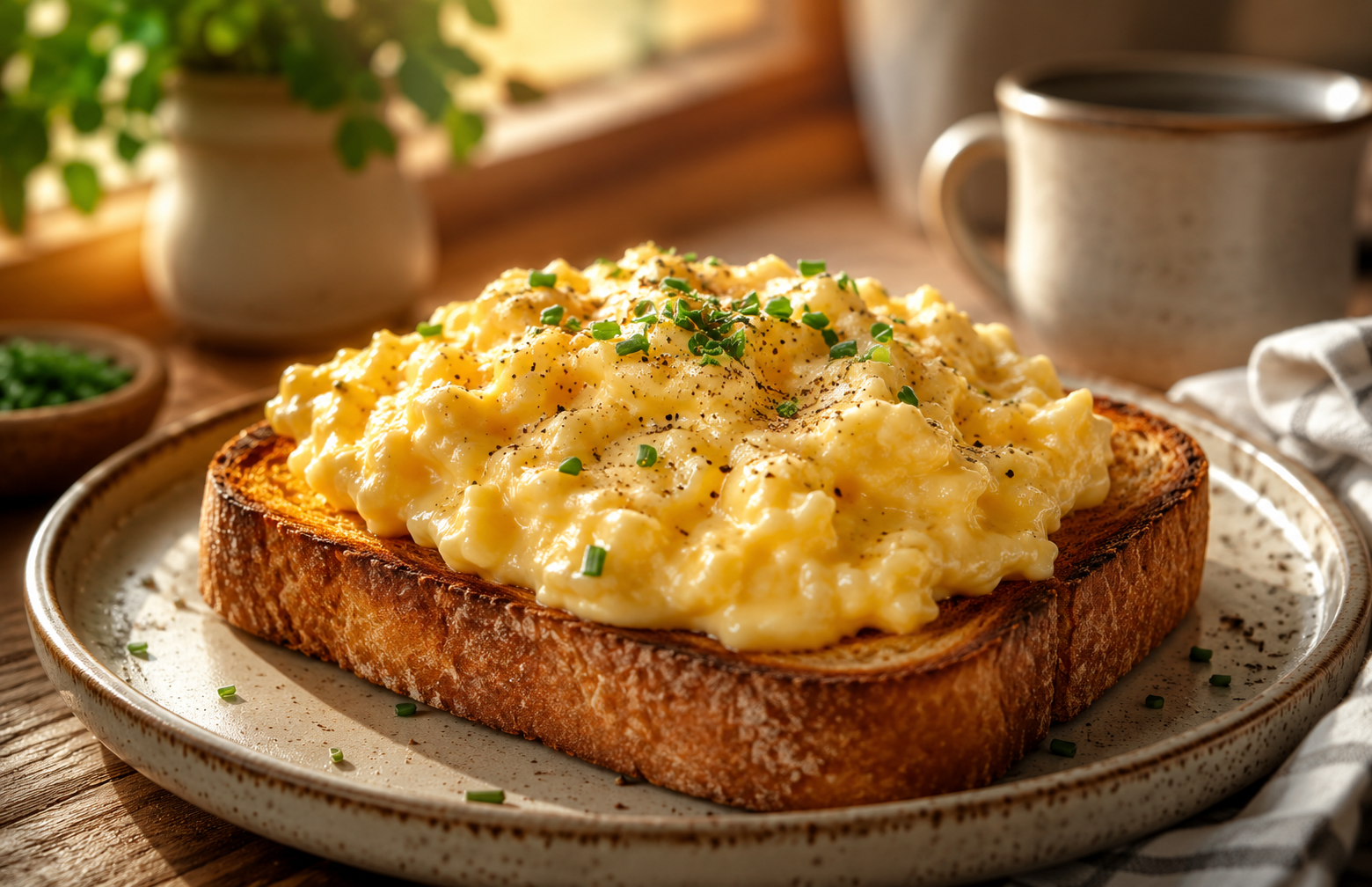
Soft, Fluffy & Creamy Scrambled Eggs (Air Fryer & Pan)
These Soft, Fluffy & Creamy Scrambled Eggs are rich, tender, and full of flavor. Whether you prefer cooking them in a nonstick skillet or using an air fryer, this easy recipe delivers light, creamy eggs every time.
3
servings5
minutes5
minutes205
kcal10
minutesIngredients
- For the Scrambled Eggs
6 large eggs
2 tablespoons whole milk or heavy cream
1 tablespoon butter
1/2 teaspoon salt
1/4 teaspoon black pepper
- Optional Add-Ins
1 tablespoon chopped chives
2 tablespoons shredded cheddar cheese
1 tablespoon cream cheese
Fresh parsley
Diced cooked ham
Cooked bacon pieces
Directions
- Pan Method
- Step 1: Whisk the Eggs
Crack the eggs into a medium mixing bowl.
Add:
Whole milk or heavy cream
Salt
Black pepper
Whisk thoroughly until the mixture becomes smooth, fully blended, and slightly frothy. - Step 2: Heat the Skillet
Place a nonstick skillet over low heat.
Add the butter and allow it to melt slowly without browning. - Step 3: Add the Egg Mixture
Pour the whisked eggs into the skillet.
Allow them to sit undisturbed for a few seconds before stirring. - Step 4: Stir Gently
Using a silicone spatula, slowly push the cooked eggs from the edges toward the center.
Continue folding the eggs gently as soft curds begin to develop. - Step 5: Cook Slowly
Maintain low heat while gently stirring until the eggs are mostly set but still slightly glossy and creamy. - Step 6: Remove from Heat
Take the skillet off the heat while the eggs remain slightly soft.
The residual heat will finish cooking them without drying them out. - Step 7: Garnish and Serve
Transfer immediately to serving plates.
If desired, top with:
Chopped chives
Fresh parsley
Shredded cheddar cheese
Cream cheese
Cooked bacon pieces
Diced cooked ham
Serve immediately while warm. - Air Fryer Method
- Step 1: Preheat the Air Fryer
Preheat the air fryer to 300°F (150°C) for approximately 3 minutes. - Step 2: Prepare the Egg Mixture
In a mixing bowl, whisk together:
Eggs
Whole milk or heavy cream
Salt
Black pepper
Whisk until smooth and evenly combined. - Step 3: Prepare the Baking Dish
Lightly grease a small oven-safe or air fryer-safe baking dish with butter.
Pour the egg mixture into the prepared dish. - Step 4: Begin Cooking
Place the dish inside the preheated air fryer.
Cook at 300°F (150°C) for 4 minutes. - Step 5: Stir the Eggs
Carefully remove the dish.
Using a spatula, gently stir the partially cooked eggs.
Return the dish to the air fryer. - Step 6: Finish Cooking
Continue cooking for 3–5 additional minutes, stirring once halfway through.
Cook until the eggs are soft, fluffy, and creamy. - Step 7: Serve Immediately
Remove the dish from the air fryer.
Top with butter, cheese, herbs, bacon, or ham if desired.
Serve immediately for the best texture.
Nutrition Facts
3 servings per container
- Amount Per ServingCalories205
- % Daily Value *
- Total Fat
16g
21%
- Total Carbohydrate
2g
1%
- Protein 13g 26%
* The % Daily Value tells you how much a nutrient in a serving of food contributes to a daily diet. 2,000 calories a day is used for general nutrition advice.