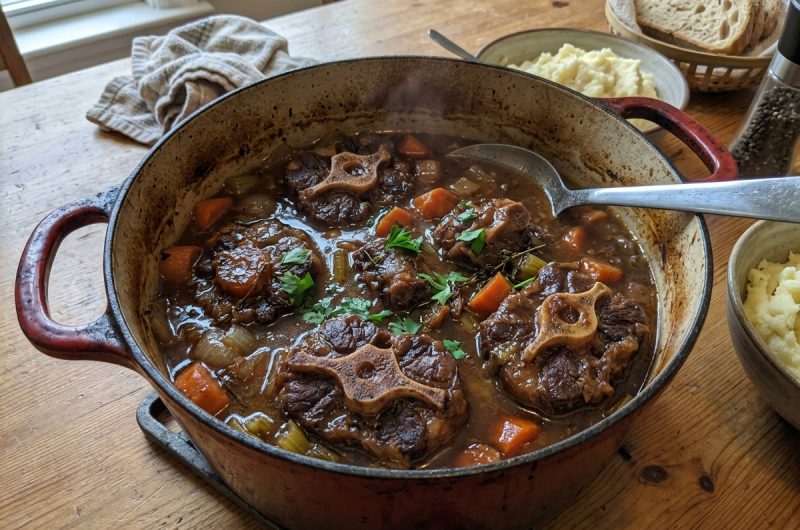
Rustic Garlic Herb Beef Tail Roast is a hearty, savory dish that brings out the rich flavor of beef tail, also known as oxtail. Slow cooking transforms this bone-in cut into tender, juicy meat with a deep beef flavor and a satisfying texture. Garlic, aromatic herbs, and simple seasonings complement the natural richness of the beef, making this recipe a comforting choice for family dinners, weekend meals, and special gatherings. Its traditional preparation and homemade flavor make it an appealing option for anyone who enjoys rustic beef recipes.
Unlike lean cuts such as sirloin or tenderloin, beef tail contains connective tissue, collagen, and fat that contribute to its distinctive texture. When cooked slowly with enough moisture, the connective tissue gradually softens, helping create succulent meat and a rich cooking liquid. This process takes time, but it rewards you with a dish that is deeply flavorful and tender. The combination of garlic and herbs adds fragrance without overpowering the natural taste of the beef, allowing every ingredient to contribute to the finished meal.
This garlic herb beef tail roast is especially suitable for colder evenings when warm, filling food is welcome. It can be served with mashed potatoes, roasted vegetables, steamed rice, or low-carbohydrate side dishes, depending on your preferences. The cooking liquid can also be spooned over the meat to add extra moisture and flavor. Although the preparation is straightforward, slow roasting allows the ingredients to develop a depth of flavor that makes this homemade beef dish feel special.
What Makes Beef Tail Perfect for Slow Roasting?
Beef tail is a flavorful cut that benefits from a gentle, extended cooking process. It contains bones, connective tissue, and meat that can become wonderfully tender when exposed to steady heat over several hours. Quick cooking methods are generally unsuitable because they may leave the meat firm and chewy. Slow roasting gives the collagen time to break down, creating a softer texture and contributing body to the cooking juices.
The bones also contribute to the richness of the finished dish. As the beef cooks, its natural juices mix with the moisture in the roasting vessel, creating a savory liquid that can be used as a simple sauce. This natural richness is one of the reasons oxtail is popular in braises, stews, and traditional slow-cooked meals around the world. For this rustic recipe, the goal is to cook the beef gently until the meat becomes tender and separates easily from the bone.
Another advantage of beef tail is its ability to absorb and complement aromatic seasonings. Garlic provides a warm, savory taste, while herbs add freshness and fragrance. When these flavors have enough time to develop during roasting, they blend with the beef juices to create a balanced, satisfying dish. The result is not simply roasted meat but a complete flavor experience built around patience, careful seasoning, and slow cooking.
The Flavor of Garlic and Herbs
Garlic is an excellent companion for richly flavored beef because it adds a distinctive savory aroma. During slow cooking, its sharp raw flavor mellows and becomes more rounded, allowing it to complement the meat rather than dominate it. Garlic also works well with the natural richness of beef tail, giving the finished roast a traditional homemade character that suits both casual dinners and more elaborate meals.
Herbs contribute another layer of flavor by balancing the heavier qualities of the beef. Depending on the herbs included in the original recipe, their earthy, woody, or slightly fresh notes can enhance the cooking juices and make the meat smell especially inviting. Herb-based beef recipes are popular because they rely on familiar ingredients to produce a satisfying result without requiring complicated sauces or elaborate preparation techniques.
The key is to allow the garlic and herbs to remain part of the overall flavor rather than treating them as a separate seasoning layer. Slow roasting gives their aromas time to mingle with the beef juices, creating a more unified taste. When the meat is ready to serve, the cooking liquid can carry those flavors directly onto the plate. This makes every serving more enjoyable and helps prevent the meat from becoming dry during serving.
How Slow Roasting Creates Tender Beef Tail
Slow roasting is particularly useful for tougher, collagen-rich cuts because it provides the time needed for their connective tissues to soften. At the beginning of cooking, beef tail may feel firm and contain substantial connective tissue around the bones. With prolonged cooking at a suitable temperature, that tissue gradually changes, producing meat that is much easier to pull apart with a fork. The finished texture should be tender rather than rubbery or resistant.
Maintaining moisture is another important part of the process. Beef tail should be cooked in a suitable roasting dish or covered oven-safe pot that helps retain moisture and collect the juices released during cooking. A tightly fitted lid or suitable oven-safe covering can reduce moisture loss, particularly during the longer stages of roasting. If the cooking vessel becomes too dry, the meat may not develop the same succulent texture and the garlic or herbs may become overly browned.
Patience is essential because the exact cooking time depends on the size of the beef tail pieces, the oven temperature, the cooking vessel, and the amount of connective tissue. Rather than relying entirely on a fixed time, check the meat periodically as the cooking process approaches completion. It is ready when the meat is very tender and begins separating easily from the bones. A gentle cooking method produces a more reliable result than increasing the temperature in an attempt to finish quickly.
Preparing the Beef for Maximum Flavor
Good preparation helps establish the foundation for a successful rustic garlic herb beef tail roast. Begin with fresh beef tail pieces that have been handled and stored safely. If the pieces are particularly large, arrange them in a roasting dish that gives them enough space for heat to circulate. Avoid overcrowding the vessel unnecessarily, because an arrangement that allows the pieces to sit comfortably makes it easier to distribute the seasonings and monitor the cooking liquid.
Before seasoning, pat the beef dry with clean paper towels if the surface is wet. This helps the seasonings adhere more evenly and can improve browning if the recipe includes an initial searing step. Browning is not the same as fully cooking the beef; it simply develops additional savory flavors on the surface. If searing is part of your preparation, brown the pieces in batches rather than crowding the pan, and transfer them carefully to the roasting vessel afterward.
Next, distribute the garlic, herbs, and other seasonings according to the original ingredient list. Try to spread the aromatics across the pieces instead of leaving all the seasoning in one place. Even distribution helps the flavors reach different parts of the meat as the dish cooks. Keep the original ingredient quantities unchanged when preparing this recipe, since altering the balance can affect the final taste and the character of the cooking juices.
Building a Rich and Savory Cooking Liquid
One of the most appealing parts of a slow-roasted beef tail recipe is the flavorful liquid that develops during cooking. As the beef softens, its juices combine with the aromatics and any liquid specified in the recipe. The result can be rich, savory, and suitable for spooning over the finished meat. Because beef tail contains collagen and natural fat, the cooking liquid may develop a fuller texture than the juices produced by leaner cuts.
For the best result, keep an eye on the liquid throughout the roasting process. The exact amount of moisture required depends on the original recipe and the shape of the cooking vessel. If the recipe calls for a covered roast, keep the cover securely fitted to help maintain the cooking environment. Avoid unnecessary opening of the oven, because repeated checks allow heat to escape and can extend the time needed to reach the desired tenderness.
Once the beef is cooked, carefully inspect the liquid before serving. Fat may rise to the surface, and you can skim away some of it if you prefer a less greasy finish. The remaining juices can be spooned over the beef or served alongside it. If a thicker sauce is desired, it should be prepared using an appropriate method without changing the original recipe ingredients when strict ingredient preservation is required. The natural juices alone can provide plenty of flavor.
How to Tell When the Beef Tail Is Ready
Tenderness is the most useful sign that beef tail has finished slow roasting. Insert a fork into a thicker section of meat and gently twist. If the meat yields easily and starts to separate from the bone, it is approaching the desired texture. If it still feels tough or resists the fork, it generally needs more cooking time. A little extra patience often makes a significant difference with collagen-rich cuts.
Do not assume that the meat is ready simply because the outside looks browned or the cooking liquid is bubbling. Browning indicates surface color development, while bubbling shows that the liquid is hot; neither guarantees that the connective tissue has softened sufficiently. Continue cooking at the recipe’s intended temperature until the meat is tender throughout. If necessary, allow additional time rather than increasing the heat dramatically, which can cause uneven cooking or excessive moisture loss.
Food safety matters alongside texture. Use clean utensils when checking the beef, and avoid allowing cooked meat to come into contact with plates or tools that held raw beef unless they have been thoroughly washed. For a reliable approach to food safety, follow applicable guidance for whole cuts and braised or slow-cooked beef, and use a food thermometer when appropriate. Beef tail should be cooked until both safe and tender, with tenderness guiding the final assessment for this particular cut.
Best Side Dishes for Garlic Herb Beef Tail Roast
Mashed potatoes are a classic accompaniment for rustic beef dishes because their soft texture pairs naturally with tender meat and savory cooking juices. The potatoes provide a mild, creamy base that balances the deep flavor of the beef. Spoon a little of the cooking liquid over the meat and potatoes just before serving for a comforting plate that makes good use of the flavors developed during slow roasting.
Roasted vegetables are another excellent option. Carrots, onions, cauliflower, and other vegetables that roast well can provide sweetness, texture, and color alongside the rich beef. Choose side dishes that complement rather than compete with the garlic and herbs. If the roast already has a particularly intense savory flavor, simply seasoned vegetables can create a balanced meal without adding unnecessary complexity.
For a lighter or lower-carbohydrate meal, consider steamed green vegetables or a crisp salad. Broccoli, green beans, cabbage, and leafy greens offer freshness that contrasts with the tender, rich meat. Rice is also a practical choice for soaking up the cooking liquid, while cauliflower mash can provide a lower-carbohydrate alternative to traditional mashed potatoes. The best accompaniment depends on the occasion, your preferences, and how substantial you want the meal to be.
Frequently Asked Questions
Is beef tail the same as oxtail?
Beef tail and oxtail commonly refer to the same type of culinary cut: the tail of cattle. Although the name historically referred to the tail of an ox, the term is widely used for beef tail sold for cooking today. It contains bones, meat, connective tissue, and fat, which make it particularly suitable for slow roasting, braising, and other long-cooking methods.
Why is my beef tail still tough?
Beef tail may remain tough when it has not cooked long enough for the connective tissue to soften. This is especially common when the pieces are large or the cooking temperature is too low for the chosen time. Continue cooking gently and test the meat periodically with a fork. Once it yields easily and separates from the bone, the texture should be much more tender.
Can I prepare this recipe ahead of time?
Yes, this type of slow-cooked beef dish can be prepared ahead and refrigerated with its cooking juices. Reheat the portions gently until they reach a safe internal temperature, keeping the meat moist with the stored liquid. Preparing it in advance can also make serving easier when you are planning a family meal or entertaining guests.
What should I serve with garlic herb beef tail?
Mashed potatoes, rice, roasted vegetables, steamed greens, and cauliflower mash all work well with garlic herb beef tail. The savory cooking juices pair especially well with side dishes that can absorb their flavor. Choose vegetables or starches according to your preferences, and consider serving a fresh salad if you want a lighter contrast to the rich meat.
Is beef tail a high-protein food?
Beef tail contains protein, but the exact amount per serving varies depending on the cut, the amount of edible meat, its fat content, and the portion size. Because the cut includes bones and may contain substantial fat and connective tissue, its protein content should not be assumed to match that of lean beef. For accurate nutrition information, calculate the values using the actual edible ingredients and serving sizes.
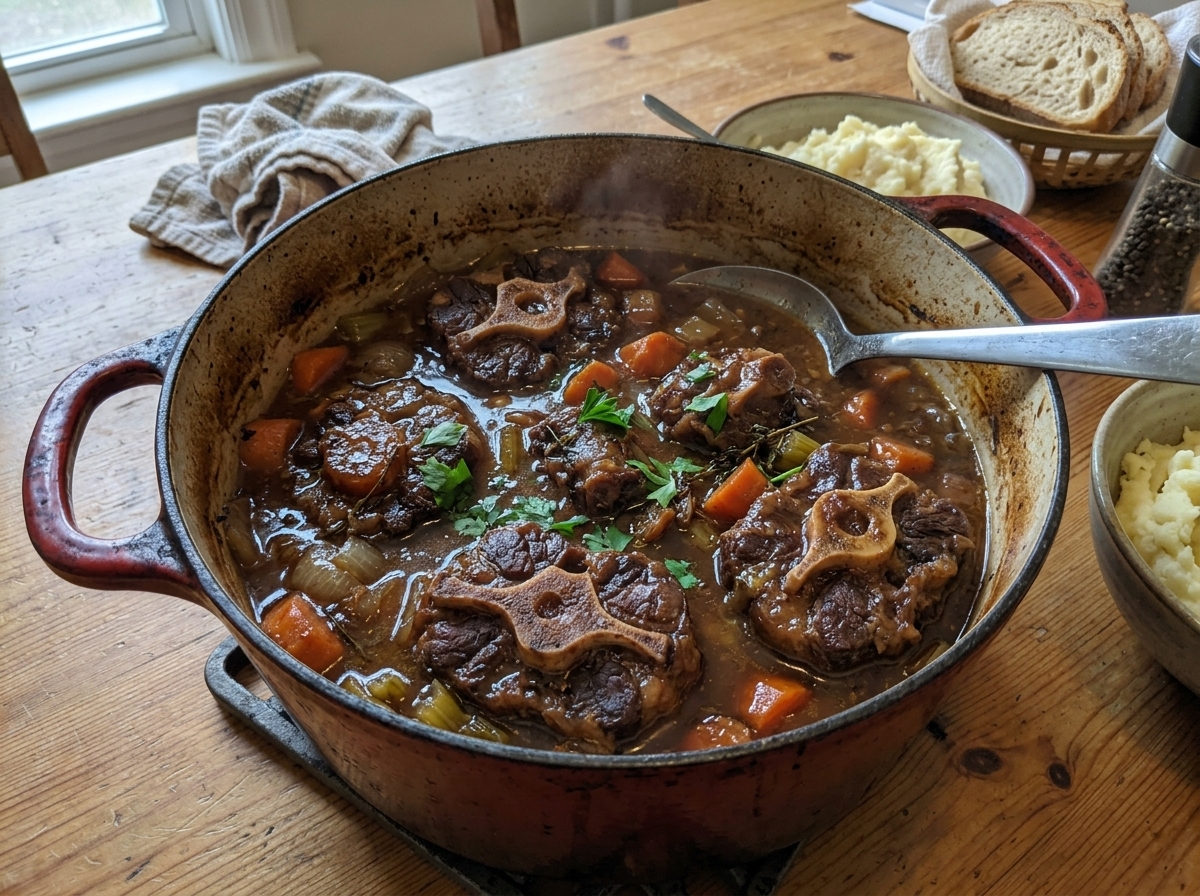
Rustic Garlic Herb Beef Tail Roast
This Rustic Garlic Herb Beef Tail Roast is slow-cooked until fall-off-the-bone tender and flavored with garlic, rosemary, and thyme.
20
minutes4
hours4
hours20
minutesIngredients
4 pounds beef tail (oxtail)
2 tablespoons olive oil
8 garlic cloves, minced
1 tablespoon rosemary
1 tablespoon thyme
1 teaspoon oregano
1 teaspoon salt
1 teaspoon pepper
1 teaspoon onion powder
2 cups beef broth
Directions
- Preheat oven to 325°F (165°C).
- Mix garlic, herbs, oil, and seasonings.
- Rub over beef tail.
- Brown meat if desired.
- Place in roasting pan with broth.
- Cover tightly.
- Roast 3½–4½ hours.
- Rest 15 minutes.
- Serve with vegetables and pan juices.


