
Healthy Pickled Cucumber Salad is a refreshing, crunchy, and tangy side dish that brings fresh cucumbers to life with a simple mixture of vinegar, water, salt, garlic, and dill. These homemade refrigerator pickles are easy to prepare, require no traditional canning process, and develop their delicious briny flavor as they rest in the refrigerator. Whether served with lunch, dinner, sandwiches, or grilled dishes, this quick pickled cucumber recipe is a practical way to enjoy crisp vegetables with plenty of flavor.
Unlike conventional canned pickles, refrigerator pickles do not require a boiling-water canning bath or a lengthy preservation process. Instead, sliced or whole cucumbers are covered with a prepared brine and refrigerated until they absorb the seasoning. Although the preparation is straightforward, allowing enough time for the cucumbers to marinate makes a noticeable difference in their taste. They can be enjoyed after several hours, but waiting until the following day usually produces a more developed, balanced flavor.
What Makes Healthy Pickled Cucumber Salad Special?
One of the best things about homemade pickled cucumber salad is its combination of simplicity and texture. Fresh cucumbers provide a naturally crisp base, while vinegar gives the brine its characteristic sharpness. Garlic contributes a savory aroma, and dill adds a fresh, herbaceous flavor that works particularly well with pickled vegetables. Together, these ingredients create a side dish that tastes bright and refreshing without requiring complicated cooking techniques or expensive ingredients.
Another advantage is the ability to control the flavor of your refrigerator pickles. Homemade preparation allows you to choose the strength of the vinegar, adjust the amount of salt within a suitable recipe, and decide whether you want to add sweetness. This version emphasizes a tangy, savory taste rather than a sweet pickle flavor. The result is a versatile cucumber salad that can complement many meals without overpowering the other dishes on the table.
These quick pickles are also useful when you have fresh cucumbers that need to be used before they lose their firmness. Rather than preparing the same ordinary cucumber salad repeatedly, you can transform them into a flavorful refrigerator condiment. The pickling liquid penetrates the vegetables during refrigeration, producing a distinctive taste that becomes more noticeable as the cucumbers rest.
What Are Refrigerator Pickles?
Refrigerator pickles are vegetables preserved temporarily in a vinegar-based brine and kept chilled rather than processed for shelf-stable storage. Cucumbers are among the most popular choices because they absorb flavors well and can retain a satisfying crunch when prepared correctly. The basic method involves preparing the vegetables, mixing the brine, combining everything in a suitable container, and allowing the flavors to develop in the refrigerator.
Traditional canning usually involves specific equipment, sterilization procedures, and a tested recipe designed to make food safe for storage at room temperature. Refrigerator pickles follow a different approach because they remain refrigerated and are intended for chilled storage. This makes them convenient for home cooks who want homemade pickles without committing to a full canning project.
However, refrigerator pickles should not be confused with shelf-stable canned pickles. They must remain refrigerated, and their storage life depends on the recipe, preparation conditions, and cleanliness of the equipment. A simple vinegar-and-water mixture should not automatically be assumed to provide reliable preservation for any length of time. For the best quality and food safety, use a suitable tested recipe, keep the cucumbers chilled, and discard them if they develop mold, unusual odors, or other signs of spoilage.
Choosing the Best Cucumbers for Pickling
Freshness is essential when preparing a crunchy cucumber salad. Look for firm cucumbers with smooth or naturally textured skin, depending on the variety, and avoid vegetables that feel soft, shriveled, or damaged. Fresh cucumbers generally retain their texture better during refrigeration, helping the finished pickles remain crisp rather than becoming limp or watery.
Small pickling cucumbers are often a good choice because they tend to have firm flesh and relatively small seeds. However, ordinary fresh cucumbers can also work well. If using larger cucumbers, check the center for mature seeds and excess moisture. Depending on the variety and your preferred presentation, you can cut the cucumbers into rounds, spears, or longer slices that fit neatly inside your storage container.
Wash the cucumbers thoroughly under clean running water before cutting them. Removing surface dirt helps keep the preparation clean, while using a sharp knife makes it easier to create evenly sized pieces. Consistent slices are useful because they allow the vinegar brine to reach the cucumber flesh more evenly. If you prefer a particularly crunchy result, begin with very fresh cucumbers and avoid leaving the cut vegetables sitting at room temperature for extended periods.
The Importance of a Balanced Pickling Brine
The brine is responsible for the characteristic tangy flavor of homemade refrigerator pickles. In its simplest form, it combines vinegar, water, and salt. Vinegar supplies acidity, water balances the sharpness, and salt enhances the overall flavor while helping the cucumbers taste more like traditional pickles. Garlic and dill add further flavor without requiring an elaborate collection of seasonings.
The proportions of vinegar and water influence the final result. A roughly equal mixture is common in quick-pickle preparations, although some recipes use more vinegar for a stronger, sharper taste. This healthy pickled cucumber salad follows a tangy approach, making it a good match for people who prefer savory pickles over sweet varieties. The exact balance should follow a tested recipe, especially when the brine is intended for storage rather than immediate serving.
Salt also matters because it brings the flavors together and prevents the brine from tasting flat. Use the salt specified in your chosen recipe instead of changing the amount without considering the effect on the final product. Different types of salt can vary in density, so measuring by weight where a tested recipe provides that option can improve consistency.
Some pickle recipes include sugar, but sweetness is optional in many refrigerator-pickle preparations. A sweetened brine produces a different flavor profile, while an unsweetened mixture allows the cucumber, garlic, dill, and vinegar to remain the main flavors. For this version, the emphasis is on a clean, briny taste rather than a sugary finish.
How Garlic and Dill Improve Cucumber Salad
Garlic is an excellent addition to homemade pickled cucumbers because its savory character complements the acidity of vinegar. As the vegetables rest in the brine, the garlic contributes an increasingly noticeable aroma. It also pairs well with other ingredients commonly served alongside pickles, including fresh herbs, grilled vegetables, roasted meats, sandwiches, and cheese.
Dill provides the familiar herbal flavor associated with many classic cucumber pickles. Its fresh, slightly grassy notes soften the sharpness of the vinegar and make the overall mixture taste more balanced. When combined with garlic, dill creates a recognizable pickle flavor that feels familiar without needing a complicated spice blend.
The way these ingredients are distributed in the container can also influence the finished salad. Keeping the cucumbers submerged helps the brine contact the vegetables evenly, while spreading the garlic and dill throughout the container allows their flavors to mingle with the liquid. A clean glass jar or another food-safe container with a suitable lid makes the process convenient and helps prevent unwanted odors from affecting the pickles.
How to Keep Homemade Pickles Crunchy
Starting with fresh cucumbers is one of the most important steps toward achieving a crisp texture. Cucumbers that are already soft or have been stored for too long are unlikely to become firm simply because they are placed in vinegar. Selecting good-quality vegetables at the beginning makes the entire preparation more successful.
Cutting the cucumbers evenly also helps create a consistent result. Very thin slices absorb the brine quickly but may soften sooner, while thicker pieces often maintain a firmer bite. Choose a shape that suits the way you plan to serve the salad. For sandwiches, thin rounds are convenient; for a side dish, thicker slices or spears may provide a more satisfying crunch.
Refrigeration should begin promptly after preparation, and the container should remain chilled throughout storage. Avoid repeatedly leaving the pickles on the counter while preparing other food. It is also helpful to use a clean spoon or fork each time you remove a portion, rather than handling the contents directly.
Finally, remember that texture naturally changes over time. Although refrigerator pickles can remain enjoyable for a period of time under appropriate conditions, they are not guaranteed to stay perfectly crisp indefinitely. Preparing manageable batches and enjoying them while the cucumbers are still firm usually gives the best eating experience.
Healthy Ways to Serve Pickled Cucumber Salad
Healthy pickled cucumber salad works well as a side dish for everyday lunches and dinners. Its sharp, refreshing flavor balances rich foods, making it a useful accompaniment to grilled chicken, roasted vegetables, rice dishes, and sandwiches. A small serving can add contrast to a meal that contains creamy sauces or savory ingredients without requiring another cooked dish.
You can also use these garlic dill refrigerator pickles as a topping for burgers, wraps, and homemade sandwiches. Their tangy flavor provides a pleasant contrast to cheese, eggs, grilled meats, and other filling ingredients. Chopped pickles can be mixed into suitable salad dressings or used to add a little acidity to potato salads, depending on the flavor profile you want to create.
For a simple vegetable platter, serve the chilled cucumber slices alongside tomatoes, carrots, leafy greens, or other fresh produce. Their briny taste offers variety while keeping preparation easy. They can also be included in a picnic or packed lunch when they are transported and stored safely at the appropriate temperature.
Although cucumbers are low in calories and provide water, the nutritional profile of pickled cucumbers depends on the ingredients and portion size. Salt is an important consideration, particularly for people who need to limit sodium. A homemade recipe gives you greater control over ingredients, but it does not automatically make every serving low in sodium.
Make-Ahead Preparation and Storage
One of the biggest advantages of refrigerator pickles is that they can be prepared ahead of time. Making them the evening before you plan to serve them allows the brine to develop a more rounded flavor. This approach is especially useful when preparing meals for guests, organizing weekday lunches, or adding an easy vegetable side to a busy dinner schedule.
Store the pickles in a clean, covered, food-safe container in the refrigerator. Keep the vegetables submerged in the brine as much as possible and use clean utensils when serving. Do not store homemade quick pickles in a kitchen cupboard or pantry unless you have followed a separately tested canning recipe that specifically establishes room-temperature storage safety.
The original recipe description suggests a refrigerator life of up to two months. However, that period should not be treated as a universal guarantee for every homemade cucumber pickle, particularly when the exact ingredient quantities and acidity have not been provided. For this version, follow a tested refrigerator-pickle recipe’s storage guidance, maintain continuous refrigeration, and discard the batch if you notice mold, unusual smells, unexpected bubbling, or a slimy texture.
If you are making pickles for the first time, preparing a smaller quantity can be a practical choice. You can assess how quickly your household uses them and prepare another batch when needed. This also helps ensure that the cucumbers are enjoyed while their texture is still pleasant.
Frequently Asked Questions
How long do quick pickled cucumbers take to be ready?
Thinly sliced cucumbers may develop a noticeable tang within several hours, but an overnight rest usually produces a fuller flavor. Thicker slices or whole small cucumbers may require more time. Keep the container refrigerated while the pickles develop, and follow the timing guidance in the recipe you are using.
Can I make refrigerator pickles without sugar?
Yes, many savory refrigerator-pickle recipes do not require added sugar. This version focuses on the sharp flavor of vinegar, the savory character of garlic, and the fresh taste of dill. The absence of sugar produces a less sweet pickle, although the final flavor will also depend on the cucumber variety and brine proportions.
Do I need special canning equipment?
No traditional canning equipment is required for a refrigerator-pickle method. You need a clean food-safe container, a suitable lid, basic kitchen utensils, and enough refrigerator space to keep the cucumbers chilled. Remember that skipping the canning process means the pickles must remain refrigerated rather than being stored at room temperature.
Can I use regular cucumbers instead of pickling cucumbers?
Yes, regular fresh cucumbers can be used if they are firm and in good condition. Depending on the variety, they may contain larger seeds or more water, which can affect the final texture. Slice them evenly and choose a suitable tested recipe to achieve a satisfying result.
Are homemade pickled cucumbers healthy?
Cucumbers provide water and some nutrients, and homemade pickles can be a flavorful way to add vegetables to meals. However, vinegar-based pickles can contain considerable sodium because salt is part of the brine. The best choice depends on your dietary needs, portion size, and the recipe’s actual nutritional values.
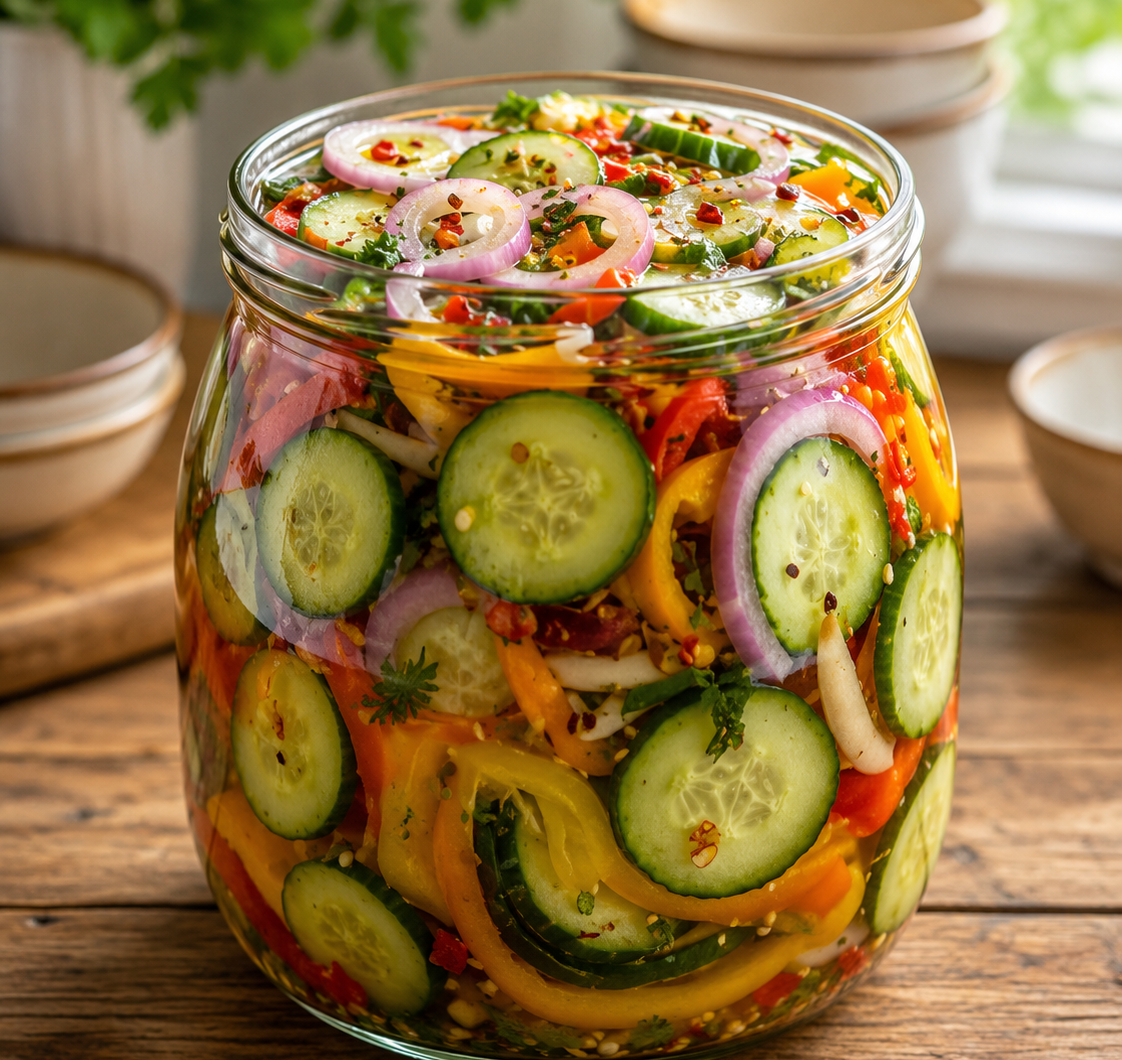
Pickled Cucumber Salad
Pickled Cucumber Salad in a Jar is a crisp, refreshing refrigerator pickle made with fresh cucumbers, onions, dill, garlic, and a tangy vinegar brine.
15
minutes4
hours35
kcal4
hours15
minutesIngredients
2 cucumbers
1/2 red onion
1 cup vinegar
1 cup water
2 tablespoons sugar or keto sweetener
1 teaspoon salt
2 garlic cloves
Fresh dill
Directions
- Slice the cucumbers and onion.
- Place them in a glass jar.
- Heat the brine ingredients until dissolved.
- Cool slightly and pour over the vegetables.
- Refrigerate for at least 4 hours.
- Serve chilled.
Nutrition Facts
4 servings per container
- Amount Per ServingCalories35
- % Daily Value *
- Total Fat
0g
0%
- Total Carbohydrate
7g
3%
- Protein 1g 2%
* The % Daily Value tells you how much a nutrient in a serving of food contributes to a daily diet. 2,000 calories a day is used for general nutrition advice.


