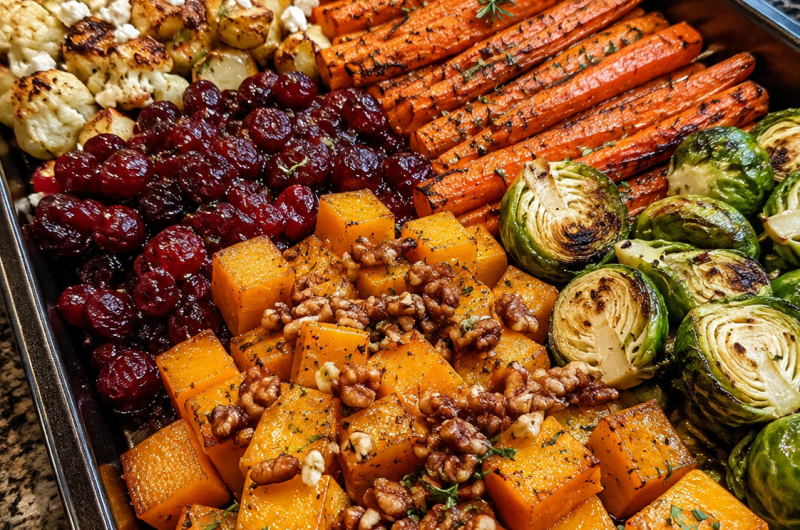
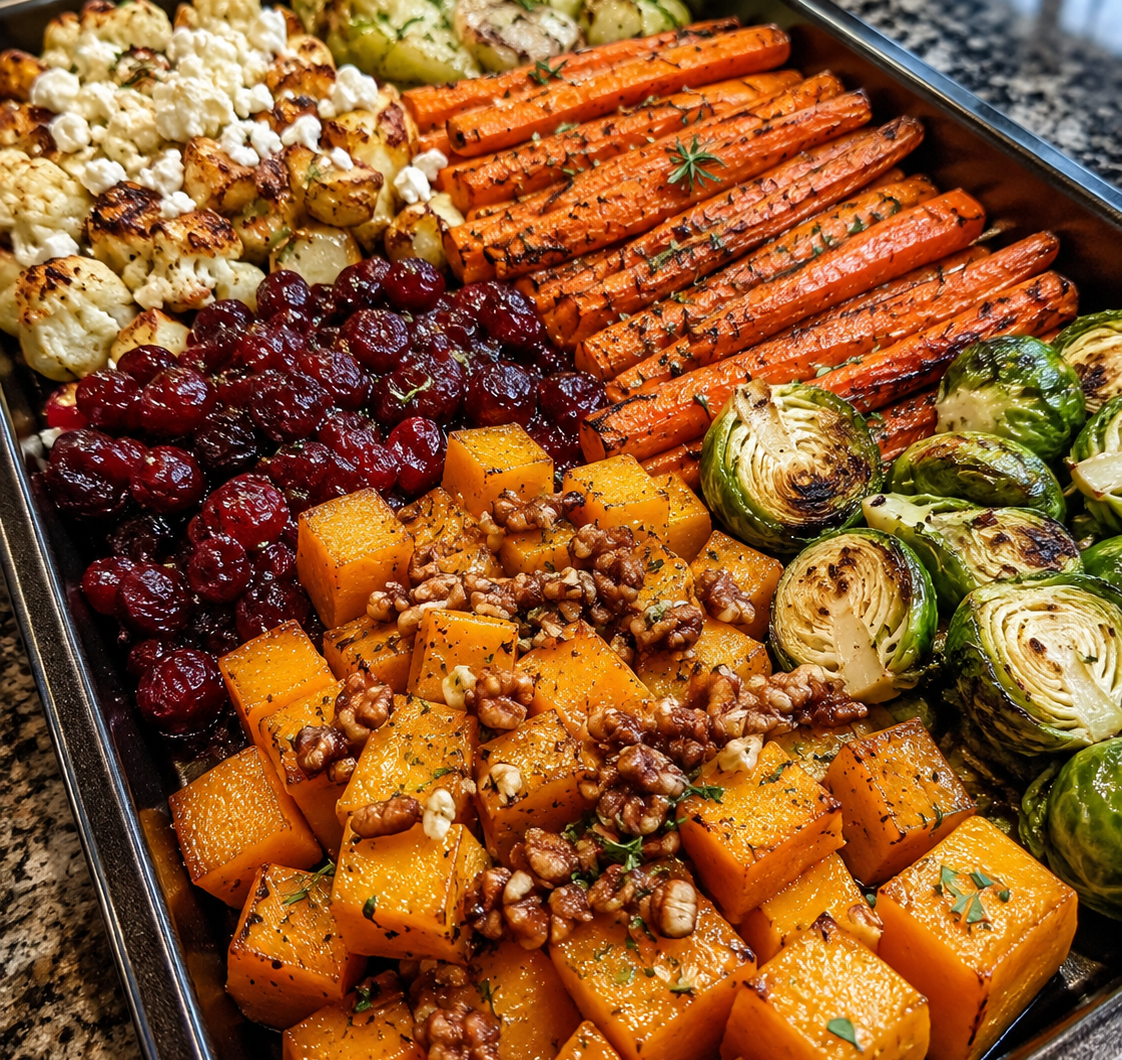
Caramelized butternut squash, carrots, Brussels sprouts, and sweet potatoes create a colorful roasted vegetable side dish filled with sweet, savory, tangy, and nutty flavors. Once roasted, the vegetables are covered with a warm cranberry-honey glaze and finished with crumbled feta, chopped walnuts, and optional fresh parsley. The finished dish is suitable for holiday dinners, family gatherings, weekly meal preparation, or an attractive addition to an everyday meal.
This roasted vegetable medley is sometimes described as keto-inspired because it uses wholesome vegetables, olive oil, cheese, and nuts. However, sweet potatoes, butternut squash, dried cranberries, orange juice, and honey contain substantial carbohydrates and natural sugars. Therefore, the original recipe is not suitable for a strict ketogenic diet. Its ingredients have been preserved exactly as provided, making it better described as a nutritious vegetarian side dish rather than a genuinely low-carb keto recipe.
Why This Roasted Vegetable Dish Works
A successful roasted vegetable recipe needs more than a collection of vegetables on a baking sheet. Flavor, texture, color, and seasoning must work together. Butternut squash and sweet potatoes provide creamy centers and natural sweetness, while carrots become tender with lightly caramelized edges. Brussels sprouts add a firmer texture and pleasantly savory flavor that prevents the dish from tasting excessively sweet.
The toppings create another layer of contrast. Feta cheese contributes saltiness and a soft, crumbly texture, while walnuts bring richness and crunch. Dried cranberries offer chewy pieces with a sweet-tart character. Honey, orange juice, and water transform these cranberries into a warm glaze that spreads throughout the roasted vegetables and connects all the individual flavors without covering their natural taste.
A Colorful Holiday Vegetable Side Dish
The warm orange, deep green, red, white, and brown colors make this dish especially attractive on a holiday table. It pairs naturally with roast turkey, baked chicken, beef roast, pork tenderloin, or salmon. Because it contains no meat, it can also provide vegetarian guests with a substantial side containing vegetables, cheese, nuts, and a flavorful fruit glaze.
Although it looks festive enough for Thanksgiving, Christmas, or another special gathering, the preparation remains straightforward. Most of the work involves peeling and cutting the vegetables. Once seasoned, they roast together on one baking sheet. The cranberry-honey glaze requires only a few minutes on the stovetop, while the feta, walnuts, and parsley are added after roasting to preserve their individual textures.
How Roasting Develops Natural Sweetness
Roasting vegetables at 425°F exposes their surfaces to strong, dry heat. Moisture begins evaporating, their edges turn golden, and their naturally occurring sugars develop a deeper flavor. This process creates the appealing contrast between lightly browned exteriors and tender centers. Butternut squash, sweet potatoes, and carrots respond particularly well because all three become sweeter and creamier as they cook.
Brussels sprouts also benefit from high-temperature roasting. Their cut sides can develop dark golden areas with a pleasantly nutty flavor, while their layered interiors become tender. Boiled Brussels sprouts may become overly soft or develop a strong cabbage aroma, but roasting concentrates their flavor and provides better texture. Combining them with sweeter root vegetables creates a balanced vegetable medley.
Butternut Squash in the Roasted Vegetable Medley
Butternut squash has a smooth texture and mild sweetness that becomes more noticeable after roasting. Its bright orange color also makes the dish visually appealing. Peeling and cutting the squash into evenly sized cubes helps it cook at approximately the same rate as the sweet potatoes and carrots. Very large chunks may remain firm after the other vegetables are ready.
This winter squash provides fiber and several important nutrients, including beta-carotene, which the body can convert into vitamin A. Olive oil does more than help the squash caramelize; dietary fat also assists with the absorption of fat-soluble nutrients. The recipe therefore combines the squash with a practical cooking method that supports both flavor development and a satisfying texture.
Sweet Potatoes for Creamy Texture
Sweet potatoes become tender, creamy, and deeply flavorful in a hot oven. They complement the butternut squash but have a slightly denser texture, helping the finished dish feel more substantial. Medium sweet potatoes are convenient because they are usually easier to peel and cut evenly. Avoid potatoes with deep bruises, extensive soft areas, or visible signs of spoilage.
Because sweet potatoes brown readily, they should be spread across the baking sheet rather than piled in a crowded layer. Direct contact with the hot pan encourages golden edges, while overcrowding traps steam and produces softer, paler vegetables. Stirring everything halfway through roasting exposes additional surfaces to heat and prevents the pieces touching the pan from becoming excessively dark.
Carrots Add Color and Sweetness
Carrots bring another level of natural sweetness while maintaining slightly more firmness than the squash and sweet potatoes. Slicing them into pieces similar in thickness to the other vegetables promotes even roasting. Very thin slices may dry or burn before the larger cubes are tender, while thick pieces may remain crunchy when the rest of the dish is ready.
Fresh carrots should feel firm and have a bright, healthy appearance. Peeling creates a smooth texture, although careful washing is also important before preparation. Carrots are well known as a source of beta-carotene, but their contribution to this recipe is not limited to nutrition. Their flavor becomes richer during roasting and works naturally with the honey, orange juice, feta, and walnuts.
Brussels Sprouts Provide Savory Balance
Brussels sprouts keep the roasted vegetable mixture from becoming one-dimensional. Their earthy, lightly bitter flavor balances the sweeter squash, potatoes, carrots, cranberries, and honey. Select compact green sprouts with tightly closed leaves. After trimming the ends, cut each sprout in half so its flat surface can make contact with the baking sheet and develop deeper caramelization.
Some outer leaves may loosen while the Brussels sprouts are being trimmed and tossed. These leaves can be included because they often become crisp in the oven. Arrange as many sprouts as possible with the cut side against the pan. Even if every piece cannot be positioned perfectly, spreading the vegetables in a single uncrowded layer will improve overall browning.
Seasoning the Vegetables
The seasoning mixture is deliberately simple: olive oil, salt, black pepper, and garlic powder. Olive oil coats the vegetables, encourages browning, and helps the dry seasonings adhere. Salt strengthens their natural flavors, black pepper contributes mild warmth, and garlic powder adds a savory note without introducing fresh garlic pieces that might burn during the high-temperature roasting period.
Toss the vegetables thoroughly in a large bowl before transferring them to the baking sheet. Mixing directly on the pan can leave some pieces heavily coated while others remain dry. A large bowl provides enough space to lift and turn the vegetables until the oil and seasoning are distributed evenly. Every piece should have a light coating rather than sitting in excess oil.
Getting Perfectly Caramelized Vegetables
The baking sheet must be large enough to hold the vegetables in one layer. If the pieces are crowded or stacked, the released moisture becomes trapped and steams them. Steamed vegetables may still become tender, but they will not develop the same golden surfaces or concentrated roasted flavor. If necessary, two baking sheets can provide better spacing, although their positions may need rotating.
Roast the vegetables for 35 to 40 minutes, stirring halfway through. The precise cooking time depends on the size of the pieces, the baking sheet, and the oven’s actual temperature. The vegetables are ready when they can be pierced easily and have visible golden edges. Avoid removing them merely because the timer ends if they have not developed sufficient color.
Preparing the Cranberry-Honey Glaze
While the vegetables roast, combine the dried cranberries, honey, orange juice, and water in a small saucepan. Cook the mixture over low heat for three to four minutes. The honey becomes more fluid, the cranberries begin to soften, and the orange juice introduces acidity and citrus flavor. The mixture should become lightly thickened but remain thin enough to drizzle.
Use low heat and watch the saucepan carefully because honey can scorch when exposed to excessive heat. The glaze does not require a hard boil or long reduction. Its purpose is to warm and soften the cranberries while blending the liquid ingredients. Remove it from the heat as soon as it becomes slightly thicker, since it may continue thickening as it cools.
Adding Feta Cheese and Walnuts
Feta cheese should be scattered over the vegetables after roasting. Adding it before baking could cause it to dry excessively or lose its fresh, crumbly character. Its salty, tangy flavor is especially useful in this dish because it offsets the sweetness of the root vegetables and glaze. Distributing it across the platter ensures that most servings contain a little cheese.
Walnuts add a crisp, nutty element that contrasts with the tender vegetables and chewy cranberries. They can be used exactly as provided or lightly toasted before serving for a more pronounced flavor. Toasting must be monitored carefully because nuts can burn quickly. Like the feta, walnuts are best added after roasting so they maintain their crunch instead of becoming softened by vegetable moisture.
Assembling the Finished Dish
Transfer the hot roasted vegetables to a large serving platter and drizzle the cranberry-honey glaze evenly over them. Avoid concentrating all the cranberries and liquid in one area. Gently spoon the glaze across different sections so that its flavor reaches the squash, potatoes, carrots, and Brussels sprouts without requiring vigorous tossing that might break the tender vegetables.
Finish with crumbled feta, chopped walnuts, and optional fresh parsley. Parsley adds a fresh green color and mild herbal note, but it is not essential when unavailable. Serve the dish while warm, when the vegetables are tender, the glaze is fluid, and the contrast between the warm vegetables, creamy feta, and crisp walnuts is at its most enjoyable.
Serving Suggestions
This cranberry-glazed roasted vegetable dish pairs especially well with roast turkey or chicken, making it suitable for Thanksgiving and Christmas menus. It also complements pork tenderloin, beef roast, grilled chicken, or baked salmon. The sweet glaze provides contrast to savory meat, while the Brussels sprouts, feta, and garlic seasoning keep the overall flavor balanced.
For a vegetarian meal, serve the vegetables with quinoa, rice pilaf, couscous, or a fresh green salad. The dish may also be added to a grain bowl with extra leafy vegetables. Because the original recipe includes both feta and walnuts, it already provides more texture and richness than plain roasted vegetables, making it a useful foundation for a meat-free lunch.
Preparing the Vegetables Ahead
The butternut squash, sweet potatoes, carrots, and Brussels sprouts can be prepared one day in advance. Peel and cut them as directed, then refrigerate them in covered containers. Keeping the vegetables dry is helpful because excessive surface moisture can reduce caramelization. Wait until shortly before roasting to add the olive oil and seasonings for the best result.
The cranberry-honey glaze may also be prepared in advance and refrigerated separately. Warm it gently before drizzling so it returns to a pourable consistency. The feta, walnuts, and parsley should be kept separate until serving. This preparation plan reduces last-minute work while preserving the different textures that make the finished dish appealing.
Storage and Reheating
Place leftover roasted vegetables in an airtight container and refrigerate them for up to four days. If possible, store additional feta and walnuts separately, particularly when preparing the dish specifically for meal prep. Separate storage helps prevent the walnuts from softening and allows the vegetables to be reheated without unnecessarily warming the cheese.
Reheat leftovers in an oven at 350°F for approximately 10 minutes or until hot. Oven reheating helps restore some roasted texture, while a microwave will generally make the vegetables softer. Leftovers can also be served in salads or grain bowls. Always refrigerate the dish promptly and discard it if it develops an unusual smell, appearance, or texture.
Recipe Variations
Several substitutions can change the flavor, but they would also alter the original ingredient list. Honey can be replaced with pure maple syrup for a vegan-style glaze, provided the feta is also omitted. Goat cheese can replace feta for a creamier finish, while pecans can be used instead of walnuts. Fresh rosemary or thyme can provide a more savory herbal character.
These variations should be treated as optional ideas rather than part of the original recipe. The recipe card below preserves every supplied ingredient and quantity. Anyone following a strict dietary pattern should also evaluate the complete dish carefully. In particular, replacing honey alone will not make the recipe low in carbohydrates because squash, sweet potatoes, dried cranberries, and orange juice remain present.
Notes for the Best Results
Cut the vegetables into similar-sized pieces so they finish cooking at roughly the same time. Keep the baking sheet uncrowded, use enough olive oil to coat everything lightly, and stir halfway through roasting. Do not add the feta, walnuts, or parsley until the vegetables have left the oven, as these toppings are intended to retain their distinct texture.
The dish should not be removed before the vegetables develop visible caramelized edges. Tenderness alone does not provide the full roasted flavor. At the same time, monitor smaller pieces so they do not burn. A balanced result should contain tender centers, golden surfaces, chewy cranberries, creamy feta, crunchy walnuts, and enough glaze to unite every component.
Keto Caramelized Butternut Squash, Carrots
6
servings20
minutes40
minutes390
kcal1
hourIngredients
For the Vegetables
3 cups butternut squash, peeled and cubed
2 medium sweet potatoes, peeled and cubed
2 cups Brussels sprouts, trimmed and halved
3 large carrots, peeled and sliced
3 tablespoons olive oil
1 teaspoon salt
½ teaspoon black pepper
1 teaspoon garlic powderFor the Cranberry-Honey Glaze
⅓ cup dried cranberries
3 tablespoons honey
2 tablespoons orange juice
1 tablespoon waterFor the Topping
½ cup feta cheese, crumbled
½ cup walnuts, chopped
2 tablespoons fresh parsley, chopped (optional)
Directions
- Prepare
Preheat the oven to 425°F.
Line a large baking sheet with parchment paper.
Place all vegetables in a large bowl.
Add oil, salt, pepper, and garlic powder.
Toss until evenly coated. - Roast
Spread the vegetables in one layer.
Roast for 35–40 minutes.
Stir halfway through cooking. - Make the Glaze
Combine cranberries, honey, orange juice, and water.
Cook over low heat for 3–4 minutes.
Remove when slightly thickened. - Assemble
Transfer the vegetables to a platter.
Drizzle with the warm glaze.
Add feta and walnuts.
Garnish with parsley.
Serve warm.
Nutrition Facts
6 servings per container
- Amount Per ServingCalories390
- % Daily Value *
- Total Fat
18g
24%
- Total Carbohydrate
56g
21%
- Protein 8g 16%
* The % Daily Value tells you how much a nutrient in a serving of food contributes to a daily diet. 2,000 calories a day is used for general nutrition advice.