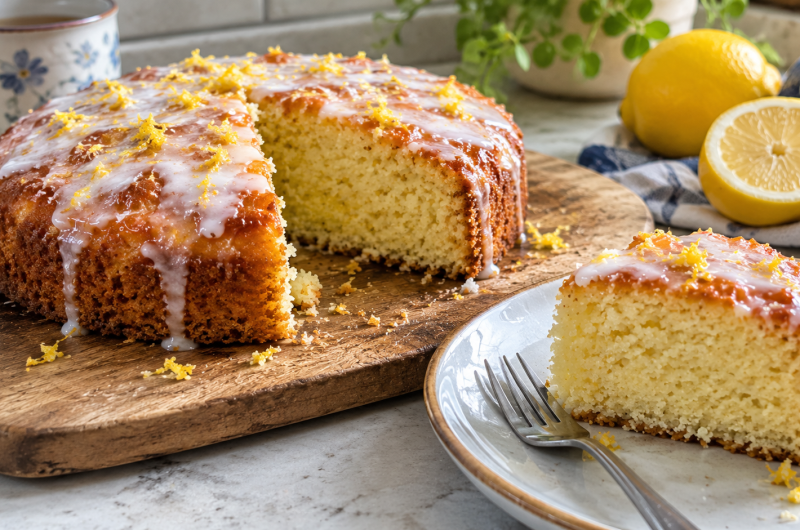
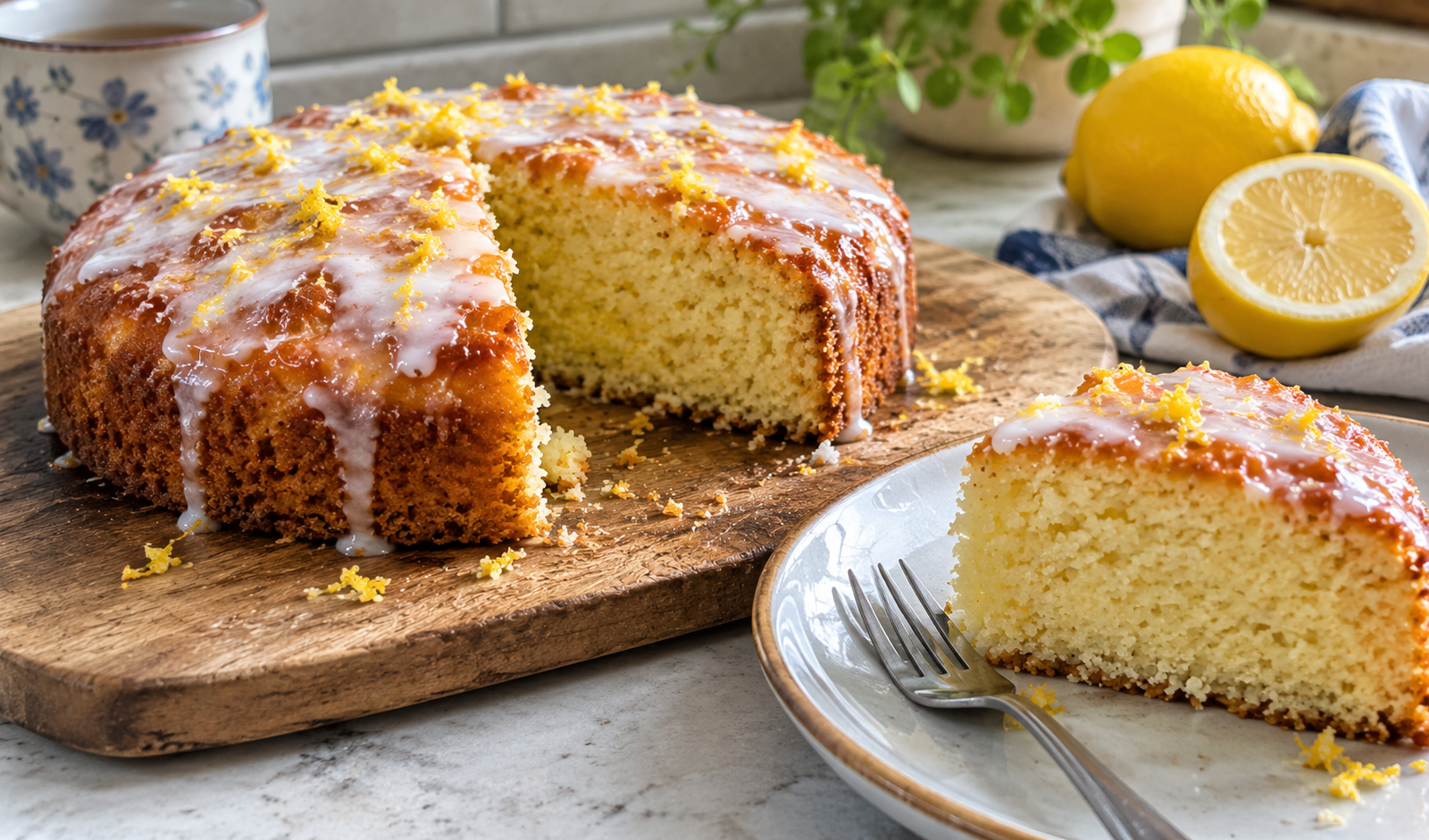
Gluten-Free Greek Yogurt Lemon Cake is a simple, flavorful dessert that combines the refreshing taste of lemon with the soft, tender texture of a homemade yogurt cake. Made with gluten-free all-purpose flour, plain full-fat yogurt, eggs, sugar, and oil, this easy lemon cake is an excellent choice for anyone looking for a delicious gluten-free baking recipe. A sweet lemon glaze adds a bright citrus finish, soaking into the top of the cake to give every slice a delicate balance of sweetness and tanginess.
One of the best things about this gluten-free lemon yogurt cake is how easily it comes together. You do not need an electric mixer, complicated baking techniques, or several mixing bowls. A large bowl, a whisk, and a few basic kitchen ingredients are enough to prepare the batter. This makes the recipe especially useful when you need a homemade dessert without spending hours in the kitchen. The batter comes together quickly, leaving the oven to do most of the work.
Inspired by traditional French yogurt cake, this version uses gluten-free flour to create a dessert that can be enjoyed by people avoiding gluten. Yogurt helps contribute moisture and a soft crumb, while the lemon glaze provides a noticeable citrus flavor. Whether you serve it after dinner, alongside afternoon tea, or as part of a weekend brunch, this easy gluten-free lemon cake offers a comforting homemade taste that works for many occasions.
What Makes This Gluten-Free Lemon Yogurt Cake Special?
A Soft and Moist Texture
Moisture is one of the most important qualities of a good gluten-free cake. Without the gluten found in conventional wheat flour, baked goods can sometimes turn out dry, crumbly, or dense. This recipe uses plain full-fat yogurt and oil to help create a softer texture. The yogurt contributes moisture and richness, while the oil helps keep the cake tender after baking.
Another advantage of using oil instead of solid butter is that the cake can remain soft even after it has cooled. This makes it suitable for preparing ahead of time when you want a dessert ready for guests. The lemon glaze adds another layer of moisture and flavor, especially around the top of the cake. When applied after cooling, it gradually absorbs into the surface and creates a sweet, citrusy finish.
Fresh Lemon Flavor in Every Slice
Lemon gives this yogurt cake its distinctive flavor. Its natural tartness balances the sweetness of the cake and glaze, creating a dessert that tastes bright rather than overwhelmingly sugary. The lemon juice in the glaze is especially important because it provides a fresh citrus note that complements the mild flavor of the yogurt.
For the best result, choose a fresh lemon with a firm skin and a fragrant aroma. Freshly squeezed juice usually provides a more vibrant taste than bottled lemon juice. If you prefer a stronger lemon aroma, you can also add lemon zest to the cake batter. Zest contains aromatic oils that provide a concentrated citrus fragrance without adding much liquid to the mixture.
Simple One-Bowl Preparation
This one-bowl gluten-free cake is ideal for beginner bakers and anyone who prefers straightforward recipes. Instead of preparing separate mixtures for wet and dry ingredients, you can combine the ingredients in stages in the same bowl. First, whisk together the yogurt, sugar, and eggs. Next, add the gluten-free flour, baking powder, and salt before incorporating the oil.
Mixing everything in one bowl reduces washing up and makes the preparation process easier to manage. However, the batter should still be mixed carefully. Once the flour has been added, stir only until the ingredients come together into a smooth mixture. Excessive mixing is unnecessary and may affect the final texture, particularly if your gluten-free flour blend contains starches or other ingredients that behave differently from conventional flour.
Ingredients for the Best Gluten-Free Yogurt Cake
Choosing the Right Gluten-Free Flour
Gluten-free all-purpose flour is the main dry ingredient in this recipe. A commercial gluten-free baking blend is generally the most convenient option because it combines different gluten-free flours and starches to provide a texture suitable for cakes and other baked goods. Some blends contain xanthan gum, which can help improve structure and reduce crumbling.
Different flour blends absorb liquid differently, so the finished batter may vary slightly depending on the brand you use. Choose a blend intended for general baking rather than one designed specifically for bread. If you are baking for someone with celiac disease or a medically necessary gluten-free diet, check that the flour and all other packaged ingredients are labeled gluten-free and have been handled to avoid cross-contact.
Why Full-Fat Yogurt Works Well
Plain full-fat yogurt adds moisture, richness, and a gentle tang to the cake. It also helps balance the sweetness of the sugar and complements the lemon glaze. The yogurt should be plain rather than flavored, because flavored varieties may contain additional sugar or ingredients that change the taste of the finished dessert.
Regular plain yogurt is the preferred option for this version. Greek yogurt can also work, but its thicker consistency may affect the batter slightly. Low-fat yogurt is another possible alternative, although the cake may have a less rich texture. Non-fat yogurt is less suitable when the goal is a tender, full-bodied crumb. For the most consistent result, use the recommended full-fat yogurt whenever possible.
Eggs, Sugar, and Baking Powder
Eggs help bind the ingredients together and provide structure as the cake bakes. They also contribute richness and support the cake’s rise. Using three large eggs helps create a batter that holds together well without requiring gluten-containing flour.
Granulated sugar sweetens the cake and contributes to its texture and browning. It balances the acidity of the yogurt and lemon, ensuring the finished dessert has a pleasant flavor. Baking powder provides the lift needed to produce a light, tender cake, while a small amount of fine sea salt enhances the other flavors. Although the quantity of salt is small, it helps prevent the sweetness from tasting flat.
Selecting the Best Oil
The recipe uses coconut oil or vegetable oil to create a moist cake. Vegetable oil provides a relatively neutral flavor, allowing the lemon and yogurt to remain the main attractions. Coconut oil is another suitable choice, particularly if you enjoy its subtle flavor. If using coconut oil, melt it first and allow it to cool slightly before adding it to the batter.
Avoid adding very hot oil directly to the mixture, as excessive heat may affect the eggs and make the batter harder to combine evenly. Stir the oil in thoroughly so that it becomes fully incorporated. A smooth, evenly mixed batter helps produce a consistent crumb throughout the cake.
Storage and Make-Ahead Instructions
Storing at Room Temperature
Once the cake has cooled completely and the glaze has set, place it in an airtight container. For short-term storage, keep it in a cool place away from direct sunlight and heat. The yogurt and oil help the cake retain moisture, although storage conditions and room temperature will affect how long it remains fresh.
If your kitchen is particularly warm or humid, refrigerating the cake is a more suitable choice. Keep it covered to prevent the surface from drying out or absorbing odors from other foods. Before serving refrigerated slices, allow them to sit briefly at room temperature if you prefer a softer texture.
Refrigerating the Cake
To store the cake for several days, place it in an airtight container in the refrigerator. Keeping it covered helps preserve its moisture and protects the lemon flavor. Cut only the slices you need so the remaining cake has less exposed surface area.
The texture may feel firmer when cold because the oil can become less fluid at lower temperatures. Letting a slice sit at room temperature for a short while can help soften it before serving. Always check for changes in smell, appearance, or texture, and discard the cake if there are signs of spoilage.
Freezing for Later
If you want to prepare the cake in advance, freezing is another option. Let it cool completely, then wrap individual slices or portions securely and place them in a freezer-safe container. You can freeze the cake without the glaze or freeze already glazed portions, although the appearance of the glaze may change slightly after thawing.
Thaw the cake in the refrigerator or at room temperature while it remains covered. Allow enough time for the center to defrost before serving. Freezing individual portions is convenient because you can take out only the amount needed instead of thawing the entire cake.
Frequently Asked Questions About Gluten-Free Greek Yogurt Lemon Cake
Can I Use Greek Yogurt Instead of Regular Yogurt?
Yes, Greek yogurt can be used if regular plain yogurt is unavailable. Greek yogurt is thicker, so it may produce a slightly different batter consistency. Full-fat Greek yogurt is a useful alternative when you want to maintain a rich texture. For the closest match to the original recipe, however, plain full-fat regular yogurt is the preferred choice.
Can I Make This Cake Without the Lemon Glaze?
Yes, you can omit the glaze if you prefer a less sweet dessert or want to simplify the recipe. For a stronger lemon aroma without the glaze, add lemon zest to the batter. The finished cake will still have a tender texture, although it will lack the extra sweetness and citrus moisture provided by the topping.
Can I Use a Different Oil?
The original recipe allows either coconut oil or vegetable oil. A neutral vegetable oil is a good option when you want the lemon flavor to remain prominent. Coconut oil can also be used, particularly if you enjoy its subtle taste. If using coconut oil, melt it gently and let it cool slightly before mixing it into the batter.
Can I Replace Lemon With Another Citrus Fruit?
You can adapt the glaze by using orange or lime juice instead of lemon juice. Orange creates a sweeter, milder citrus flavor, while lime provides a sharper finish. These alternatives change the character of the cake but offer a simple way to vary the recipe. The original version uses lemon for its familiar sweet-and-tangy flavor.
How Do I Know When the Cake Is Fully Baked?
Insert a toothpick into the center of the cake. If it comes out clean or with a few dry crumbs, the cake is ready. Wet batter means it needs more time in the oven. Start checking after approximately 30 minutes, and remember that the pan shape and your oven may affect the final baking time.
Is This Cake Suitable for a Gluten-Free Diet?
The recipe uses gluten-free all-purpose flour, making it suitable for gluten-free baking when all ingredients are verified gluten-free and cross-contact is prevented. If preparing the cake for someone with celiac disease, check the labels on the flour, baking powder, and other packaged ingredients. Use clean equipment and surfaces that have not been contaminated by regular wheat flour.
Gluten-Free Greek Yogurt Lemon Cake
A moist, tender gluten-free yogurt cake finished with a sweet and tangy lemon glaze.
10
servings1
minute30
minutes290
kcal45
minutesIngredients
- For the cake
½ cup plain full-fat yogurt
1 cup granulated sugar
3 large eggs
1¾ cups gluten-free flour (210 grams)
2 teaspoons baking powder
¼ teaspoon fine sea salt
½ cup coconut oil, or vegetable oil
- For the glaze:
1 lemon
½ cup powdered sugar
Directions
- Heat the oven to 350°F. Grease a loaf pan or cake pan and line the bottom with parchment paper.
- In a large bowl, whisk together the plain full-fat yogurt, granulated sugar, and eggs until well combined.
- Stir in the gluten-free flour, baking powder, and fine sea salt until the mixture is evenly combined.
- Pour in the coconut oil or vegetable oil and stir until a smooth batter forms. Scrape the batter into the prepared pan.
- Let the batter rest briefly while the oven finishes heating. Bake for 30–40 minutes, checking with a toothpick inserted into the center. It should come out clean or with a few dry crumbs.
- Place the pan on a cooling rack for about 20 minutes, then turn the cake out of the pan and allow it to cool fully.
- Juice the lemon into a bowl and whisk in the sifted powdered sugar until smooth.
- Spoon the lemon glaze evenly over the cooled cake. Let it soak into the top before slicing and serving.
Notes
- Use a loaf pan, an 8- or 9-inch round cake pan, or a suitable Bundt pan. Baking times may vary with the pan.
- Plain full-fat yogurt is preferred. Low-fat yogurt or regular Greek yogurt can be used as alternatives, but the texture may differ.
- Add 1 teaspoon of pure vanilla extract to the batter if desired.
- Coconut oil and vegetable oil can be used interchangeably. Other neutral oils may also work.
- Orange or lime juice can replace lemon juice in the glaze.
- Skip the glaze if preferred and add the zest of 1 or 2 lemons to the batter for a stronger lemon flavor.
- Keep covered in a cool place for short-term storage or refrigerate in an airtight container. Freeze securely wrapped portions for longer storage.
Nutrition Facts
- Total number of serves: 1
- Calories: 290kcal
- Fat: 13g
- Carbohydrates: 43g
- Fiber: 2g
- Sugar: 27g
- Protein: 4g