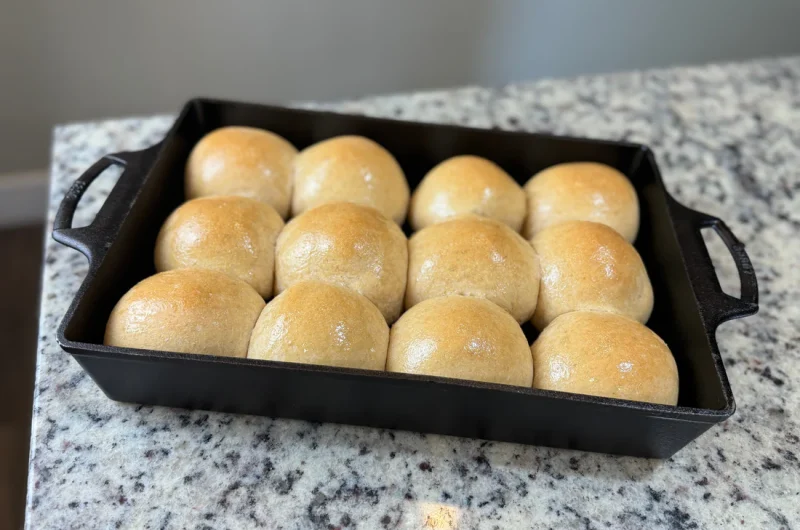
Fresh Milled Flour Rolls are one of the most rewarding homemade bread recipes you can bake in your own kitchen. These soft, fluffy dinner rolls are made using fresh milled hard white wheat flour, giving them a wholesome flavor, light color, and excellent nutritional value. Unlike bread made with refined white flour, fresh milled flour contains the entire wheat kernel, including the bran, germ, and endosperm. This means every roll is naturally rich in fiber, vitamins, minerals, and wholesome goodness while still being soft enough for everyday meals.
One of the biggest advantages of this recipe is its speed. Many homemade bread recipes require several hours of rising time, but these rolls are ready in about one hour from start to finish. That makes them perfect for busy families, weeknight dinners, holiday meals, or any occasion when you want fresh homemade bread without spending the entire day in the kitchen.
Why Fresh Milled Flour Is Becoming More Popular
More home bakers are choosing fresh milled flour because it provides superior flavor and nutrition compared to commercially processed flour. When wheat berries are milled immediately before baking, the natural oils and nutrients remain intact. This creates bread with a richer taste, fresher aroma, and better overall texture.
Fresh milling also allows you to control the quality of your ingredients. Instead of relying on flour that may have been sitting on store shelves for months, you can grind whole wheat berries just before mixing your dough. The result is bread that tastes fresher and often has a softer texture than many people expect from whole grain baking.
Why We Prefer This Recipe
These Fresh Milled Flour Rolls are simple enough for beginners while producing bakery-style results. They are soft on the inside, lightly golden on the outside, and have a mild wheat flavor that pairs beautifully with almost any meal.
Unlike many whole wheat rolls that become dense or dry, these rolls remain tender thanks to the balanced ingredients and proper kneading. The honey adds a touch of natural sweetness, while butter creates a rich, soft crumb. Because the dough comes together quickly, you can enjoy warm homemade rolls in about an hour.
Whether served with soup, roasted meats, holiday dinners, or sandwiches, these rolls fit almost every occasion.
Why Hard White Wheat Works Best
Mild Flavor
Hard white wheat has a naturally mild, slightly sweet flavor that many people prefer over traditional red wheat. This makes it ideal for dinner rolls because it creates bread that appeals to both children and adults.
Lighter Color
Unlike red wheat, hard white wheat produces bread with a much lighter appearance. The finished rolls resemble traditional white dinner rolls while still offering the nutritional benefits of whole grains.
Excellent Nutrition
Although the flavor is milder, hard white wheat still contains all the nutrients naturally found in whole grains. It provides fiber, B vitamins, iron, magnesium, and antioxidants that support a balanced diet.
Ingredient Overview
Each ingredient plays an important role in producing soft, fluffy rolls with excellent flavor and texture.
Fresh Milled Hard White Wheat Flour
Fresh milled flour is the star ingredient. Because it contains the entire wheat kernel, it absorbs more moisture than regular all-purpose flour. This extra absorption helps produce moist, hearty rolls while providing additional nutrients.
Fresh flour should be used soon after milling for the best flavor and baking performance.
Warm Milk or Water
Warm milk creates a richer dough with a softer crumb, while warm water produces equally delicious dairy-free rolls. The liquid should feel comfortably warm rather than hot to ensure the yeast remains active.
Honey or Sugar
Honey adds gentle sweetness while helping activate the yeast. It also contributes to beautiful browning during baking.
Sugar works equally well if preferred.
Instant Yeast
Instant yeast helps the dough rise quickly, making this recipe possible within about one hour. Because it mixes directly into the dough, preparation is simple and convenient.
Salt
Salt strengthens gluten development, balances sweetness, and enhances the natural wheat flavor. Although only a small amount is used, it makes a noticeable difference in the finished bread.
Butter
Softened butter enriches the dough and helps create tender, fluffy rolls with a soft crust. Brushing additional melted butter over the finished rolls gives them a beautiful shine while keeping the tops soft.
Why Proper Dough Consistency Matters
Fresh milled flour behaves differently from commercially processed flour because it absorbs more liquid. The dough should feel soft, smooth, and only slightly sticky.
Many new bakers mistakenly add too much flour if the dough feels sticky during mixing. However, slightly sticky dough generally produces softer rolls after baking. Excess flour often creates dense, dry bread.
If the dough appears overly dry, adding a small amount of additional warm milk or water usually corrects the texture.
Using a Bosch Mixer or Kneading by Hand
One advantage of this recipe is its flexibility. A Bosch mixer equipped with a dough hook can knead the dough efficiently while saving time and effort.
However, hand kneading works equally well.
When kneading by hand, gently stretch and fold the dough repeatedly for approximately 8–10 minutes until it becomes smooth and elastic.
Proper kneading develops the gluten structure, helping the rolls rise well while maintaining a soft interior.
Perfect for Everyday Meals
Fresh Milled Flour Rolls complement almost any meal. Their mild flavor allows them to pair beautifully with soups, stews, roasted meats, pasta dishes, salads, and holiday dinners.
They are equally delicious served warm with butter, honey, homemade jam, or cheese. Leftover rolls can also be sliced for sandwiches or toasted for breakfast.
Because they freeze well after baking, many home bakers prepare double batches so fresh rolls are always available when needed.
Instructions
Making homemade rolls with fresh milled flour is much easier than many people expect. Although fresh milled flour behaves slightly differently from store-bought flour, following a few simple techniques helps produce consistently soft, fluffy, and flavorful rolls. Paying attention to dough texture, rising times, and baking temperature makes a noticeable difference in the final result.
Step 1: Activate the Yeast
Begin by pouring the warm milk or warm water into a large mixing bowl or the bowl of your stand mixer.
Add the honey or sugar and stir until dissolved.
Sprinkle the instant yeast evenly over the surface of the liquid.
Allow the mixture to sit for 5–10 minutes until it becomes foamy.
Foamy bubbles indicate that the yeast is active and ready to help the dough rise properly.
Step 2: Mix the Dough
Add the following ingredients:
- Fresh milled hard white wheat flour
- Salt
- Softened butter
Mix everything together until a soft dough forms.
If using a Bosch mixer, mix on low speed until all the flour is incorporated.
The dough should look soft, smooth, and slightly sticky.
Avoid adding extra flour too quickly, as fresh milled flour continues absorbing moisture during mixing.
Step 3: Knead Until Smooth
Continue kneading for approximately 8–10 minutes.
If kneading by hand:
- Fold the dough over itself.
- Push it forward using the heel of your hand.
- Rotate slightly and repeat.
If using a mixer:
Use the dough hook until the dough becomes smooth, elastic, and slightly stretchy.
Proper kneading develops the gluten structure naturally found in wheat, helping the rolls become lighter and fluffier.
Step 4: First Rise
Place the dough into a lightly greased bowl.
Cover with a clean kitchen towel or plastic wrap.
Allow it to rest in a warm location for approximately 20 minutes.
Unlike many bread recipes, this dough does not need to double in size.
A slight increase in volume is sufficient.
Step 5: Divide the Dough
Turn the dough onto a lightly floured work surface.
Divide it into 10–12 equal portions.
Using your hands, gently shape each piece into a smooth ball.
Keeping the rolls similar in size helps them bake evenly.
Step 6: Arrange in the Baking Dish
Lightly grease a baking pan.
Arrange the dough balls with a small amount of space between them.
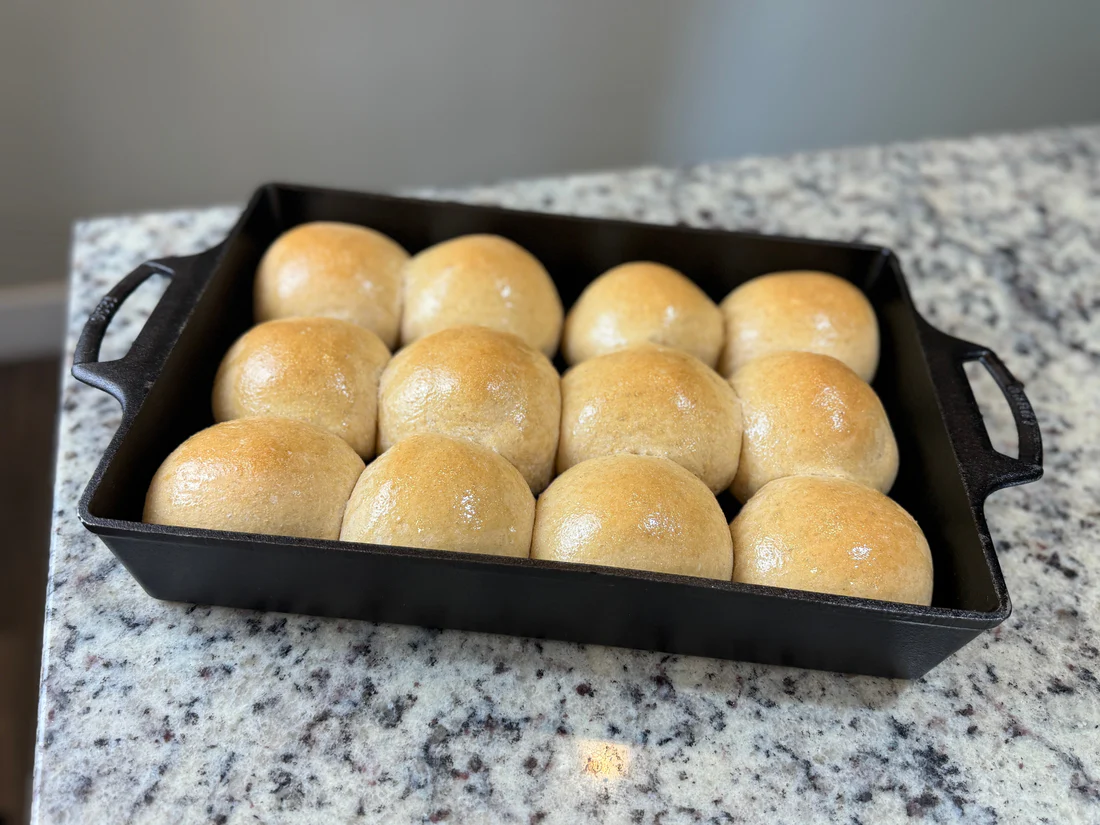
As they rise and bake, they will expand and gently touch each other, creating classic pull-apart dinner rolls.
Step 7: Second Rise
Cover the shaped rolls.
Allow them to rise for another 15–20 minutes.
During this time the rolls become slightly puffy and increase in size.
Avoid allowing them to overproof, as excessive rising can reduce their oven spring.
Step 8: Bake
Preheat the oven to:
375°F (190°C)
Bake the rolls for approximately 15–18 minutes.
The tops should become lightly golden while the interiors remain soft and fluffy.
If available, an instant-read thermometer should register approximately 190°F (88°C) inside the rolls.
Step 9: Brush with Butter
Immediately after removing the rolls from the oven, brush the tops with melted butter.
This simple step gives the rolls:
- A beautiful golden shine
- A softer crust
- Rich buttery flavor
Allow the rolls to cool slightly before serving.
Easy Ways to Customize Your Rolls
Fresh Milled Flour Rolls are wonderfully versatile and can easily be adapted to suit different meals.
Honey Butter Rolls
Brush the warm rolls with honey butter immediately after baking for extra sweetness.
These pair beautifully with holiday dinners.
Herb Dinner Rolls
Mix dried herbs into the dough, including:
- Rosemary
- Thyme
- Oregano
- Parsley
The herbs add wonderful aroma and flavor.
Garlic Butter Rolls
After baking, brush the rolls with melted garlic butter and sprinkle with chopped parsley.
They become the perfect accompaniment to pasta dishes and soups.
Cheese Rolls
Fold shredded cheddar, mozzarella, or Parmesan into the dough before shaping.
The melted cheese creates rich flavor throughout each roll.
Common Mistakes to Avoid
Avoiding these simple mistakes helps produce consistently excellent rolls.
Adding Too Much Flour
Fresh milled flour naturally absorbs moisture.
Adding excessive flour creates dry, dense rolls.
The dough should remain soft and slightly tacky.
Using Hot Liquid
Milk or water that is too hot may damage the yeast.
Warm—not hot—is ideal.
Under-Kneading
Insufficient kneading limits gluten development.
The dough should feel smooth and elastic before rising.
Overbaking
Baking too long dries the rolls.
Remove them as soon as they become lightly golden.
Serving Suggestions
These homemade rolls pair beautifully with countless meals, including:
- Homemade soups
- Beef stew
- Chicken dinners
- Roast turkey
- Holiday ham
- Pasta dishes
- Fresh salads
- Breakfast with butter and jam
- Sandwiches
- Sliders
They are equally delicious served warm with:
- Butter
- Honey
- Homemade fruit preserves
- Cream cheese
Storage Instructions
Store completely cooled rolls in an airtight container at room temperature for 1–2 days.
For longer freshness, refrigerate for up to 5 days.
To freeze:
- Wrap individually or in small portions.
- Place in freezer-safe bags.
- Freeze for up to 3 months.
Thaw at room temperature and warm briefly before serving.
Nutrition Benefits
Fresh milled whole wheat flour naturally contains more nutrients than refined flour because the bran, germ, and endosperm remain intact. These rolls provide dietary fiber, B vitamins, vitamin E, iron, magnesium, zinc, and plant-based antioxidants. The whole grains also contribute slower-digesting carbohydrates that provide longer-lasting energy while supporting digestive health. Compared to many commercial dinner rolls, fresh milled flour rolls offer greater nutritional value without sacrificing softness or flavor.
Notes
Use freshly milled hard white wheat whenever possible for the best flavor and nutrition. The dough should remain soft and slightly sticky throughout mixing, as this produces lighter rolls after baking. Resist adding too much flour, even if the dough initially feels tacky. Freshly baked rolls are best enjoyed warm on the day they are made, but they also freeze beautifully for future meals. Brushing the tops with melted butter immediately after baking helps create an extra-soft crust and a beautiful golden finish. These Fresh Milled Flour Rolls are ideal for holiday dinners, family meals, sandwiches, soup nights, meal prep, and everyday homemade baking.
Fresh Milled Flour Rolls
10
servings15
minutes165
kcal20
minutes20
minutes18
Minutes1
hour15
minutesIngredients
- For the Dough
3 cups fresh milled hard white wheat flour
1 cup warm milk (or water)
2 tablespoons honey or sugar
2¼ teaspoons instant yeast
1 teaspoon salt
3 tablespoons butter (softened)
- Optional Finish
Melted butter for brushing after baking
Directions
- Activate the Yeast
Pour the warm milk (or water) into a large mixing bowl.
Add the honey or sugar and stir until dissolved.
Sprinkle the instant yeast over the top.
Allow it to rest for 5–10 minutes until the mixture becomes foamy. - Prepare the Dough
Add the following ingredients:
Fresh milled hard white wheat flour
Salt
Softened butter
Mix until a soft dough forms.
If using a Bosch mixer, mix on low speed until everything is fully combined - Knead the Dough
Knead the dough for 8–10 minutes until it becomes smooth and elastic.
By hand: Knead on a lightly floured surface.
By mixer: Use the dough hook attachment.
The finished dough should feel soft and slightly sticky. - First Rise
Transfer the dough to a lightly greased bowl.
Cover with a clean kitchen towel or plastic wrap.
Let it rise in a warm place for 20 minutes.
The dough should become slightly puffy. - Shape the Rolls
Divide the dough into 10–12 equal portions.
Roll each portion into a smooth ball.
Arrange the dough balls in a lightly greased baking dish. - Second Rise
Cover the baking dish.
Allow the rolls to rise for 15–20 minutes, or until they become puffy and begin to touch each other. - Bake
Preheat the oven to:
375°F (190°C)
Bake for 15–18 minutes, or until the tops become lightly golden brown. - Finish
Remove the rolls from the oven.
Brush the tops with melted butter while still warm.
Allow them to cool for a few minutes before serving.
Nutrition Facts
10 servings per container
- Amount Per ServingCalories165
- % Daily Value *
- Total Fat
4g
6%
- Total Carbohydrate
28g
11%
- Total Sugars 4g
- Protein 5g 10%
* The % Daily Value tells you how much a nutrient in a serving of food contributes to a daily diet. 2,000 calories a day is used for general nutrition advice.