Anti-inflammatory vegetable soup with turmeric is a comforting, flavorful meal made with fresh vegetables, aromatic spices, herbs, and a bright touch of lemon juice. This homemade vegetable soup is an excellent choice for chilly evenings, rainy afternoons, or any time you want a warm bowl of something nourishing.
It combines onions, carrots, celery, green cabbage, cauliflower, garlic, turmeric, and vegetable broth to create a delicious soup with plenty of texture and natural flavor. Best of all, this easy vegetable soup recipe takes approximately 45 minutes to prepare and cook, making it suitable for busy weekdays.
The secret to this turmeric vegetable soup is the way its ingredients work together. Slowly sautéed vegetables create a flavorful foundation, while turmeric and garlic add warmth and depth to the broth. Green cabbage becomes tender and slightly sweet as it simmers, and cauliflower absorbs the surrounding flavors without losing its pleasant texture. Fresh parsley and lemon juice bring everything together with a refreshing finish. The result is a light yet satisfying soup that tastes homemade in the best possible way.
What Makes This Turmeric Vegetable Soup Special?
This healthy vegetable soup stands out because it uses everyday ingredients to build layers of flavor without requiring complicated cooking techniques. Instead of relying on heavy cream, excessive butter, or complicated sauces, the recipe gets its richness from olive oil, softened vegetables, spices, and a well-seasoned broth. Each ingredient contributes something different, giving the finished soup a balanced combination of sweetness, savory flavor, freshness, and gentle warmth.
Turmeric is one of the defining ingredients in this recipe. It gives the broth its golden color and earthy taste, pairing particularly well with garlic, vegetables, and black pepper if you choose to use it as an optional seasoning. Turmeric contains curcumin, a compound that has been studied for its anti-inflammatory properties. However, eating turmeric soup should not be considered a treatment for inflammation or a substitute for medical care. It is best enjoyed as one part of a balanced, varied diet.
Another reason to love this homemade soup is the combination of cabbage and cauliflower. These vegetables offer different textures, so every spoonful feels interesting rather than overly soft or watery. Cabbage develops a mild sweetness during cooking, while cauliflower becomes tender and absorbs the aromatic broth. Together with carrots, celery, and onions, they create a vegetable-packed meal that is both comforting and easy to enjoy.
Ingredients for Anti-Inflammatory Vegetable Soup
The ingredient list for this recipe is straightforward, and most items are easy to find at a local grocery store. Olive oil helps soften the vegetables and carry their flavors throughout the broth. Onions, carrots, and celery provide the aromatic base, while garlic and turmeric give the soup its distinctive character. Green cabbage and cauliflower add substance, and vegetable broth brings the ingredients together into a warm, flavorful dish.
Fresh lemon juice is especially important near the end of cooking because it adds brightness to the earthy turmeric and naturally sweet vegetables. Parsley provides a fresh herbal note that makes the finished soup taste lively rather than heavy. For the best results, choose fresh, firm vegetables and remove any damaged outer cabbage leaves before chopping. Cut the vegetables into reasonably similar pieces so they cook evenly and are easy to eat with a spoon.
Use the original ingredient quantities from your source recipe when preparing this dish. The supplied recipe description identifies the main ingredients but does not provide exact measurements, so quantities should not be guessed or presented as original. If you have the complete source ingredient list, retain those quantities when publishing the recipe card.
Health Benefits of the Main Ingredients
Turmeric and its natural compounds
Turmeric is widely used in cooking because of its earthy flavor and vivid golden color. It contains curcumin, a plant compound researched for its potential effects on inflammatory processes in the body. The amount of curcumin absorbed from an ordinary serving of soup can vary, and culinary turmeric should not be treated as a medicinal dose. Nevertheless, using turmeric in everyday meals is a simple way to enjoy its characteristic flavor while adding variety to a vegetable-rich diet.
Cabbage and cauliflower
Green cabbage and cauliflower are nutritious vegetables that contribute fiber, vitamins, and other naturally occurring plant compounds. Cabbage becomes softer and sweeter during simmering, while cauliflower provides a tender, satisfying texture. Both vegetables work well in soups because they absorb flavor without requiring complicated preparation. Including a range of vegetables in meals can help increase dietary variety, and this recipe offers a convenient way to enjoy two familiar vegetables in one comforting dish.
Carrots, onions, and celery
Carrots bring natural sweetness and contribute beta-carotene, which the body can convert into vitamin A. Onions add savory depth, while celery contributes a fresh, mildly herbal flavor that helps create a balanced soup base. Cooking these vegetables in olive oil allows their aromas to develop and helps carry their flavors into the broth. Together, they provide the foundation that makes this soup taste rich and satisfying even though the recipe does not depend on cream or other heavy ingredients.
Olive oil, garlic, lemon, and parsley
Olive oil contributes unsaturated fats and helps the vegetables soften without sticking to the pot. Garlic provides a distinctive aroma, while lemon juice adds acidity that lifts the finished broth. Parsley supplies a fresh herbal note and contributes small amounts of nutrients. These ingredients are valuable for flavor as much as for their nutritional qualities. A healthy eating pattern depends on the overall variety and balance of foods rather than the supposed healing effects of any single ingredient.
Helpful Tips for the Best Vegetable Soup
Cut the vegetables evenly
Try to cut the carrots, cauliflower, and cabbage into similarly sized pieces where practical. Uniform pieces cook at a more consistent rate, helping prevent some vegetables from becoming mushy while others remain firm. Smaller pieces generally cook more quickly, whereas larger chunks take longer to soften. If you prefer a soup with more texture, cut the vegetables slightly larger and check their tenderness as they simmer. Consistent chopping also makes the finished soup easier to serve and more pleasant to eat.
Build flavor before adding the broth
Do not skip the initial sautéing stage. Softening the onions, carrots, and celery in olive oil gives the soup a more developed flavor than boiling everything together from the beginning. Adding garlic and turmeric after the first vegetables have softened allows their aromas to emerge without exposing them to prolonged high heat. Stir frequently during this stage, and add the broth once the vegetables and seasonings smell fragrant. These small steps can noticeably improve a simple homemade vegetable soup.
Balance the broth with lemon juice
Lemon juice is a useful finishing ingredient because it brightens the broth and balances the natural sweetness of the cooked vegetables. Add it near the end rather than relying on prolonged simmering to preserve its fresh flavor. If you enjoy a more pronounced citrus taste, you can adjust the amount when serving, provided that doing so is consistent with your dietary needs and recipe preferences. Taste before making changes, because the acidity of lemons can vary and some vegetable broths already have a strong flavor.
Choose a broth that suits your diet
Vegetable broth keeps this recipe plant-based when all other ingredients are also plant-derived. Check the label if you need a gluten-free soup, since some packaged broths and seasoning products may contain gluten-containing ingredients or be produced with cross-contact concerns. A lower-sodium broth can also make it easier to control the salt level of the finished dish. Homemade broth is another option, but a suitable store-bought vegetable broth works well when you want to prepare dinner quickly.
Easy Ways to Serve This Soup
This anti-inflammatory vegetable soup is versatile enough to serve in several ways. For a light lunch, enjoy a generous bowl on its own, allowing the cabbage, cauliflower, and carrots to provide plenty of texture. For dinner, pair it with whole-grain toast or a simple side salad. The lemony broth also complements roasted vegetables and other uncomplicated dishes, making the soup easy to incorporate into a weekly meal plan without requiring a separate menu.
If you want to make the meal more filling, serve the soup over cooked quinoa in a bowl. Quinoa adds a different texture and provides plant-based protein, which can help make the meal more substantial. Other additions may be possible depending on your preferences, but keep in mind that adding beans, grains, meat, or other ingredients changes the recipe and its nutritional information. If you are publishing the original recipe, identify these as optional serving ideas rather than part of the required ingredient list.
Frequently Asked Questions
Is anti-inflammatory vegetable soup with turmeric gluten-free?
This recipe can be gluten-free when the vegetable broth and every other ingredient used are free from gluten. Fresh vegetables, olive oil, turmeric, lemon juice, and parsley are naturally gluten-free, but packaged broth products should always be checked. If you have celiac disease or need to avoid gluten strictly, review ingredient labels and any cross-contact warnings. Serve the soup with a gluten-free side if you need to maintain a completely gluten-free meal.
Can I make this turmeric vegetable soup ahead of time?
Yes, this soup is suitable for preparing ahead because its flavors can blend during storage. Cook the vegetables until tender but not excessively soft, then cool and refrigerate the soup promptly. When reheating, warm it gently and check the vegetable texture before serving. You can add a little fresh lemon juice or parsley at serving time if you want to restore some of the brightness that may fade during refrigeration.
What can I serve with vegetable soup?
This soup pairs well with whole-grain bread, toast, a simple green salad, or a small serving of cooked quinoa. If you want a more substantial meal, choose a side that complements the mild, lemony broth without overpowering it. Quinoa is particularly useful when you want to add plant-based protein. Remember that serving suggestions are optional and do not change the original ingredients in the recipe itself.
Can I adjust the vegetables?
The recipe is designed around onions, carrots, celery, cabbage, and cauliflower, which each contribute a particular flavor or texture. You can experiment with additional vegetables when making a personal variation, but changing or replacing the original ingredients creates a modified version of the recipe. For your published recipe card, keep the original ingredient list intact and describe any substitutions separately as optional variations rather than silently changing the ingredients.
Does turmeric soup treat inflammation?
No soup should be presented as a proven treatment for inflammation or a replacement for prescribed medication. Turmeric contains curcumin, which is being studied for its biological effects, but the amount obtained from ordinary cooking is not equivalent to a standardized supplement or medical treatment. This vegetable soup can be part of a balanced diet that includes a variety of vegetables, fruits, whole grains, and other nutritious foods. Anyone managing a medical condition should consult a qualified healthcare professional for individual advice.
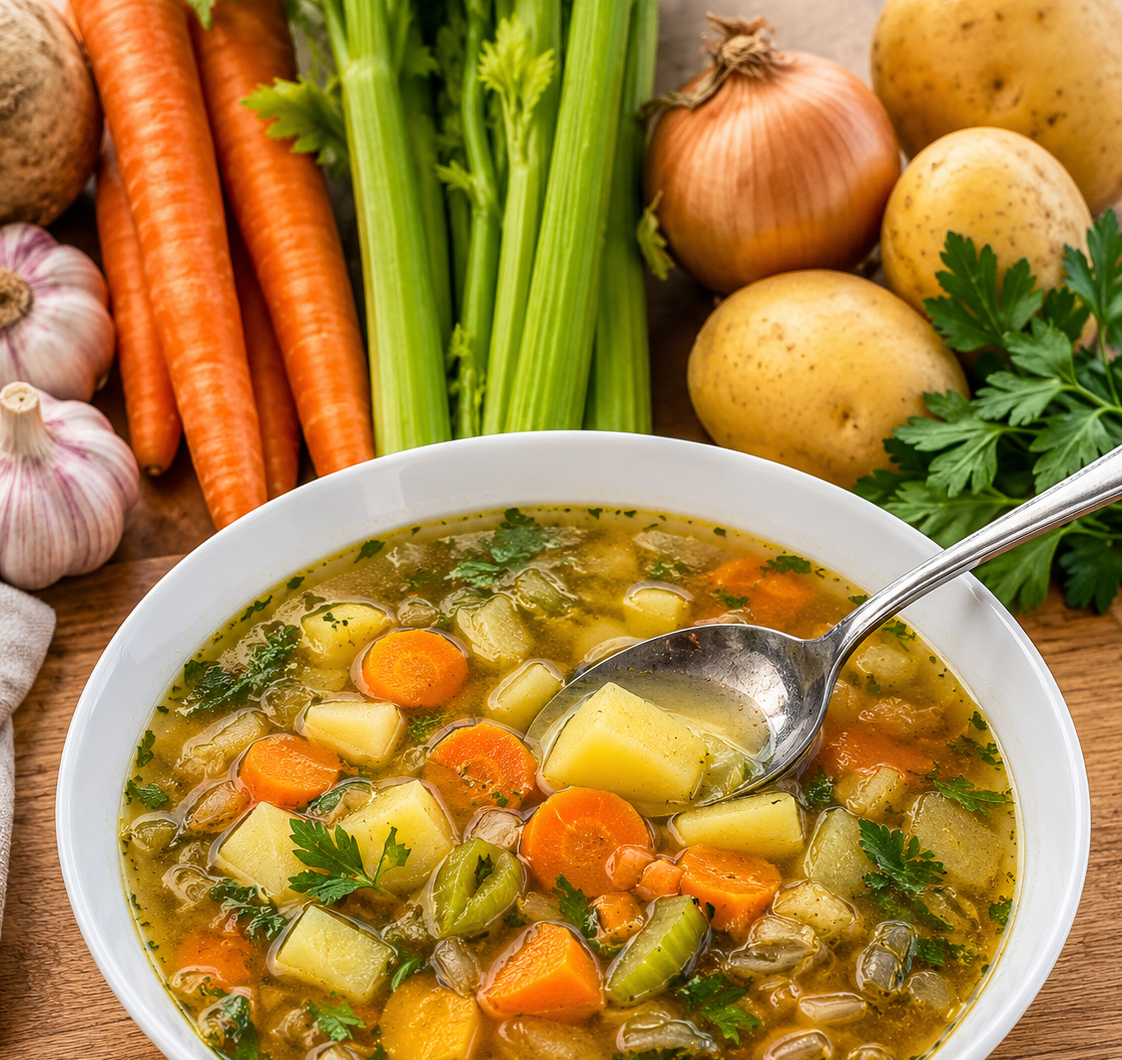
Anti-Inflammatory Vegetable Soup with Turmeric
This Wholesome Anti-Inflammatory Vegetable Soup with Turmeric is a comforting one-pot meal made with fresh vegetables, warm spices, vegetable broth, lemon juice, and parsley. It is easy to make, full of flavor, and perfect for lunch or dinner.
6
servings15
minutes25
minutes40
minutesIngredients
3 tablespoons olive oil
1 medium onion, diced
3 stalks celery, thinly sliced
4 carrots, peeled and thinly sliced
3 cloves garlic, chopped
3 cups cauliflower florets
3 cups chopped green cabbage
1 teaspoon turmeric
1 teaspoon cumin
1/2 teaspoon paprika
Pinch of chili flakes (optional)
6 cups vegetable broth
1 1/2 teaspoons kosher salt, or to taste
1/2 teaspoon ground black pepper, or to taste
1/4 cup chopped parsley
Juice of one lemon
Directions
- Heat olive oil in a large soup pot over medium heat.
- Add onion, celery, and carrots. Cook for 6–7 minutes, stirring occasionally, until the onions are soft and translucent.
- Add garlic, cauliflower, cabbage, turmeric, paprika, cumin, and chili flakes if using.
- Cook for another 2–3 minutes until the cabbage softens and the spices become fragrant.
- Pour in the vegetable broth and bring the soup to a gentle simmer.
- Simmer for 15–20 minutes until all vegetables are tender and the broth has reduced slightly.
- Season with salt and black pepper to taste.
- Add the lemon juice and chopped parsley.
- Simmer for a few more minutes.
- Serve warm and enjoy.