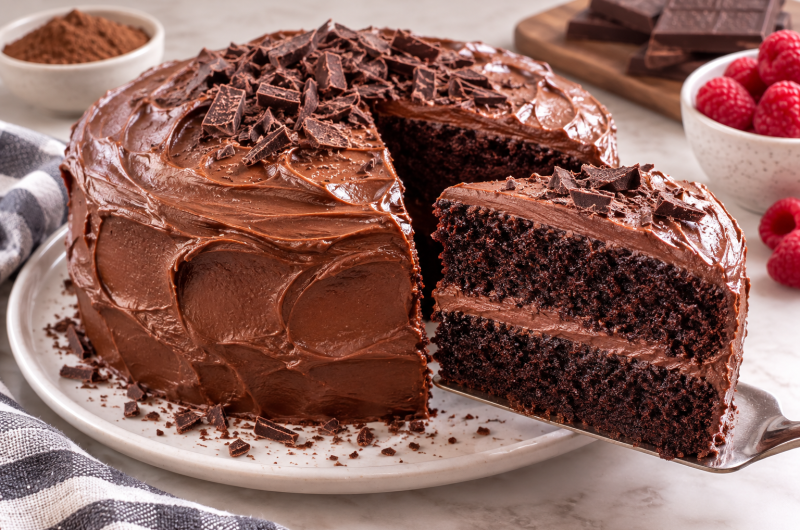
A perfectly baked Gluten-Free Chocolate Cake should be every bit as rich, soft, and indulgent as a traditional chocolate cake. This recipe delivers exactly that, with a tender crumb, deep chocolate flavor, and a wonderfully moist texture that no one will believe is completely gluten-free. Whether you are baking for a birthday, holiday celebration, family gathering, or simply satisfying a chocolate craving, this homemade cake is guaranteed to impress.
Unlike many gluten-free cakes that can be dry or crumbly, this recipe stays incredibly soft thanks to a carefully balanced combination of gluten-free flour, cocoa powder, buttermilk, vegetable oil, and hot coffee. Every slice is packed with intense chocolate flavor while remaining light enough to enjoy with a cup of coffee or tea. Finished with a smooth chocolate frosting, it becomes a bakery-style dessert that looks as beautiful as it tastes.
Importance Of This Recipe
One of the biggest advantages of this recipe is that it doesn’t feel like a gluten-free substitute. The texture is soft, fluffy, and moist, making it almost impossible to distinguish from a traditional wheat-based chocolate cake. This makes it an excellent choice when baking for family and friends, even if they do not follow a gluten-free diet.
Another reason this cake stands out is its versatility. It works equally well as a simple everyday dessert, an elegant layer cake, or a celebration centerpiece decorated with chocolate shavings, berries, or whipped cream. Its dependable results make it suitable for both beginner bakers and experienced home cooks.
What Makes This Chocolate Cake So Moist?
Moisture is one of the most important qualities of any chocolate cake, and several ingredients work together to create the perfect texture.
Vegetable Oil Creates a Soft Crumb
Unlike butter, vegetable oil remains liquid even after the cake cools. This helps the crumb stay soft for longer while producing a lighter texture that melts in your mouth. Coconut oil can also be used if you prefer a slightly richer flavor.
The oil blends evenly into the batter, creating moisture throughout every slice instead of concentrating it in certain areas.
Buttermilk Adds Tenderness
Buttermilk contributes both flavor and texture. Its gentle acidity reacts with the baking soda, helping the cake rise beautifully while producing a lighter crumb.
If traditional buttermilk is unavailable, combining dairy-free milk with lemon juice creates an excellent alternative that provides similar baking results.
The Secret Ingredient: Hot Coffee
One of the best-kept secrets of professional chocolate baking is the use of hot brewed coffee. Coffee does not make the cake taste like coffee. Instead, it enhances the natural richness of cocoa, creating a deeper and more intense chocolate flavor.
If you prefer not to use coffee, hot water can be substituted without affecting the cake’s texture. However, coffee provides an extra layer of complexity that makes the chocolate taste even richer.
Choosing the Right Gluten-Free Flour
A quality gluten-free flour blend is essential for achieving the best structure and texture. Blends that already contain xanthan gum usually produce more reliable results because xanthan gum helps replace the elasticity normally provided by gluten.
Using a well-balanced flour blend allows the cake to remain soft while preventing excessive crumbling after baking. It also creates cleaner slices, making the finished cake more attractive when served.
Cocoa Powder Brings Rich Chocolate Flavor
Unsweetened cocoa powder provides the signature chocolate taste in this recipe. High-quality cocoa creates a deeper color and more intense flavor, making every bite rich and satisfying.
Because cocoa naturally contains slight bitterness, the combination of granulated sugar and brown sugar balances the flavor while allowing the chocolate to remain the main focus.
Brown Sugar Adds Moisture
Using both white and brown sugar improves more than sweetness. Brown sugar contains natural molasses that helps retain moisture during baking, contributing to the cake’s soft texture even after several days.
This combination also creates a slightly deeper caramel-like flavor that complements the cocoa beautifully.
Mixing the Batter
Preparing the batter is straightforward and beginner-friendly. The dry ingredients are first whisked together to distribute the baking powder, baking soda, and cocoa evenly. In a separate bowl, the eggs, sugars, oil, buttermilk, and vanilla are mixed until smooth before combining both mixtures.
Once the dry ingredients have been incorporated, the hot coffee is slowly added while stirring continuously. Although the batter becomes thinner than many cake batters, this is completely normal and is one of the reasons the finished cake remains exceptionally moist.
Baking for Perfect Results
Baking at the correct temperature allows the cake to rise evenly while developing a tender crumb. The batter expands gently as the baking powder and baking soda react, creating a light structure that supports the rich chocolate flavor.
The cake is ready when the top springs back lightly and a toothpick inserted into the center comes out clean. Avoid overbaking, as additional time in the oven may reduce the cake’s moisture.
Cooling Before Frosting
Allow the cakes to cool in their pans for several minutes before transferring them to a wire rack. Complete cooling is essential because warm cake layers can melt the frosting and make decorating difficult.
Once cooled, the cake becomes easier to handle and maintains its shape during assembly, creating clean layers with smooth frosting between them.
Creating the Perfect Chocolate Frosting
A rich chocolate cake deserves an equally delicious frosting, and this simple cocoa buttercream complements the cake beautifully. Softened butter creates a creamy foundation, while powdered sugar provides sweetness and structure. Unsweetened cocoa powder adds deep chocolate flavor, and vanilla extract enhances the overall taste without overpowering the cake.
Adding the milk gradually is the key to achieving the perfect consistency. A small amount at a time allows you to create a frosting that is smooth, creamy, and easy to spread over the cake without becoming too thin.
Achieving a Smooth Finish
For the neatest appearance, begin by placing one cake layer on a serving plate before spreading an even layer of frosting across the surface. Position the second cake layer on top and continue frosting the top and sides until the cake is fully covered.
Using an offset spatula or the back of a spoon helps create a smooth finish. If you prefer a rustic homemade appearance, gentle swirls in the frosting create an attractive texture without requiring professional decorating skills.
Decorating Your Chocolate Cake
One of the best things about this Gluten-Free Chocolate Cake is how easily it can be customized for different occasions. Fresh raspberries, strawberries, blueberries, or cherries add bright color and refreshing flavor that balances the richness of the chocolate.
Chocolate curls, grated dark chocolate, cocoa powder, or colorful sprinkles transform the cake into a beautiful birthday centerpiece. For a simple everyday dessert, a light dusting of powdered sugar is enough to create an elegant presentation.
Serving Suggestions
This cake is delicious on its own, but pairing it with complementary flavors makes every serving even more enjoyable. A scoop of vanilla ice cream creates a classic dessert combination, while freshly whipped cream adds extra lightness.
Fresh berries provide a refreshing contrast to the rich chocolate flavor, and a hot cup of coffee, tea, or milk completes the experience. Because the cake remains moist, it is equally enjoyable served chilled or at room temperature.
Perfect for Special Occasions
Although this cake is simple enough to prepare for everyday baking, it is also elegant enough for birthdays, anniversaries, holiday celebrations, and family gatherings. Its soft texture and rich flavor make it suitable for guests of all ages, including those who do not follow a gluten-free diet.
The recipe can also be baked in different pan sizes, allowing you to prepare layer cakes, sheet cakes, or cupcakes depending on the occasion.
Storage and Freezing
Once frosted, store the cake in an airtight container in the refrigerator for up to four days. Before serving, allow it to sit at room temperature for about 20 to 30 minutes so the frosting softens and the cake regains its tender texture.
The unfrosted cake layers freeze exceptionally well. Wrap each cooled layer tightly in plastic wrap followed by aluminum foil before freezing for up to three months. Thaw completely before decorating.
Easy Ways to Customize the Recipe
This recipe can be adapted to suit different tastes while keeping the original ingredients unchanged. Add fresh raspberries between the cake layers for a fruity variation or sprinkle chocolate chips into the batter for extra richness.
For a dairy-free version, use plant-based milk mixed with lemon juice instead of buttermilk and replace the butter in the frosting with vegan butter. These simple substitutions allow more people to enjoy this delicious dessert.
Common Mistakes to Avoid
Although the recipe is beginner-friendly, a few simple techniques help produce the best results. Measuring the flour accurately prevents a dry cake, while sifting the cocoa powder removes lumps and creates a smoother batter.
Avoid overmixing after adding the flour, as this can produce a heavier texture. Finally, never frost the cake while it is still warm because the buttercream may melt and slide off the layers.
Notes
Use Quality Cocoa Powder
Good-quality cocoa powder produces a deeper chocolate flavor and a richer color.
Choose a Gluten-Free Flour Blend with Xanthan Gum
A flour blend containing xanthan gum helps improve the cake’s structure and creates cleaner slices.
Coffee Enhances Chocolate
Hot coffee deepens the chocolate flavor without making the cake taste like coffee.
Cool Completely Before Frosting
Allow the cake layers to cool fully before decorating for the smoothest frosting finish.
Store Properly
Keep leftover cake covered in the refrigerator and allow it to reach room temperature before serving for the best texture.
Summary
This Gluten-Free Chocolate Cake proves that gluten-free baking can be every bit as rich, moist, and satisfying as traditional baking. With its tender crumb, deep chocolate flavor, creamy frosting, and simple preparation, it is a dessert that feels special enough for celebrations while remaining easy enough for everyday baking.
Whether served at birthdays, holiday gatherings, family dinners, or weekend celebrations, this homemade chocolate cake is guaranteed to impress. Its beautiful texture, intense chocolate flavor, and reliable results make it a recipe that belongs in every gluten-free baker’s collection.
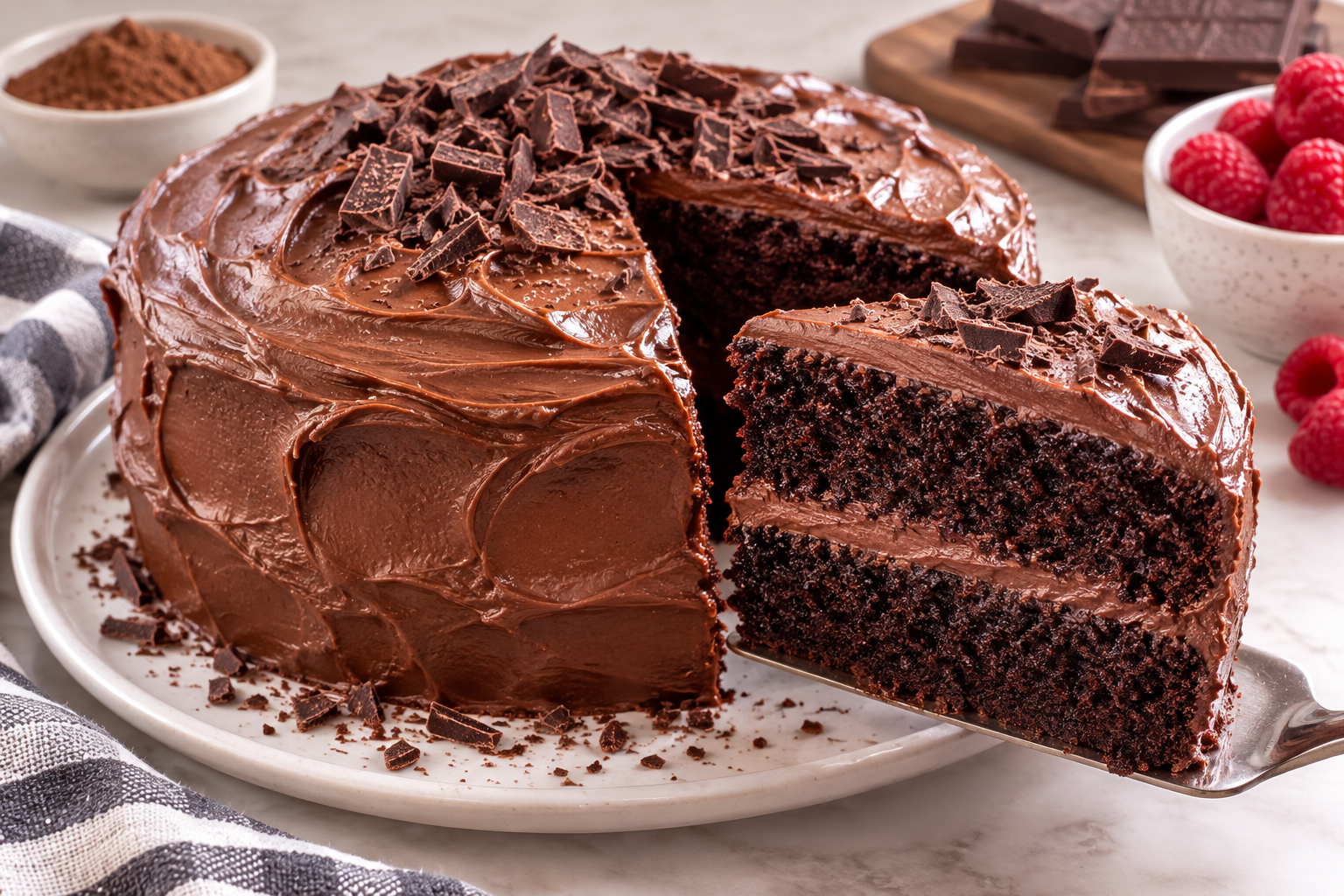
The Gluten-Free Chocolate Cake
A rich, moist, and fluffy Gluten-Free Chocolate Cake made with gluten-free flour, cocoa powder, and hot coffee for an intense chocolate flavor. Finished with a smooth chocolate frosting, this cake is perfect for birthdays, holidays, and everyday celebrations.
12
servings15
minutes35
minutes300
kcal10
minutes1
hourIngredients
- Cake
1¾ cups gluten-free all-purpose flour blend
¾ cup unsweetened cocoa powder
1½ tsp baking powder
1½ tsp baking soda
½ tsp salt
2 large eggs
1 cup granulated sugar
½ cup brown sugar
½ cup vegetable oil (or melted coconut oil)
1 cup buttermilk
¾ cup hot brewed coffee (or hot water)
2 tsp vanilla extract
- Frosting
½ cup unsalted butter, softened
2½ cups powdered sugar
¼ cup unsweetened cocoa powder
2–3 tbsp milk
1 tsp vanilla extract
Pinch of salt
Directions
- Prepare the Batter
Preheat the oven to 350°F (175°C) and line the cake pans.
Whisk together the flour, cocoa, baking powder, baking soda, and salt.
Beat the eggs, sugars, oil, buttermilk, and vanilla.
Fold the dry ingredients into the wet ingredients.
Gradually stir in the hot coffee until smooth. - Bake
Divide the batter evenly between the prepared pans.
Bake for 30–35 minutes.
Cool in the pans for 10 minutes, then transfer to a wire rack. - Make the Frosting
Beat the butter until creamy.
Add the powdered sugar, cocoa, vanilla, and salt.
Mix in the milk until smooth and spreadable. - Assemble
Spread frosting over one cake layer.
Add the second layer.
Frost the top and sides.
Slice and serve.
Nutrition Facts
12 servings per container
- Amount Per ServingCalories420
- % Daily Value *
- Total Fat
19g
25%
- Total Carbohydrate
58g
22%
- Protein 5g 10%
* The % Daily Value tells you how much a nutrient in a serving of food contributes to a daily diet. 2,000 calories a day is used for general nutrition advice.