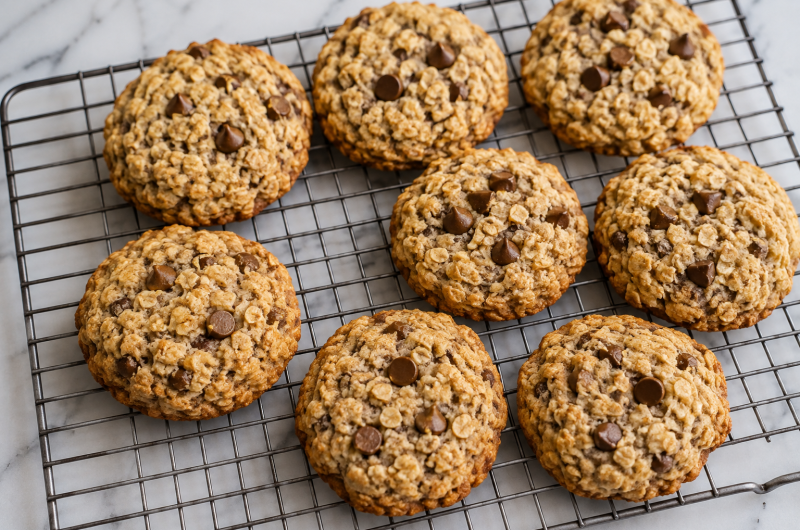
Few homemade treats are as comforting as a freshly baked oatmeal cookie. These Gluten-Free Oatmeal Cookies deliver everything people love about the classic recipe, including crisp golden edges, soft chewy centers, and rich buttery flavor. Made with gluten-free rolled oats, brown sugar, and chocolate chips, they are a wonderful choice for dessert, afternoon snacks, lunch boxes, holiday cookie trays, or simply enjoying with a warm cup of coffee or tea.
Unlike many gluten-free cookies that can become dry or crumbly, this recipe produces cookies with a tender texture that stays soft for days. The combination of carefully selected ingredients creates bakery-style cookies that are so delicious most people will never realize they are completely gluten-free.
Why You’ll Love These Gluten-Free Oatmeal Cookies
One of the biggest reasons this recipe stands out is its balance of texture and flavor. Every cookie offers crisp edges that gently give way to a soft, chewy center packed with hearty oats and sweet chocolate chips. The recipe uses simple pantry ingredients and comes together in one bowl, making cleanup quick and easy.
Because the dough is chilled before baking, the cookies keep their thick shape instead of spreading too much in the oven. This simple technique creates beautifully rounded cookies with an attractive homemade appearance and consistent texture in every batch.
What Makes These Cookies Different
Many gluten-free cookies rely heavily on starches, which sometimes produce a dry texture. This recipe avoids that problem by combining gluten-free flour with old-fashioned rolled oats and brown sugar. Together, these ingredients create a cookie that feels rich, moist, and satisfying while maintaining enough structure to hold its shape during baking.
The addition of chocolate chips provides bursts of sweetness throughout each cookie without overpowering the buttery oat flavor. Every bite delivers the perfect combination of soft oats, melted chocolate, and caramel notes from the brown sugar.
Choosing the Right Gluten-Free Flour Blend
A dependable gluten-free flour blend forms the foundation of successful baking. This recipe works especially well with multipurpose gluten-free flour blends designed for baking cookies and cakes. If your flour blend already contains xanthan gum, there is no need to add additional amounts unless specifically recommended. Using a high-quality flour blend improves texture, helps the cookies hold together, and produces a softer crumb after baking.
Why Rolled Oats Are Important
Old-fashioned rolled oats provide the signature chewy texture that makes oatmeal cookies so popular. They remain slightly firm after baking, giving every cookie a satisfying bite while absorbing moisture from the dough. Quick oats become much softer during baking and may reduce the chewy texture, while steel-cut oats remain too firm for this recipe. Certified gluten-free rolled oats are the best option for maintaining both safety and texture.
Brown Sugar Creates Soft Cookies
Light brown sugar contributes much more than sweetness. Its natural molasses content keeps the cookies moist while adding rich caramel flavor that complements the oats perfectly. Brown sugar also helps the cookies remain soft for several days after baking. Combined with granulated sugar, it creates balanced sweetness while allowing the buttery oat flavor to remain the focus.
Butter Brings Rich Flavor
Room-temperature butter blends easily with the dry ingredients, creating a smooth dough with even distribution of fat. During baking, the butter melts gradually, producing crisp golden edges while keeping the centers tender. Softened butter also allows the dough to mix evenly without requiring excessive stirring, helping preserve the ideal cookie texture.
Eggs Help Build Structure
Eggs provide stability while contributing moisture and richness. They bind the ingredients together and support the cookies as they bake, preventing excessive crumbling after cooling. Allowing the eggs to reach room temperature before mixing also improves blending and creates a smoother dough with a more consistent texture.
Vanilla Enhances Every Flavor
Although only a small amount is used, pure vanilla extract plays an important role in balancing the sweetness of the cookies. It enhances the butter, oats, brown sugar, and chocolate without becoming noticeable on its own. High-quality vanilla produces a warmer, richer flavor than imitation extracts, making the finished cookies taste more like those from a professional bakery.
Chocolate Chips Add the Perfect Finish
Semi-sweet chocolate chips provide just enough sweetness to complement the oatmeal without overwhelming it. They melt slightly during baking while maintaining their shape, creating pockets of chocolate throughout every cookie. If preferred, raisins may be substituted for a more traditional oatmeal cookie, but chocolate chips create a modern version that appeals to nearly everyone.
Mixing the Dry Ingredients
Begin by whisking together the gluten-free flour blend, xanthan gum (if needed), baking soda, salt, and granulated sugar. Mixing these ingredients thoroughly ensures the baking soda is evenly distributed throughout the dough, allowing every cookie to rise uniformly. Breaking apart any lumps also creates a smoother final texture.
Afterward, stir in the rolled oats and brown sugar. Make sure the brown sugar is fully separated so it blends evenly into the mixture. Even distribution prevents concentrated sweet spots while ensuring every cookie has the same rich flavor.
Incorporating the Butter
Instead of creaming the butter separately, this recipe mixes softened butter directly into the dry ingredients. Pressing the butter into the flour and oats until the mixture resembles coarse crumbs evenly coats the ingredients and creates a thick dough that bakes into beautifully textured cookies. This method also reduces cleanup because everything comes together in one mixing bowl.
Combining the Wet Ingredients
Once the butter is fully incorporated, create a small well in the center of the bowl and add the beaten eggs together with the vanilla extract. Stir gradually while folding the dry ingredients into the wet mixture. Continue mixing only until all of the flour disappears and a thick, evenly combined dough forms. Overmixing is unnecessary and may produce denser cookies.
Folding in the Chocolate Chips
The final mixing step is gently folding the chocolate chips throughout the dough. Stir only until they are evenly distributed so every cookie contains plenty of chocolate. The dough should now be thick, easy to scoop, and firm enough to shape into equal portions before chilling.
Chilling the Dough Creates Better Cookies
One of the most important steps in this recipe is chilling the cookie dough before baking. Although it may seem unnecessary, this short resting period makes a significant difference in both texture and appearance. As the dough chills, the butter becomes firm again, helping the cookies keep their thick, bakery-style shape during baking. The oats also absorb moisture from the dough, resulting in a richer flavor and chewier texture. Even a short chilling time helps prevent the cookies from spreading too much in the oven.
Shaping the Cookies
For evenly baked cookies, divide the dough into equal portions before placing them on the baking sheet. Each portion should be approximately the size of a golf ball or about 45 grams. Rolling the dough gently between your hands creates a smooth surface, while lightly flattening each ball into a thick disc encourages even baking. Uniform sizing ensures every cookie finishes baking at the same time and develops the same soft center and crisp edges.
Baking Until Perfectly Golden
Bake the cookies in a preheated 350°F (180°C) oven for approximately twelve minutes. The edges should appear lightly golden while the centers remain slightly soft. Resist the temptation to bake until the centers look completely firm because the cookies continue cooking on the hot baking sheet after they leave the oven. Removing them at the right moment guarantees soft, chewy centers once fully cooled.
Cooling the Cookies Properly
Freshly baked oatmeal cookies are delicate immediately after baking. Allow them to rest on the baking sheet for about ten minutes before moving them. During this time, the cookies finish setting and become firm enough to transfer without breaking. Afterward, place them on a wire cooling rack so air can circulate around them, preventing condensation from softening the bottoms. Proper cooling helps preserve the ideal combination of crispy edges and chewy centers.
Perfect for Every Occasion
These Gluten-Free Oatmeal Cookies are suitable for almost every occasion throughout the year. They make wonderful lunchbox treats, afternoon snacks, holiday cookie platters, bake sale favorites, picnic desserts, and homemade gifts. Their classic appearance and familiar flavor appeal to both children and adults, making them one of the most versatile cookies you can bake. Because they stay fresh for several days, they are also excellent for meal preparation or entertaining guests.
Delicious Serving Ideas
These cookies taste wonderful served on their own, but they also pair beautifully with many beverages and desserts. Enjoy them with a glass of cold milk, freshly brewed coffee, hot tea, or hot chocolate. They can also be served alongside vanilla ice cream for an easy dessert or crumbled over yogurt for added texture. Their rich oat flavor makes them an excellent companion to both warm and cold drinks throughout the year.
Easy Flavor Variations
Once you’ve mastered the basic recipe, there are many ways to customize it. Replace the chocolate chips with raisins for a traditional oatmeal raisin cookie, or use white chocolate chips for a sweeter variation. Chopped pecans or walnuts add extra crunch, while cinnamon or pumpkin spice introduces warm seasonal flavor. These simple additions allow you to enjoy new versions of the recipe without changing the baking method.
Storage Instructions
Store completely cooled cookies in an airtight container at room temperature for up to five days. Placing a small slice of bread inside the container helps maintain moisture and keeps the cookies soft. If your kitchen is particularly warm, refrigeration may extend freshness, although allowing refrigerated cookies to return to room temperature before serving provides the best texture.
Freezing Instructions
Both the baked cookies and the unbaked cookie dough freeze exceptionally well. Shape the dough into individual portions before freezing so you can bake only the amount you need. Store the dough in a freezer-safe container for up to three months. Bake directly from frozen by adding one or two extra minutes to the baking time. Fully baked cookies can also be frozen and thawed at room temperature whenever you need a homemade treat.
Common Mistakes to Avoid
Several simple mistakes can affect the final result. Using quick oats instead of rolled oats changes the chewy texture, while skipping the chilling step often causes excessive spreading. Overbaking removes valuable moisture, creating dry cookies instead of soft centers. Measuring flour incorrectly may also produce crumbly dough. Following the recipe carefully ensures consistent, bakery-quality cookies every time.
Notes
Use Certified Gluten-Free Oats
Always choose certified gluten-free rolled oats if preparing cookies for someone with gluten intolerance or celiac disease.
Chill the Dough
Cold dough helps maintain thick, chewy cookies with minimal spreading.
Do Not Overbake
Remove the cookies when the centers still look slightly soft because they continue setting while cooling.
Measure Flour Correctly
Accurate measurements help maintain the proper balance between softness and structure.
Cool Completely Before Storing
Warm cookies create condensation inside storage containers, reducing their crisp edges.
Freeze for Future Baking
Cookie dough freezes beautifully, making it easy to bake fresh cookies whenever you like.
Why You Love These Cookies
These Gluten-Free Oatmeal Cookies offer everything people expect from a classic homemade cookie—crispy golden edges, soft chewy centers, rich buttery flavor, hearty oats, and delicious chocolate chips. Their simple preparation, one-bowl method, and dependable results make them perfect for beginner bakers as well as experienced home cooks. Whether you’re baking for holidays, family gatherings, afternoon snacks, or everyday desserts, these cookies deliver comforting homemade flavor in every bite while remaining completely gluten-free.
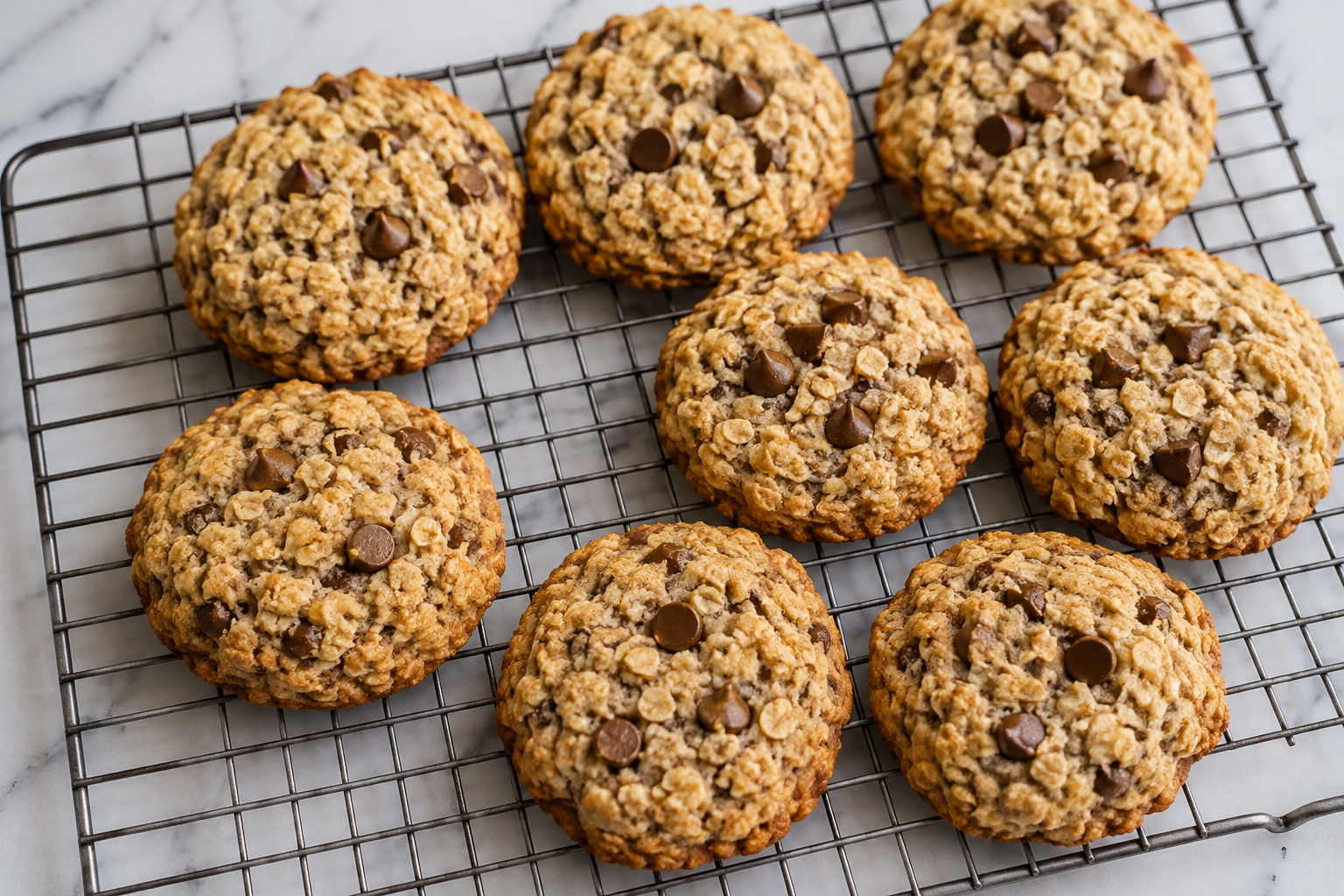
Gluten-Free Oatmeal Cookies
Soft and chewy Gluten-Free Oatmeal Cookies made with gluten-free rolled oats, brown sugar, butter, and chocolate chips. These bakery-style cookies have crisp edges, tender centers, and rich homemade flavor in every bite.
24
servings10
minutes30
minutes185
kcal12
minutes10
minutes1
hour2
minutesIngredients
1½ cups (210 g) gluten-free all-purpose flour blend
¾ teaspoon xanthan gum (omit if included in flour blend)
1 teaspoon baking soda
½ teaspoon kosher salt
½ cup (100 g) granulated sugar
2½ cups (250 g) gluten-free old-fashioned rolled oats
1 cup (218 g) packed light brown sugar
6 ounces semi-sweet chocolate chips
10 tablespoons (140 g) unsalted butter, softened
2 large eggs, room temperature, beaten
1 teaspoon pure vanilla extract
Directions
- Preheat the oven to 350°F (180°C) and line baking sheets with parchment paper.
- Whisk together the flour, xanthan gum, baking soda, salt, and granulated sugar.
- Stir in the rolled oats and brown sugar.
- Add the softened butter and mix until the mixture resembles coarse crumbs.
- Add the beaten eggs and vanilla extract, then mix until a thick dough forms.
- Fold in the chocolate chips.
- Divide the dough into 24 equal portions, roll into balls, and flatten slightly.
- Chill the shaped dough for 30 minutes.
- Arrange the cookies on the prepared baking sheets, leaving space between each one.
- Bake for 12 minutes, until lightly golden around the edges.
- Cool on the baking sheet for 10 minutes, then transfer to a wire rack to cool completely.
Nutrition Facts
24 servings per container
- Amount Per ServingCalories185
- % Daily Value *
- Total Fat
8g
11%
- Total Carbohydrate
26g
10%
- Protein 3g 6%
* The % Daily Value tells you how much a nutrient in a serving of food contributes to a daily diet. 2,000 calories a day is used for general nutrition advice.