
Gluten-free crepes are a delicious breakfast option for anyone who wants thin, soft, and delicate crepes without using regular wheat flour. They have a light texture, slightly sweet flavor, and flexible consistency that makes them suitable for both sweet and savory fillings. Whether served with fresh fruit, honey, chocolate spread, or a savory combination of cheese and vegetables, these homemade gluten-free crepes make an enjoyable meal for the whole family.
Making crepes at home does not have to be complicated. With a few basic ingredients, a mixing bowl, and a hand mixer, you can prepare a smooth batter without needing special kitchen equipment. The batter comes together quickly, and each crepe cooks in just a few minutes. This makes the recipe a convenient choice for weekend breakfasts, brunch gatherings, or even a simple weekday meal when you want something different from traditional pancakes.
Unlike thick breakfast pancakes, crepes are known for their thin, delicate structure. They are cooked in a shallow pan, allowing the batter to spread into a fine layer. The finished crepes should be tender enough to fold or roll without breaking. With the right flour measurement, properly mixed ingredients, and suitable cooking temperature, gluten-free crepes can turn out beautifully even without traditional wheat flour.
What Makes These Gluten-Free Crepes Special?
One of the best things about homemade gluten-free crepes is their versatility. Their mild flavor works with almost any topping or filling, so you can prepare them according to your preferences. For a sweet breakfast, serve them with sliced strawberries, bananas, powdered sugar, maple syrup, or a little chocolate spread. If you prefer savory food, fill them with cooked vegetables, scrambled eggs, mushrooms, or cheese for a satisfying meal.
The texture is another reason these crepes are worth making. They are designed to be light and flexible rather than thick or fluffy. Each crepe develops a delicate surface as it cooks, while the inside stays soft. When prepared correctly, they can be lifted from the pan, turned over, and folded without becoming too dry or brittle.
This recipe is also convenient because it uses a hand mixer instead of requiring a blender. Many homemade crepe recipes recommend blending all the ingredients together, but a hand mixer works well for combining the batter. It is an accessible method for home cooks who prefer using everyday kitchen tools. Mixing the ingredients thoroughly helps create a consistent batter that spreads easily across the pan.
Why Choose Homemade Gluten-Free Crepes?
Preparing gluten-free crepes at home gives you more control over the ingredients and the final texture. Store-bought gluten-free breakfast products can be convenient, but homemade crepes allow you to prepare fresh portions whenever you need them. You can also adjust the toppings, fillings, and serving style without changing the basic recipe.
Another advantage is that these crepes can fit different meal preferences. They are suitable for breakfast, brunch, lunch, or a light dinner, depending on how you serve them. Sweet toppings make them feel like a special breakfast treat, while savory fillings turn them into a more substantial meal. Their thin structure also makes them easy to layer with different ingredients.
For people avoiding gluten, choosing the right flour is particularly important. A suitable gluten-free flour blend helps provide the structure needed for crepes while keeping their texture delicate. Since gluten-free flour behaves differently from regular all-purpose flour, accurate measuring and proper mixing are important parts of the preparation process.
Understanding the Texture of Gluten-Free Crepe Batter
Crepe batter is naturally thinner than pancake batter. This difference is important because the mixture needs to spread quickly across the bottom of the pan. A thick batter would create heavier crepes that resemble small pancakes instead of the thin, delicate breakfast crepes you want.
When preparing this gluten-free crepe recipe, expect the batter to look noticeably runny. This is normal and helps create the characteristic thin layers. The mixture should be smooth and evenly combined, without visible flour pockets or large lumps. A smooth consistency allows the batter to move easily when poured into the pan and makes it easier to create evenly shaped crepes.
Gluten-free flour blends can absorb liquid differently depending on their ingredients and brand. Some mixtures may thicken slightly after standing, while others remain relatively thin. This is one reason it is helpful to pay attention to the batter’s appearance rather than expecting it to look exactly like traditional pancake batter.
How to Measure Gluten-Free Flour Correctly
Accurate flour measurement is one of the most important steps when making gluten-free crepes. Adding too much flour can make the batter thicker than intended, which may affect how easily it spreads in the pan. It can also produce crepes that feel heavier or less flexible after cooking.
The spoon-and-level method is a reliable way to measure gluten-free flour. Instead of dipping the measuring cup directly into the flour bag, use a spoon to transfer the flour into the measuring cup. Continue filling until the cup is full, then use the flat back of a knife to remove the excess from the top.
This technique helps prevent flour from becoming tightly packed inside the measuring cup. Scooping directly from the container can add more flour than the recipe requires, especially when the flour has settled during storage. A small difference in measurement can change the consistency of a delicate crepe batter, so taking a moment to measure correctly can improve the final result.
Choosing the Best Pan for Gluten-Free Crepes
The type of pan you use can make a noticeable difference in the finished result. A crepe pan is a helpful choice because it has a wide, flat cooking surface that makes spreading and turning the batter easier. Its shallow sides also allow you to slide a spatula underneath the thin crepes without struggling.
A good nonstick surface is particularly useful for gluten-free crepes. Since these crepes are thin and delicate, they can be more difficult to handle if they stick to the cooking surface. A suitable pan helps the batter cook evenly and makes it easier to release each crepe when it is ready.
If you do not own a dedicated crepe pan, a regular nonstick skillet can also work. Choose one with a flat bottom and enough room for the batter to spread. A pan that is too small may produce thicker crepes, while an uneven cooking surface can result in inconsistent browning.
Before making the first crepe, make sure the pan is properly heated. The cooking surface should be warm enough to set the batter without burning it. Once you become familiar with the temperature of your pan, preparing additional crepes becomes much easier.
How to Get Thin and Even Crepes
Creating thin crepes is mostly about using the right amount of batter and moving the pan at the correct time. Pour the batter into the center of the heated pan, then gently tilt and rotate the pan so the mixture spreads across the cooking surface. Work quickly because the batter begins setting as soon as it touches the warm pan.
The goal is to cover the bottom of the pan with a thin layer rather than creating a thick circle. If too much batter is added, the crepe may become difficult to fold and may take longer to cook. A thinner layer generally produces a more delicate texture and makes the crepes easier to fill.
Avoid moving the crepe too early. Give the underside enough time to cook before attempting to lift the edges. When the crepe is ready to turn, it should release more easily from the pan. Use a thin spatula to loosen the edges and carefully flip it over.
The second side usually needs less cooking time than the first. Watch the surface carefully and avoid leaving the crepe in the pan longer than necessary. Overcooking can make thin gluten-free crepes dry and less flexible.
Sweet Ways to Serve Gluten-Free Crepes
Sweet toppings are a classic choice for homemade crepes. Their mild flavor provides a pleasant base for fresh fruit, creamy spreads, and simple breakfast sauces. You can keep the presentation light with a dusting of powdered sugar or make the meal more indulgent with chocolate and fruit combinations.
Fresh strawberries, blueberries, raspberries, and sliced bananas are excellent options. Their natural sweetness and fresh flavor complement the delicate texture of the crepes. You can arrange the fruit inside each crepe, fold it into a triangle, or roll the crepe around the filling.
For a richer breakfast, try adding chocolate spread, peanut butter, almond butter, or a spoonful of yogurt. Maple syrup and honey are also simple ways to add sweetness without preparing a complicated sauce. A little cinnamon can provide extra flavor, especially when serving crepes with bananas or apples.
For a brunch gathering, prepare several toppings and let everyone choose their own combination. This makes the meal more interactive and allows family members to enjoy different flavors using the same batch of crepes.
How to Store Gluten-Free Crepes
If you prepare more crepes than you need, storing them properly can make breakfast preparation easier the next day. Allow the cooked crepes to cool before placing them in an airtight container. Keeping them covered helps prevent them from drying out and becoming less flexible.
For easier storage, place a small piece of parchment paper between individual crepes. This helps prevent them from sticking together and makes it easier to remove one at a time. Refrigerate the covered container and use the crepes within a few days for the best quality.
When you are ready to serve, warm the crepes gently in a nonstick pan or microwave. Avoid heating them for too long because excessive heat can make their thin texture dry. Add your favorite fillings and toppings after warming.
You can also prepare the batter ahead of time instead of cooking all the crepes immediately. Keep it covered in the refrigerator for up to 48 hours, as recommended for this recipe. Stir gently before using and check that the mixture still has a smooth, pourable consistency.
Frequently Asked Questions About Gluten-Free Crepes
Can I make gluten-free crepes without a blender?
Yes, a blender is not necessary for this recipe. A hand mixer can combine the ingredients and create a smooth batter. This makes the preparation process easier for home cooks who do not own a blender. The important thing is to mix thoroughly so the flour is incorporated evenly and the batter does not contain lumps.
Why is my gluten-free crepe batter so thin?
Thin batter is normal for crepes. Unlike pancake batter, which needs to hold its shape when poured onto a griddle, crepe batter should spread easily across the bottom of the pan. A runny consistency helps produce delicate, thin layers. As long as the mixture is smooth and properly combined, its thin appearance is not usually a problem.
Why do my gluten-free crepes tear?
Crepes may tear if they are turned before the underside has cooked sufficiently or if the batter has not rested. Incorrect flour measurement can also affect the texture. Refrigerating the batter for approximately one hour may help make the crepes easier to handle. Use a thin spatula and gently loosen the edges before flipping.
Can I prepare the batter in advance?
Yes, the batter can be made ahead and refrigerated for up to 48 hours. Store it in a covered container to keep it fresh. Before cooking, gently stir the mixture and check its consistency. Preparing the batter in advance can save time when you want a quick breakfast or need to serve several people.
Can I make these crepes dairy-free?
This recipe includes a dairy-free option. Follow the original recipe’s specified dairy-free ingredient substitutions rather than changing the ingredient quantities or adding unlisted ingredients. This allows you to prepare a version that suits your dietary needs while maintaining the intended texture as closely as possible.
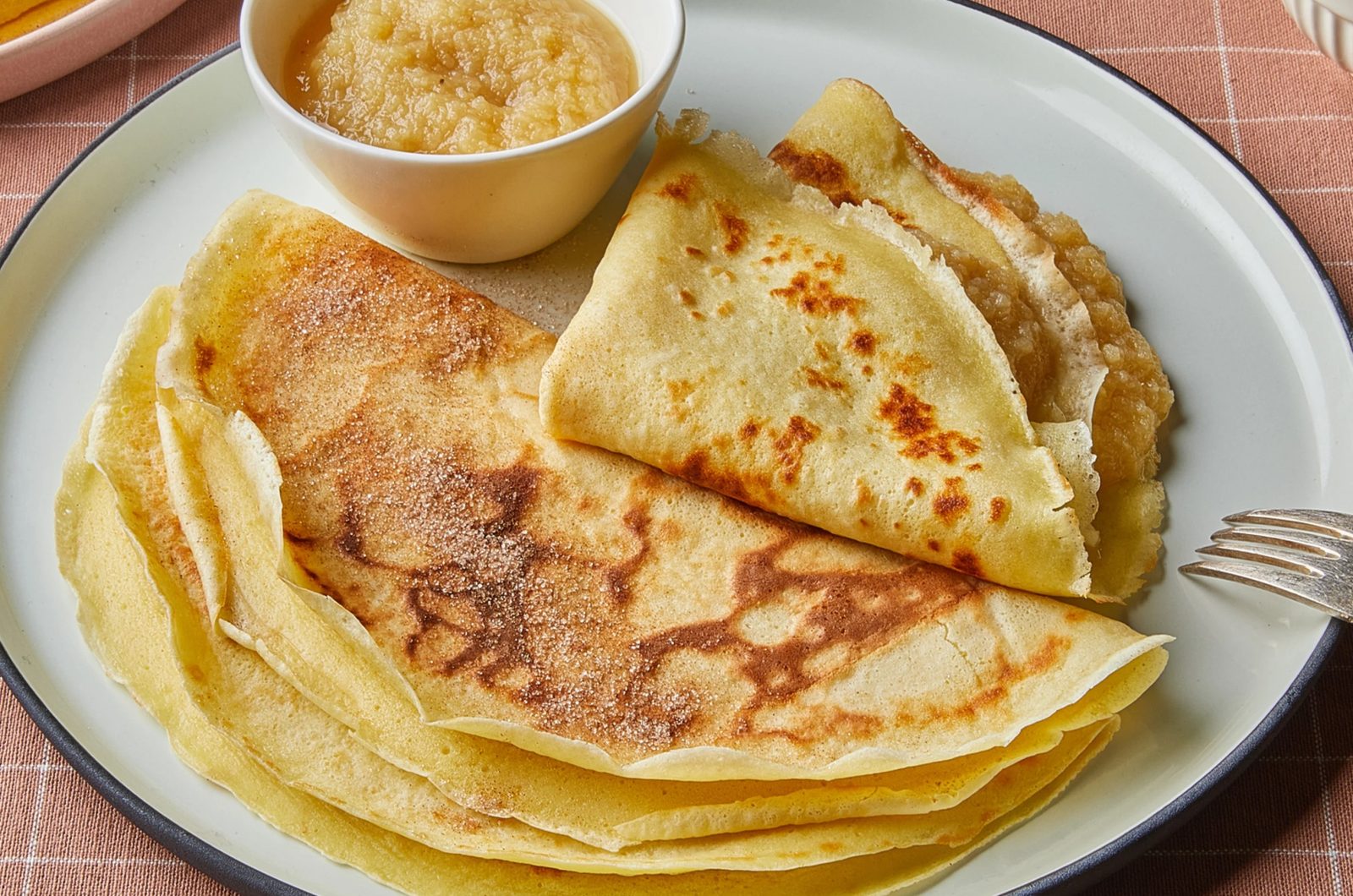
Gluten-Free Crepes
These Gluten-Free Crepes are light, thin, and delicate French-style pancakes that are perfect for breakfast, brunch, dessert, or even savory meals. Made with a gluten-free flour blend, xanthan gum, eggs, butter, and milk, they have the same soft texture and flexibility as classic French crepes.
6
servings5
minutes10
minutes135
kcal15
minutesIngredients
- For the Crepe Batter
1¼ cups (150 g) gluten-free flour blend
¼ teaspoon xanthan gum
1 tablespoon white sugar
¼ teaspoon salt
2 eggs
1½ tablespoons unsalted butter, melted
1¼ cups (300 ml) milk
Directions
- Combine the Dry Ingredients
In a large mixing bowl, whisk together:
Gluten-free flour blend
Xanthan gum
White sugar
Salt
Mix until evenly combined. - Add the Wet Ingredients
Eggs
Melted unsalted butter
½ cup of the milk
Whisk until the batter becomes smooth and thick. - Add the Remaining Milk
Gradually pour in the remaining milk while whisking continuously.
Continue mixing until the batter is silky smooth.
If needed, strain the batter through a fine-mesh sieve to remove any small lumps. - Heat the Pan
Place a nonstick skillet or crepe pan over medium-high heat.
Lightly grease the surface with butter.
Allow the pan to become fully heated before adding the batter. - Cook the Crepes
Pour approximately ½ cup of batter into the center of the hot pan.
Immediately swirl the pan so the batter spreads into a thin, even layer.
Cook for about 1 minute, or until the edges begin lifting and the underside becomes lightly golden. - Flip the Crepe
Carefully loosen the edges using a thin spatula.
Flip the crepe gently.
Cook the second side for 30 seconds to 1 minute.
Transfer the finished crepe to a plate. - Repeat
Continue with the remaining batter.
Lightly butter the pan between crepes if necessary.
Stack the finished crepes on a plate to keep them soft and warm. - Fill and Serve
Serve immediately with your favorite sweet or savory fillings.
Popular options include:
Fresh berries
Bananas
Nutella
Fruit jam
Maple syrup
Honey
Whipped cream
Ham and cheese
Spinach and mushrooms
Smoked salmon
Scrambled eggs
Nutrition Facts
6 servings per container
Serving Size1
- Amount Per ServingCalories135
- % Daily Value *
- Total Fat
5g
7%
- Total Carbohydrate
18g
7%
- Protein 5g 10%
* The % Daily Value tells you how much a nutrient in a serving of food contributes to a daily diet. 2,000 calories a day is used for general nutrition advice.


