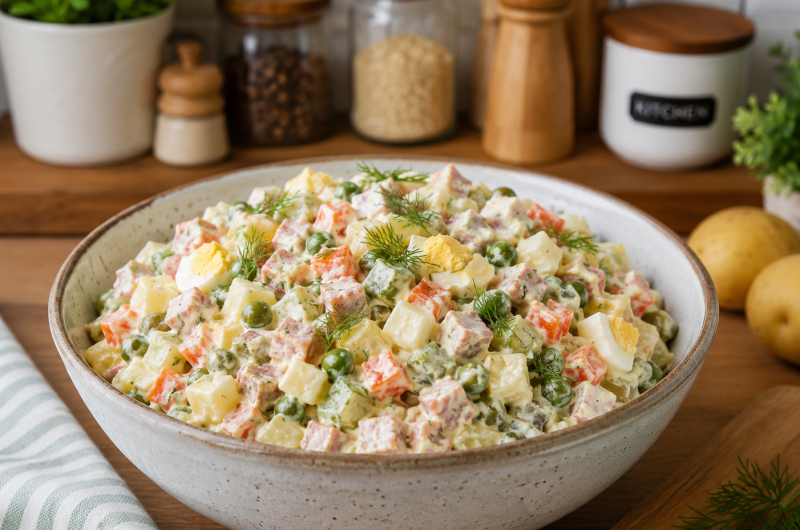
Classic Creamy Olivier Salad, also known as Russian Salad, is a traditional dish loved for its creamy texture, colorful vegetables, and delicious combination of savory and tangy flavors. Made with tender potatoes, sweet carrots, green peas, hard-boiled eggs, diced ham, and crunchy pickles, this salad brings together simple ingredients in a satisfying way. A rich homemade dressing made with mayonnaise, sour cream, Dijon mustard, and fresh herbs ties everything together beautifully.
This traditional Olivier Salad is suitable for many occasions, from casual family lunches to holiday celebrations and dinner parties. It can be prepared ahead of time, making it especially convenient when you are entertaining guests or planning a larger meal. After chilling in the refrigerator, the ingredients have time to absorb the flavors of the dressing, creating a creamy and well-balanced salad that tastes even better when served cold.
What Is Olivier Salad?
Olivier Salad is a traditional potato salad that originated in Moscow during the nineteenth century. It is also widely known as Russian Salad and has become a familiar dish throughout Eastern Europe and several other parts of the world. Although recipes differ between households and countries, the familiar version usually combines diced cooked vegetables, pickles, eggs, meat, and a mayonnaise-based dressing.
The original preparation was much more elaborate than the version commonly enjoyed today. Over the years, cooks adapted the recipe using ingredients that were easier to find and more affordable. Potatoes, carrots, peas, boiled eggs, and ham gradually became popular replacements for some of the more expensive ingredients. These changes helped transform Olivier Salad into a practical homemade dish that families could prepare for everyday meals and special celebrations.
One reason this salad remains popular is its combination of textures. The potatoes provide a soft and satisfying base, carrots contribute natural sweetness, and peas add little bursts of freshness. Hard-boiled eggs make the mixture richer, while pickles bring a pleasant crunch and tanginess. The creamy dressing connects everything without allowing one ingredient to overpower the others.
The History Behind Russian Olivier Salad
The history of Olivier Salad goes back to the 1860s, when chef Lucien Olivier created the dish at the Hermitage restaurant in Moscow. The restaurant was known for serving impressive meals, and Olivier’s creation quickly became one of its most recognized specialties. Its reputation spread because of its distinctive ingredients, rich presentation, and carefully prepared sauce.
The original recipe was considerably more luxurious than the modern Russian potato salad. It reportedly included hazel grouse, veal tongue, caviar, crayfish tails, aspic, lettuce, potatoes, capers, and olives. These ingredients were arranged and served with a special mayonnaise-style sauce. The exact preparation was kept secret, which made other restaurant chefs curious about how to reproduce its distinctive flavor.
As Olivier Salad became more famous, other restaurants attempted to create their own versions. However, they struggled to reproduce the original dressing, which contained an important savory element. Historical descriptions connect the sauce with an ingredient similar to Worcestershire sauce, helping explain why this condiment remains an interesting addition to modern versions of the salad.
Over time, the recipe changed considerably. Expensive seafood and game meats were replaced with more accessible ingredients, while boiled vegetables and pickles became central features. The result was a simpler salad that retained the creamy character and satisfying flavor of the original creation. Today, Olivier Salad is enjoyed in many countries, with regional ingredients and family traditions influencing each version.
This Creamy Russian Salad
One of the best things about homemade Olivier Salad is that it combines familiar ingredients in a way that feels special. Potatoes, carrots, peas, eggs, and ham are easy to recognize, but the dressing gives them a completely different character. Mayonnaise creates richness, sour cream introduces a gentle tang, and Dijon mustard adds a little sharpness that balances the other flavors.
Another reason to make this salad is its flexibility. You can use diced ham, cooked chicken, or another suitable protein depending on your preference. If you want a vegetarian version, simply leave out the meat. The vegetables and creamy dressing still create a flavorful combination that works well as a side dish.
This recipe is also convenient for preparing ahead. Most of the ingredients can be cooked, chopped, and stored before the final mixing. You can prepare the vegetables and dressing separately, then combine them closer to serving time. This makes it a useful option for holidays, gatherings, picnics, and busy family meals.
The Creamy Dressing for Olivier Salad
The dressing is what brings all the ingredients together. Unlike American Russian dressing, which is commonly associated with sandwiches, Olivier Salad uses a creamy mayonnaise-based mixture with a different flavor profile. It combines richness, acidity, mild spice, and fresh herbs to complement the cooked vegetables and savory ingredients.
Mayonnaise and Sour Cream
Mayonnaise provides the creamy foundation of the dressing. It coats the vegetables evenly and gives the salad its familiar rich consistency. Sour cream adds a gentle tang that balances the mayonnaise and prevents the dressing from tasting too heavy. If you prefer, Greek yogurt can be used instead of sour cream for a slightly different flavor and texture.
Dijon Mustard and Worcestershire Sauce
Dijon mustard adds depth and a mild sharpness that works especially well with potatoes, ham, and eggs. Worcestershire sauce introduces a savory, umami-rich flavor that gives the dressing additional complexity. It is also an interesting ingredient because historical descriptions of the original Olivier sauce mention a condiment with similarities to Worcestershire sauce.
Fresh Dill and Green Onions
Fresh dill provides an aromatic, herbaceous flavor that is particularly popular in Eastern European cooking. Its refreshing taste works beautifully with pickles and creamy dressing. Green onions, also called scallions, contribute a mild peppery note and a little extra color. If you do not enjoy dill, fresh parsley is a suitable alternative.
Salt, Black Pepper, and Sugar
These simple seasonings help balance the dressing. Salt brings out the natural flavors of the vegetables, black pepper adds gentle warmth, and sugar helps balance the acidity of the pickles, sour cream, and mustard. Adjusting the seasoning carefully helps create a dressing that complements rather than overwhelms the salad.
How to Make Classic Creamy Olivier Salad
Preparing homemade Russian Salad is relatively simple. The most time-consuming part is cooking and chopping the ingredients into small, evenly sized pieces. Taking a little extra care during preparation helps create a more attractive salad with a consistent texture. The vegetables should be tender but firm enough to maintain their shape when combined with the dressing.
Cook the Potatoes and Carrots
Begin by cooking the diced potatoes and carrots until they become tender. Avoid cooking them for too long because overly soft vegetables can break apart during mixing. Once cooked, drain them thoroughly and allow them to cool. Removing excess moisture is important because watery vegetables can thin the dressing and make the finished salad less creamy.
Prepare the Remaining Ingredients
While the cooked vegetables cool, prepare the other salad ingredients. Dice the ham, hard-boiled eggs, onion, and dill pickles into small pieces. If you are using canned peas, rinse and drain them well. Frozen peas should be completely thawed and drained before adding them to the mixture.
Try to keep the pieces reasonably similar in size. This makes the salad easier to mix and ensures that each serving contains a good combination of vegetables, eggs, and protein. Small, even pieces also help the dressing coat the ingredients more consistently.
Mix the Creamy Dressing
In a separate bowl, combine the mayonnaise, sour cream, Dijon mustard, Worcestershire sauce, green onions, fresh dill, salt, black pepper, and sugar. Stir until the mixture is smooth and evenly combined. Preparing the dressing separately allows you to distribute the seasonings properly before adding it to the vegetables.
Taste the dressing and adjust the seasoning if needed. The combination should be creamy, slightly tangy, and savory, with the herbs providing a fresh finishing flavor. Keep the dressing refrigerated if the remaining salad ingredients are still cooling.
Combine the Salad Ingredients
Transfer the cooled potatoes and carrots to a large mixing bowl. Add the diced ham, peas, hard-boiled eggs, onion, and dill pickles. Pour the prepared dressing over the ingredients and gently stir until everything is evenly coated.
Use a large spoon or spatula and avoid mixing too aggressively. The potatoes and eggs can break apart if handled roughly, especially when they are very soft. Gentle mixing helps preserve the individual pieces and creates the classic chunky texture associated with homemade Olivier Salad.
Chill Before Serving
Cover the bowl and place the salad in the refrigerator for at least one hour before serving. Chilling allows the dressing to settle into the ingredients and gives the different flavors time to combine. It also helps the salad develop a firmer consistency, making it easier to serve neatly.
Olivier Salad is traditionally enjoyed cold, so avoid leaving it at room temperature for extended periods. Before serving, gently stir the mixture and check its consistency. If needed, adjust the seasoning to suit your taste.
Serving and Presentation Ideas
Classic Russian Salad can be served in several different ways depending on the occasion. For an everyday meal, simply spoon it into a serving bowl and finish with fresh dill or parsley. Its colorful ingredients make it attractive without requiring complicated decoration.
For a more formal presentation, you can shape the salad into a neat molded portion. Lightly coat the inside of a measuring cup or suitable food mold with oil, then gently press the prepared salad inside. Turn it upside down onto a serving plate and carefully lift away the mold. A small sprig of dill or parsley makes a simple finishing garnish.
This salad works particularly well alongside roasted meats, grilled chicken, sandwiches, and other savory dishes. It can also be included in a holiday buffet or picnic spread. Because it is filling and contains several different ingredients, smaller portions are often enough when serving it alongside other dishes.
Variations of Russian Olivier Salad Around the World
Although the classic version is strongly associated with Russia, Olivier Salad has developed many regional variations. Different countries have adapted the recipe according to local ingredients, cooking traditions, and personal preferences. These changes demonstrate how a traditional dish can become part of several different food cultures.
In Croatia, diced apples are commonly included to introduce sweetness and crunch. Romanian versions often feature chopped beef, while Bulgarian preparations may use salami. In Turkey, pickled beets are sometimes included, adding a different color and flavor to the salad. Polish variations may contain pickled herring, creating a more distinctive savory profile.
The dish is also popular in Iran, where chicken is commonly used instead of ham. In Spain, a related preparation known as ensaladilla rusa is often made with tuna. These regional versions may differ considerably from one another, but the combination of cooked ingredients and creamy dressing remains an important characteristic.
At home, you can use these variations as inspiration while keeping the basic recipe familiar. Changing the protein, including additional vegetables, or using a different type of pickle can give the salad a new character without losing its traditional appeal.
Make-Ahead Preparation and Storage
Olivier Salad is a convenient dish for preparing ahead of time, particularly when you are planning a celebration or cooking for several people. The potatoes, carrots, eggs, ham, and other ingredients can be prepared a day in advance. Store the prepared components in separate covered containers in the refrigerator to maintain their freshness.
For the best texture, consider waiting until a couple of hours before serving to mix the dressing into the salad. This gives you better control over the consistency and helps prevent the vegetables from becoming overly soft. Once everything is combined, cover the bowl and keep it refrigerated until needed.
Leftover Olivier Salad can be stored in an airtight container in the refrigerator for approximately three to four days, according to the supplied recipe. Keep it chilled between servings and use clean serving utensils when taking portions from the container. If the salad has been left at room temperature for an extended period, it is safer not to keep it.
Classic Creamy Olivier Salad
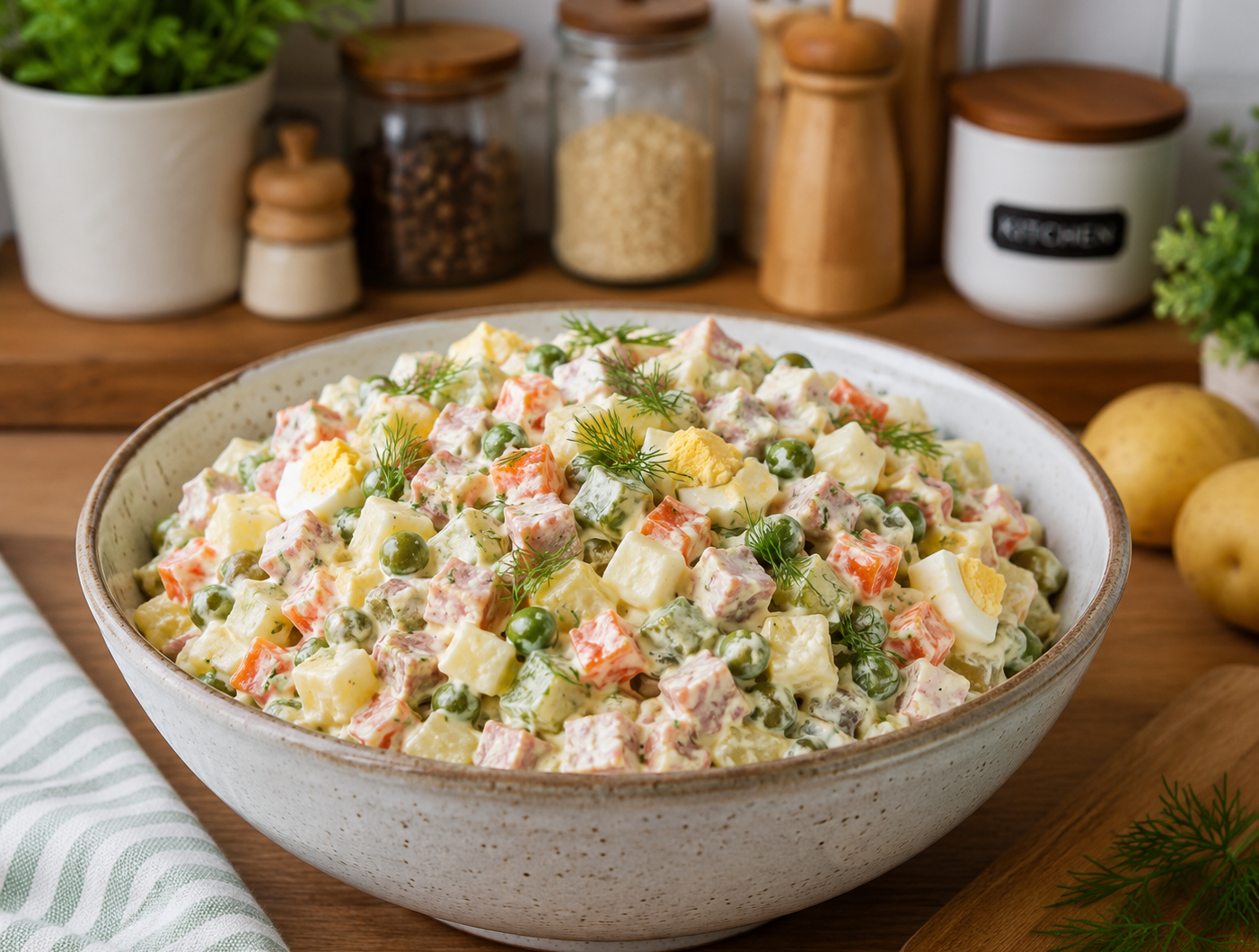
This Classic Creamy Olivier Salad, also known as Russian Potato Salad, is a rich, creamy, and satisfying dish made with tender potatoes, carrots, eggs, green peas, and your choice of cooked chicken or traditional bologna.
6
servings30
minutes25
minutes345
kcal60
minutes1
hour55
minutesIngredients
- For the Salad
3 medium potatoes
3 medium carrots
4 large eggs
1 cup cooked chicken or bologna, diced
1 cup green peas
3 pickles, diced
1 small onion (optional)
- For the Dressing
1 cup mayonnaise
1/2 cup sour cream or Greek yogurt
1 teaspoon Dijon mustard
Salt
Black pepper
- Optional Garnish
Fresh parsley
Fresh dill
Directions
- Cook the Vegetables
Place the potatoes and carrots in a large pot and cover with cold water.
Bring to a boil and cook for 20–25 minutes, or until fork-tender.
Drain, allow to cool, peel, and dice into small cubes. - Prepare the Eggs
Place the eggs in a saucepan and cover with water.
Boil for 10 minutes.
Transfer to cold water, peel, and chop into small pieces. - Cook the Green Peas
Boil the frozen peas for 2–3 minutes.
Drain immediately and cool completely. - Prepare the Remaining Ingredients
Dice the following into small, even-sized pieces:
Cooked chicken or bologna
Pickles
Onion (if using) - Combine the Salad Ingredients
In a large mixing bowl, add:
Diced potatoes
Diced carrots
Chopped eggs
Green peas
Cooked chicken or bologna
Pickles
Onion
Mix gently until evenly combined. - Prepare the Dressing
In a separate bowl, whisk together:
Mayonnaise
Sour cream or Greek yogurt
Dijon mustard
Salt
Black pepper
Mix until smooth and creamy. - Dress the Salad
Pour the dressing over the salad ingredients.
Fold everything together gently until all ingredients are evenly coated.
Avoid overmixing to keep the vegetables intact. - Chill
Cover the bowl and refrigerate for at least 1 hour.
This allows the flavors to blend and improves the texture. - Garnish and Serve
Before serving, stir the salad gently.
Garnish with fresh parsley or dill if desired.
Serve chilled.
Nutrition Facts
6 servings per container
- Amount Per ServingCalories345
- % Daily Value *
- Total Fat
24g
31%
- Total Carbohydrate
18g
7%
- Total Sugars 4g
- Protein 14g 29%
* The % Daily Value tells you how much a nutrient in a serving of food contributes to a daily diet. 2,000 calories a day is used for general nutrition advice.